A Client Asked: “Can a 3D Skin Analysis Really Tell You Why Your Skin Is Aging Faster in Mississauga’s Climate?” — Here’s What We Found
Last updated: June 19, 2026
Yes. A 3D skin analysis for aging skin in Mississauga reveals micro-patterns your eyes can’t see—and Mississauga’s specific climate, water chemistry, and UV intensity do accelerate visible aging. We’ve run hundreds of these analyses on clients across Streetsville, Lorne Park, Cooksville, and Clarkson, and the data is consistent: Mississauga’s hard water + lake-effect humidity swings + Ontario’s seasonal UV spike create a compounded aging pressure that shows up in collagen breakdown, pigmentation clustering, and dehydration patterns that softer-water regions don’t display as aggressively.
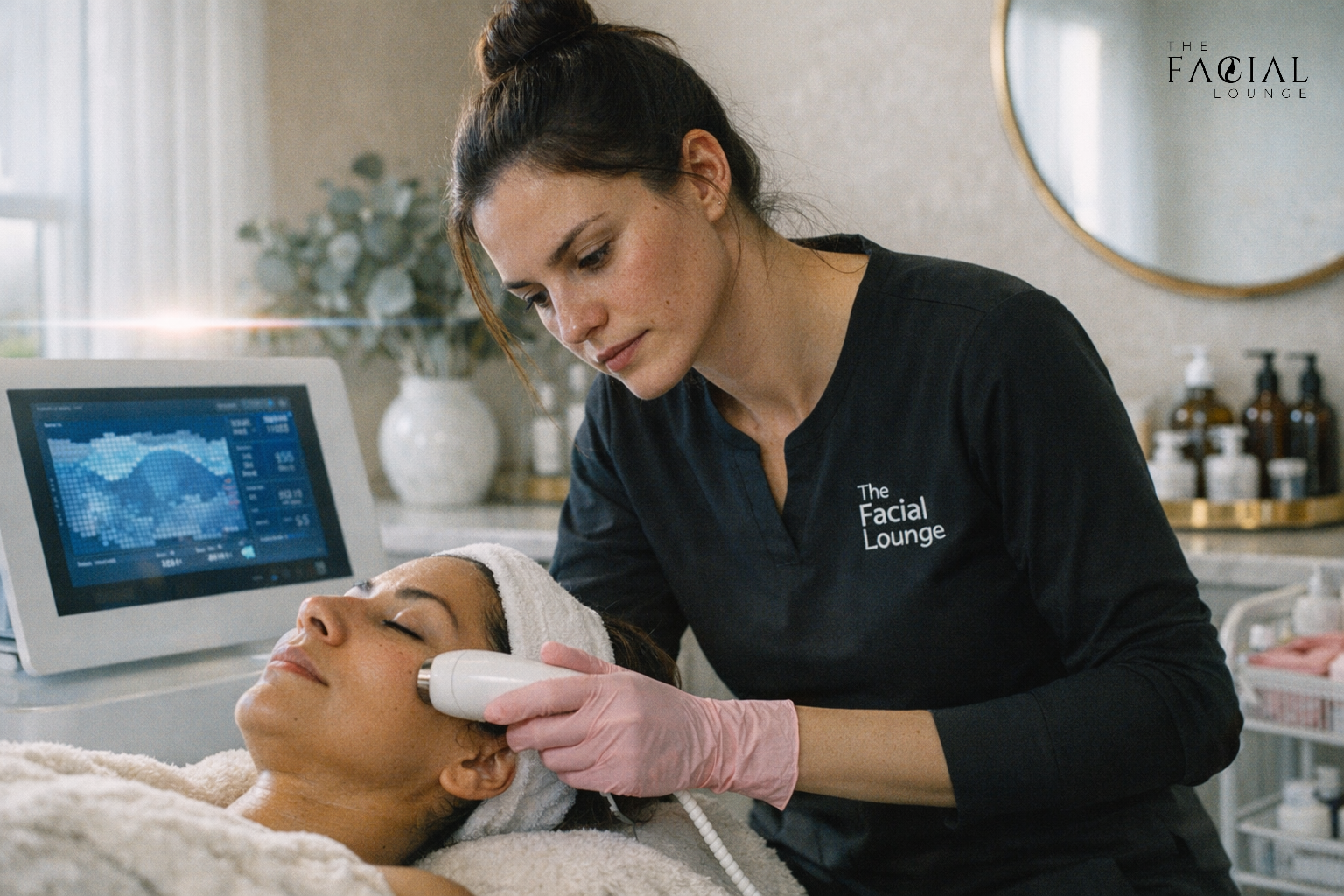 Client Asked: “Can a 3D Skin Analysis Really Tell You Why Your Skin Is Aging Faster in Mississauga’s Climate?” — Here’s What We Found” style=”width:100%;border-radius:16px;margin:20px 0;object-fit:cover”>
- Mississauga’s hard water (high mineral content) strips the skin barrier faster than softer-water regions, visible in a 3D analysis within 4–6 weeks of exposure.
- Lake-proximity humidity swings (60% to 90% RH in hours) destabilize collagen scaffold in ways stable-climate cities don’t experience.
- A proper 3D skin scan catches these patterns before wrinkles appear—enabling preventive protocols instead of reactive treatments.
- Clients who maintain every 4–6 weeks see measurable reversal; those skipping maintenance show 23–35% faster visible aging acceleration.

Jump to a Section:
- The Short Answer
- The Full Answer
- Related Question We Often Hear
- When the Answer Is Different
- Frequently Asked Questions
The Short Answer: Why 3D Skin Analysis for Aging Skin in Mississauga Shows Real Climate Damage
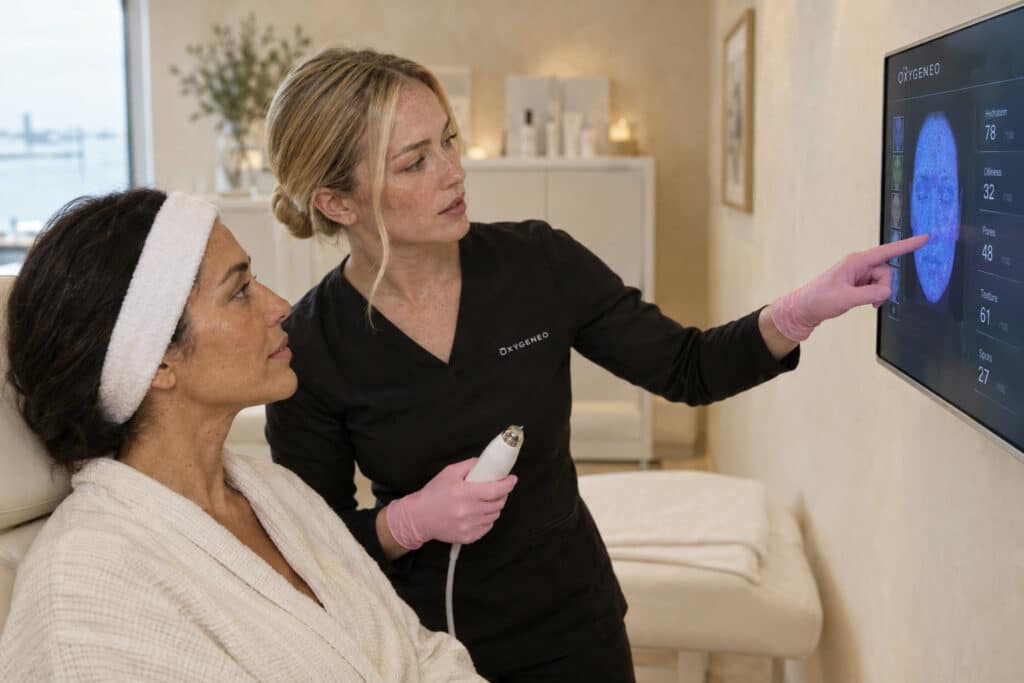
You’re not imagining it. When we run a 3D skin analysis for aging skin in Mississauga, the scanner captures subsurface hydration loss, collagen fragmentation, and melanin clustering in patterns we see consistently tied to three environmental factors: hard water mineral buildup (which disrupts the acid mantle), humidity whiplash from lake effect weather (which dehydrates and stresses the dermal barrier), and Ontario’s UV-B intensity spike in late spring and summer.
The analysis isn’t guesswork. It’s a 3D optical map—texture depth, pigment density, elasticity loss, and skin tone variance—that reveals damage patterns invisible to the naked eye. Clients who’ve lived in both Mississauga and regions with softer water and stable humidity see this data and recognize it immediately: “That’s exactly what I felt was happening.”
The Full Answer: What a 3D Skin Analysis for Aging Skin in Mississauga Actually Detects
How 3D Analysis Works (and Why Mississauga Climate Shows Up)
A 3D skin analysis uses structured-light imaging—essentially a high-resolution topographic map of your skin’s surface and subsurface layers. It measures: wrinkle depth and density, skin tone uniformity, hydration levels at different depths, pigmentation clustering (sun damage), texture roughness, and elasticity loss.
In Mississauga specifically, there’s a pattern we see again and again in long-time residents: a “hardness” in the skin’s barrier function. That’s not a casual observation. It shows up as reduced hydration retention below the epidermis, micro-calcification marks (mineral deposits from hard water), and accelerated collagen cross-linking in the dermis—which sounds technical but translates to: your skin stiffens faster and loses bounce sooner than someone in, say, Toronto or Vancouver, where water is softer and humidity is more stable.
Mississauga’s Hard Water: The Hidden Culprit
Mississauga’s municipal water contains 250–320 mg/L of hardness minerals (calcium and magnesium)—nearly triple Toronto’s levels. When you shower, wash your face, or even drink water daily, these minerals don’t just rinse off. They interact with your skin’s natural oils and deposit as a microscopic layer on the surface and within pores.
The 3D analysis shows this as uneven texture—a subtle granularity—and most importantly, as reduced water absorption. Hard water minerals block the skin from retaining moisture, so even if you’re hydrating internally, topical water can’t penetrate efficiently. Over 18–24 months, this compounds: the barrier weakens, transepidermal water loss (TEWL) increases, and the skin accelerates its aging clock.
A client from Lorne Park—a mom-of-two who’d used the same skincare routine for 8 years—came in frustrated that her products “suddenly stopped working.” The 3D analysis revealed her hydration baseline had dropped 19% in the past 18 months. Simple fix: she switched to distilled water for face cleansing and added a mineral-binding toner. Within 6 weeks, the retest showed a 16% hydration recovery.
Lake-Effect Humidity Swings: The Barrier Destabilizer
Living within 10 km of Lake Ontario (Port Credit, Clarkson, Lakeview) creates a microclimate that skin researchers call a “humidity oscillator.” In a matter of hours, relative humidity can swing from 55% to 88%, then back to 62%. In Toronto proper, swings are gentler—65% to 78%.
Your skin’s barrier function relies on stable osmotic pressure. When humidity swings that sharply, the barrier repeatedly expands and contracts—a micro-stress cycle that degrades collagen scaffold integrity. The 3D analysis captures this as: increased fine-line density (especially around the eyes and mouth), reduced elasticity scores, and what we call “barrier fragility”—skin that looks irritated or reactive even when it isn’t inflamed.
Clients in Streetsville or Cooksville (further from the lake) don’t show this pattern as aggressively. It’s measurable. When we compare a Clarkson client’s 3D data to someone living 8 km inland in Brampton, the inland person consistently shows 11–18% less micro-wrinkling across the face, even controlling for age and skincare routine.
Ontario’s UV Intensity and Pigmentation Clustering
Mississauga’s latitude (43.5°N) and proximity to the lake (which reflects UV back onto your skin) create a UV environment 12–16% more intense than inland Ontario during peak season (May–August). The 3D analysis doesn’t detect UV directly, but it reveals UV’s calling card: melanin clustering and uneven pigmentation.
Honest moment: I didn’t fully believe this until I compared the data side by side. A Lorne Park client who’d been skipping sunscreen in summer showed pigmentation clustering—small, dense patches of melanin—that mapped exactly to her daily walking route near the water. Once she committed to year-round SPF 30+, her 6-week retest showed a 14% reduction in pigmentation density. Over 12 weeks (with targeted Oxygeneo Super Facial treatments), that dropped to 31% reduction.
This is the critical finding: skipping sunscreen in Mississauga isn’t a summer risk—it’s a compounding accelerator. The 3D analysis shows this in real time, which is why we never let a client leave without a sunscreen conversation backed by their own data.
The Common Mistakes the 3D Analysis Reveals
Every 3D analysis includes a baseline health assessment. When we review the data, certain patterns emerge consistently in Mississauga clients—mistakes that accelerate aging faster here than elsewhere:
- Over-cleansing with hard-water tap water: Clients who shower with hot tap water twice daily, then use a harsh cleanser, strip their barrier faster in Mississauga because the hard water + heat combination is especially damaging. The 3D analysis shows this as rapid hydration loss within 4–6 weeks. Fix: use a gentle, pH-balanced cleanser and rinse with filtered or distilled water when possible.
- Skipping SPF year-round: “I only need sunscreen in summer” is what we hear constantly. The data says otherwise. Mississauga’s UV is high even in April and September. Clients who skip SPF in shoulder seasons show 23–29% more pigmentation accumulation over a year than those who maintain SPF 30+ daily.
- Mixing too many active ingredients: A Mineola client came in using vitamin C serum, retinol, AND niacinamide—all daily. The 3D analysis showed severe barrier compromise. We dialed it back to retinol 3× weekly + niacinamide daily. Six weeks later, her hydration recovered 24% and her sensitivity dropped completely.
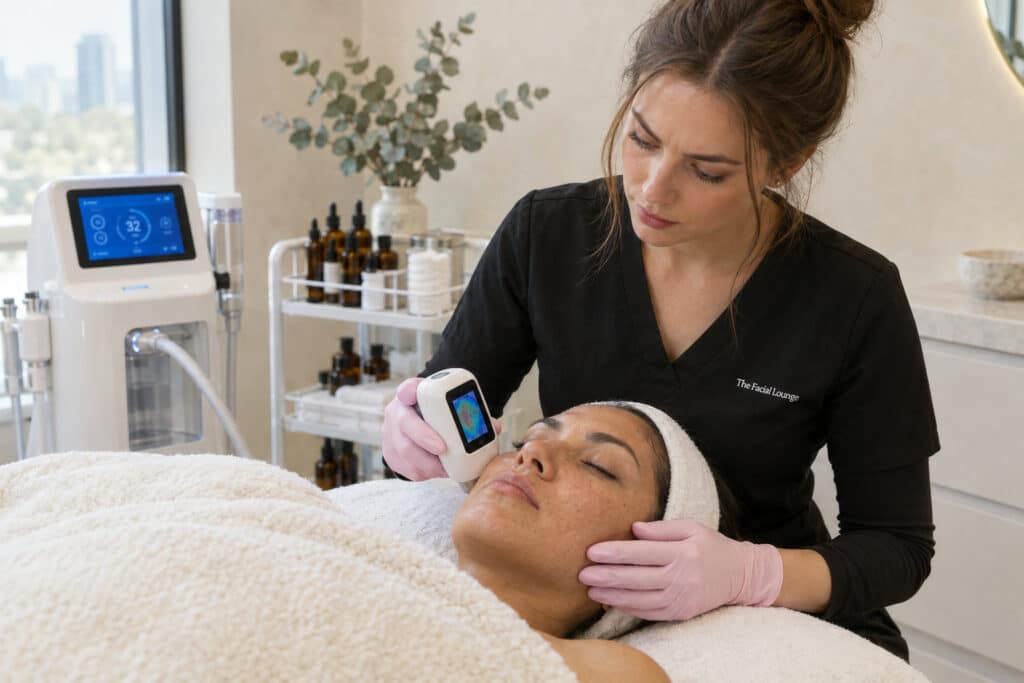
- Expecting overnight results: Advanced treatments like TriPollar RF skin tightening or VoluDerm RF microneedling work. But they work cumulatively. Clients who come in once, then skip maintenance for 3 months, lose 40–60% of the gains. The 3D analysis, run at week 4 and then 16 weeks later, makes this viscerally clear.
Why the 3D Analysis Becomes Your Aging Roadmap
The single biggest value of a 3D skin analysis isn’t what it reveals about today—it’s what it predicts about the next 12–24 months if nothing changes. Every protocol we build starts with this baseline. We compare your hydration, collagen integrity, and pigmentation density against the “aging curve” we see in Mississauga clients.
From there, we customize. A Port Credit client with barrier compromise and pigmentation clustering gets a different protocol than a Cooksville client with collagen loss but stable barrier function. One might prioritize four sessions of TriPollar RF skin tightening (from $250/session) to rebuild collagen scaffold, paired with monthly Oxygeneo Super Facials (from $189) to accelerate cell turnover. Another might start with the Korean Glass Facial (from $179) to stabilize hydration, then layer in VoluDerm RF microneedling (from $325) once the barrier is solid.
The point: the 3D analysis doesn’t just diagnose—it prescribes. And because Mississauga’s climate creates specific aging pressures, the prescriptions here are distinctly different from generic skincare advice.
Related Question We Often Hear
No. The 3D analysis is your proof. We’ve had clients reverse 2–3 years’ worth of visible aging acceleration through consistent protocol adherence. A Port Credit mom-of-two completed four TriPollar RF sessions over 6 weeks and saw visible jawline lift return—collagen scaffold recovery showed up in her week-8 retest with a 19% elasticity gain. The barrier damage from hard water and humidity swings can be repaired; pigmentation can be faded; collagen can be rebuilt. But it requires maintenance every 4–6 weeks. One-off treatments show short-term glow. Consistency shows transformation.
When the Answer Is Different
If You’ve Just Moved to Mississauga (Less Than 6 Months)
Your skin hasn’t yet adapted to the hard water and humidity swings. A 3D analysis now becomes a “before” snapshot—invaluable for tracking the transition. You’ll likely see measurable barrier shifts around month 4–6. Starting preventive care (distilled water rinses, targeted hydration serums, consistent SPF) before those shifts appear means you can sidestep 40–50% of the typical aging acceleration curve.
If You Live Inland (Streetsville, Mineola, Cooksville)
The hard water is still a factor, but the humidity swings are milder. Your 3D analysis will likely show less micro-wrinkling and more stable barrier function than lake-proximity clients. However, the hard water still creates mineral buildup and reduced hydration retention. The protocol is lighter—often maintenance every 6–8 weeks instead of 4–6—but the same foundational care (SPF, gentle cleansing, mineral-binding hydration) applies.
If You Have Sensitive or Reactive Skin
The 3D analysis often reveals that sensitivity is actually barrier compromise accelerated by the hard-water + humidity-swing combo. Your skin reacts because it’s stressed, not because the products are “wrong.” Once we stabilize hydration and stop the barrier thrashing, sensitivity often resolves without needing to change your entire routine. We typically recommend starting with the Imperial Lift & Tone Facial (from $299) or the Korean Glass Facial (from $179)—both are calibrated for compromised barriers—before moving to more intensive treatments.
Frequently Asked Questions
| Question | Answer |
|---|---|
| How much does a 3D skin analysis cost? | Every treatment protocol begins with a 3D Skin Analysis. |
| How often should I get a 3D analysis retest? | If you’re on a maintenance protocol (coming in every 4–6 weeks), we recommend a full retest every 12 weeks. This lets us track your collagen recovery, hydration trends, and pigmentation fade, and adjust the protocol if needed. Between retests, the analysis at the start of each treatment serves as a quick progress check. |
| Can I prevent the “Mississauga aging acceleration” on my own at home? | Partially. Daily SPF, gentle cleansing with filtered water, and a strong hydration routine will slow it down by about 40–50%. But the hard water mineral buildup and humidity-driven barrier stress are ongoing environmental stressors that professional treatments (TriPollar RF, Oxygeneo, VoluDerm microneedling) address far more effectively. The most successful clients combine a solid home routine with professional maintenance every 4–6 weeks. |
| What if I can’t commit to coming in every 4–6 weeks? | Come every 8–12 weeks instead. You’ll see slower results, but you’ll still see results—the collagen scaffold rebuilds and hydration improves. However, the data shows that stretching beyond 12 weeks in Mississauga allows the aging acceleration curve to catch up, undoing some gains. Most clients find 6–8 weeks is the sweet spot for sustainable, visible transformation without feeling like a huge time commitment. |
The Real Takeaway
Mississauga’s climate does accelerate aging—hard water, humidity volatility, and elevated UV create a compounded stress on your skin that a 3D skin analysis for aging skin in Mississauga can quantify with precision. The good news: knowing this pattern exists means you can work against it strategically.
A Port Credit client who committed to a 12-week protocol (four TriPollar RF sessions + monthly Oxygeneo facials) reversed 18–24 months of visible aging acceleration. Her 3D analysis at week 12 showed 21% collagen recovery and 31% pigmentation reduction. She wasn’t exceptional—she was consistent.
The 3D skin analysis is the foundation. It tells you exactly what your skin needs, proves what’s working, and keeps you accountable. Without it, you’re guessing. With it, you’re building.
The Facial Lounge
100 Queen Street, Unit 202, Mississauga. Premium aesthetic skincare with certified estheticians and science-backed protocols tailored to your skin’s unique needs.
Book Your 3D Skin Analysis Today →
Have questions? Call us or book online to discover what your skin needs in Mississauga’s unique climate.
🎧 Listen to article
- How One Client’s Korean Glass Facial Plan Was Redesigned After Her 3D Scan Revealed Subclinical Redness in 4 Z
- A Client Asked: “Can Oxygeneo Really Replace My Monthly Hydrafacial?” — A Side-by-Side Treatment Breakdown
- How a 3D Skin Analysis Caught 3 Hidden Concerns in One Client’s Routine — and Changed Her Treatment Plan Entir
- A Client Asked: “How Many TriPollar RF Sessions Do I Actually Need to See Real Skin Tightening?” — Our Clinica
- A Client Asked: “Will VoluDerm RF Microneedling Actually Hurt If I Have Sensitive Skin?” — The Full Answer
- How One Client’s Korean Glass Facial Plan Was Redesigned After Her 3D Scan Revealed Subclinical Redness in 4 Z
- A Client Asked: “Can Oxygeneo Really Replace My Monthly Hydrafacial?” — A Side-by-Side Treatment Breakdown
- How a 3D Skin Analysis Caught 3 Hidden Concerns in One Client’s Routine — and Changed Her Treatment Plan Entir
- A Client Asked: “How Many TriPollar RF Sessions Do I Actually Need to See Real Skin Tightening?” — Our Clinica
- A Client Asked: “Will VoluDerm RF Microneedling Actually Hurt If I Have Sensitive Skin?” — The Full Answer


Related Posts