Dark Spots and Uneven Tone Facial in Mississauga: KB Pure Advanced Peels vs TriFractional Resurfacing, Which One Fades Spots Without Triggering New Ones?
Last updated: October 23, 2026
Published October 23, 2026 · Updated October 23, 2026

For a dark spots and uneven tone facial in Mississauga, peel vs TriFractional comes down to one thing: how your skin responds to inflammation. A KB Pure Advanced Peel generally suits surface pigment and reactive skin, while TriFractional resurfacing generally suits pigment that sits alongside texture, scarring or enlarged pores. Neither is the right call until a 3D Skin Analysis shows what is actually happening under the surface.
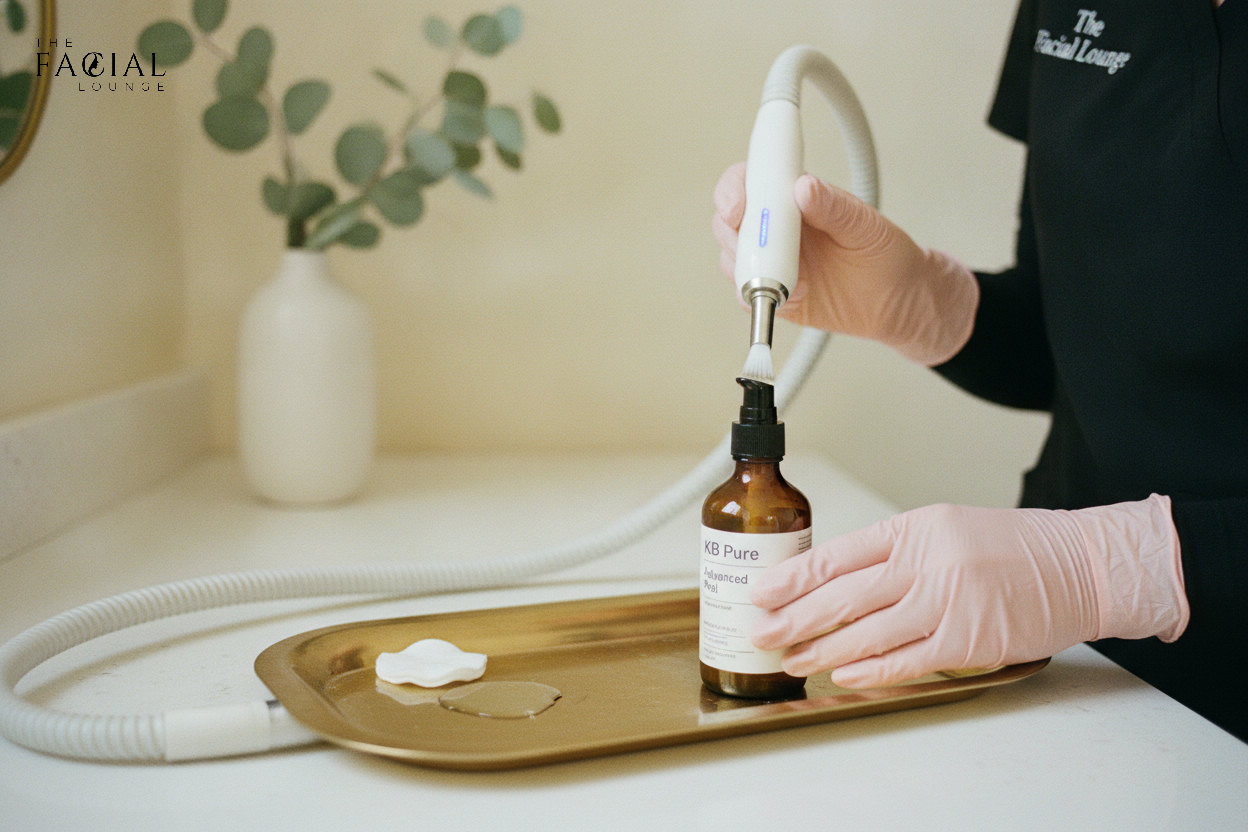
- KB Pure Advanced Peels work chemically on the outer layers of skin, which makes them a natural fit for surface-level dark spots and dull, uneven tone.
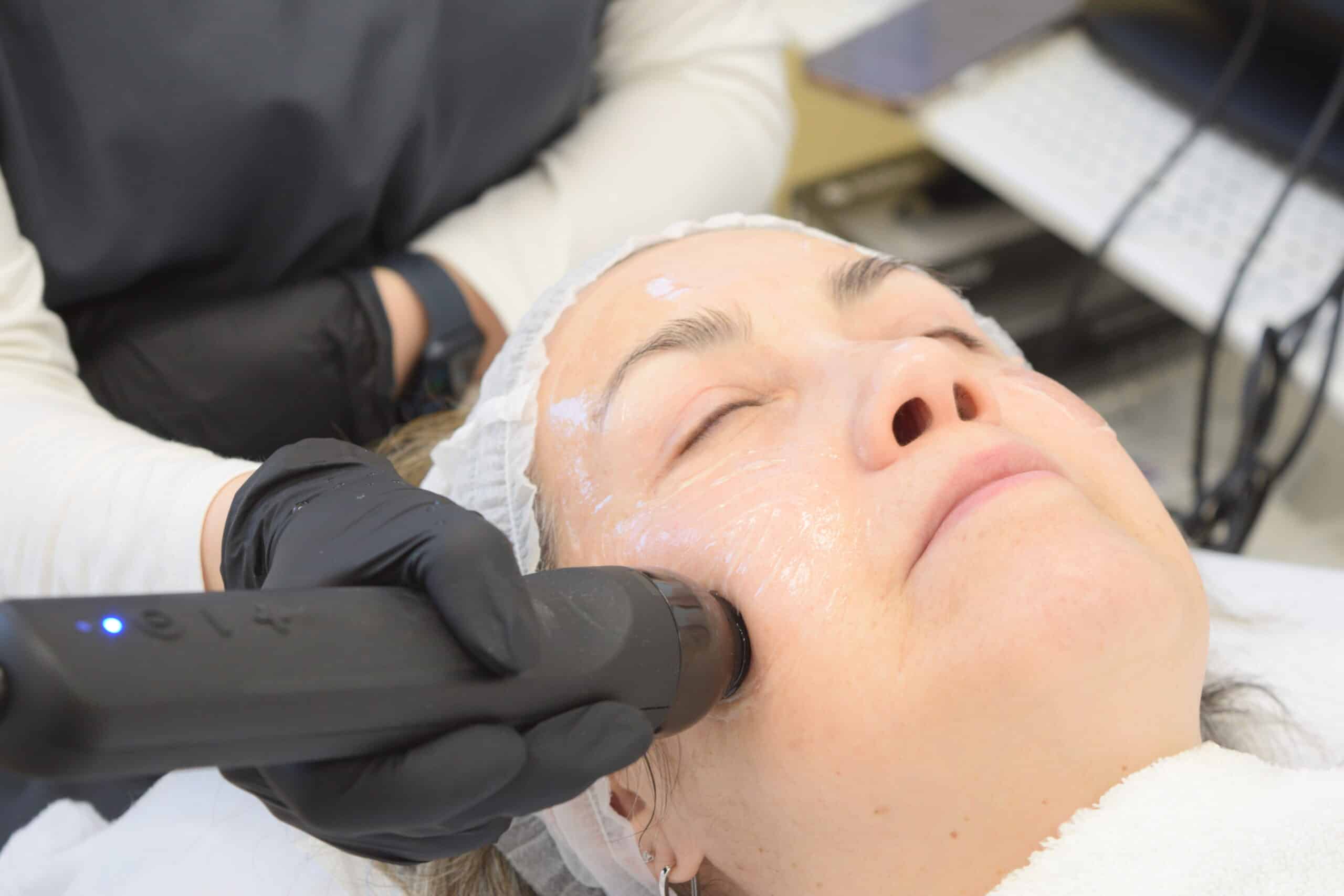
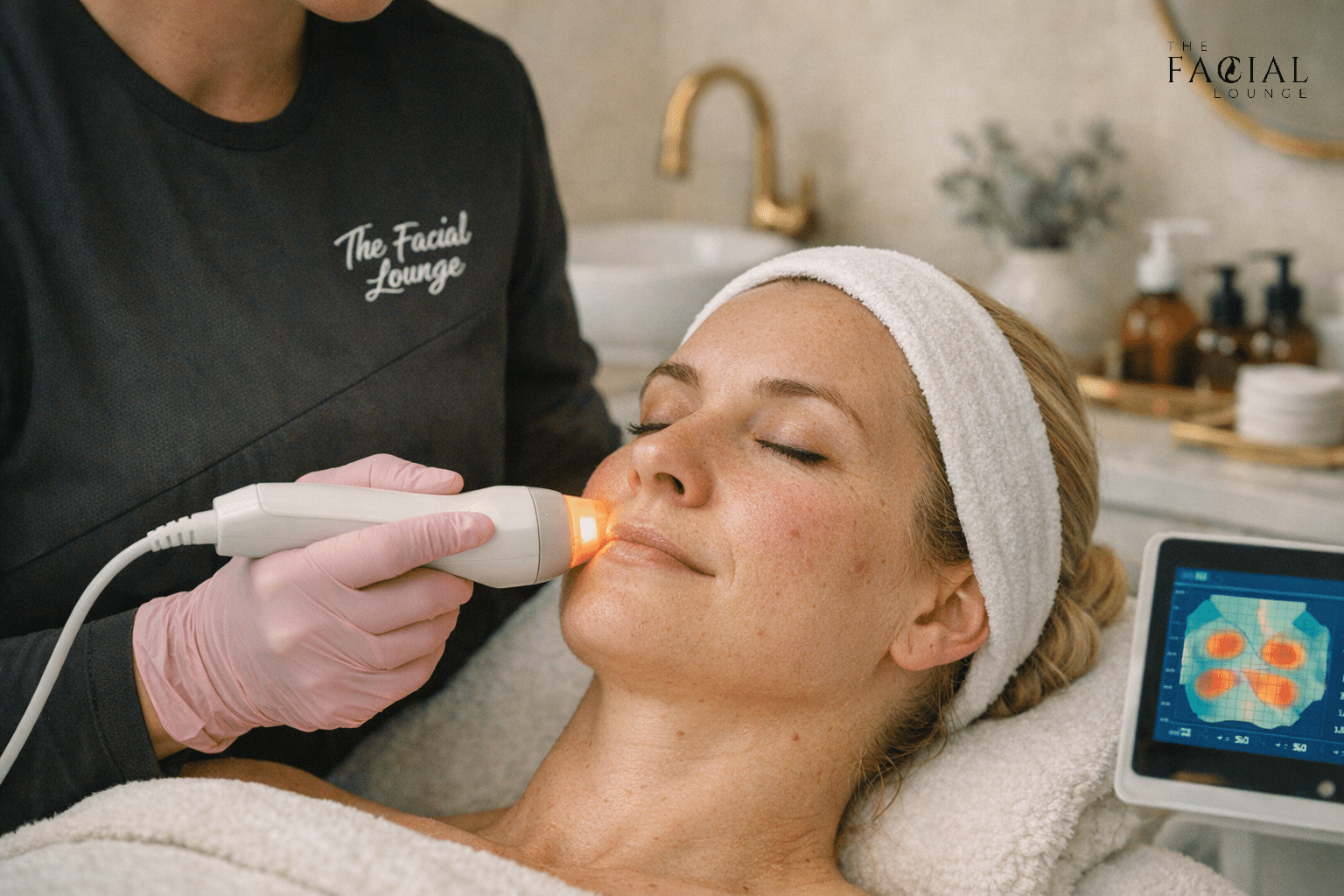
- TriFractional resurfacing uses fractional radiofrequency energy, which makes it better suited to pigment that comes bundled with rough texture or post-acne scarring.
- Post-inflammatory hyperpigmentation (new dark marks caused by irritation) is the main risk with any resurfacing treatment, and the risk is generally higher in deeper skin tones.
- 3D Skin Analysis is the foundation of every protocol at The Facial Lounge, so the peel-or-resurfacing decision is made from imaging, not guesswork.
- Daily SPF year-round is what keeps faded spots from coming back after either treatment, including through Canadian winters.
The Short Answer: Dark Spots and Uneven Tone Facial in Mississauga, Peel vs TriFractional
The dark spots and uneven tone facial peel vs TriFractional decision is really a question of depth and reactivity. If your concern is mostly flat brown spots, sun freckling or a blotchy, dull surface, a KB Pure Advanced Peel is usually the gentler, more direct route. If your spots sit inside textured skin, around old acne scars or across enlarged pores, TriFractional resurfacing addresses the texture that makes tone look uneven in the first place.
The part most people miss is the “without triggering new ones” half of the question. Any treatment that creates controlled inflammation can, in reactive skin, prompt the skin to make more pigment. That is why the choice starts with a 3D Skin Analysis rather than a menu.
The Full Answer
Choosing between a peel and fractional resurfacing for dark spots depends on several nuances. Each one below can tip the answer in a different direction, so read the ones that sound like your skin.
How does a KB Pure Advanced Peel fade dark spots?
A KB Pure Advanced Peel fades dark spots by loosening and lifting pigment-heavy cells from the outer layers of skin, so fresher, more even skin is revealed. Professional peels are formulated by strength and ingredient, which lets an esthetician match the peel to how resilient your skin is.
This is why peels tend to shine on epidermal pigment: sun spots, freckling, and the general greyish dullness that makes tone look patchy. You can read more about the treatment itself on the KB Pure Advanced Peels service page. Peels work gradually. Results usually build over a series, and the right number for you is something to confirm at a consultation.
How does TriFractional resurfacing treat uneven tone?
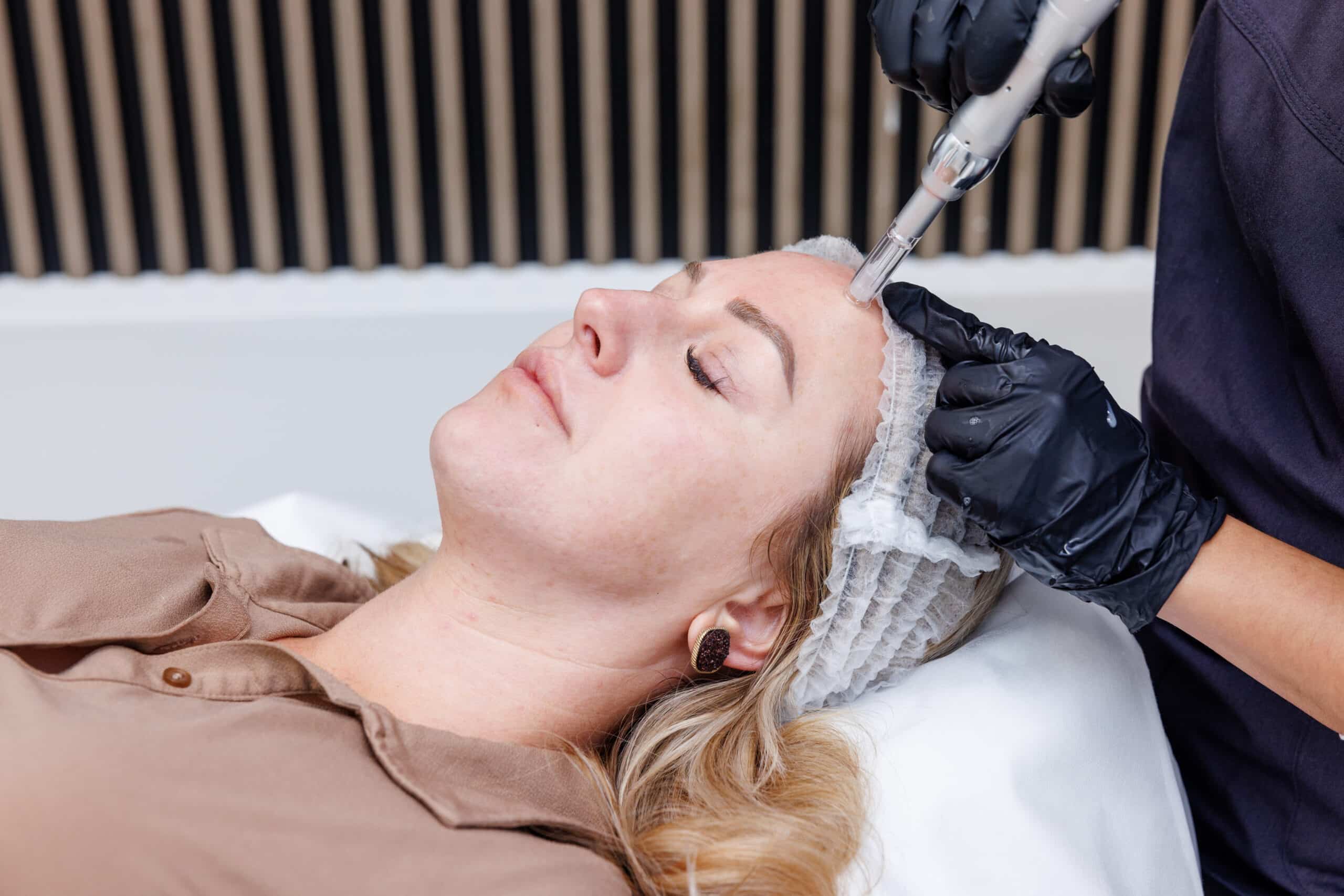
TriFractional resurfacing treats uneven tone by delivering fractional radiofrequency energy in tiny treatment zones, leaving untreated skin between them to support recovery. The goal is renewal of the skin’s surface and stimulation underneath, which is why it is usually chosen when texture and tone problems overlap.
Here is the useful distinction. Radiofrequency works through heat in tissue rather than by targeting pigment colour the way many light-based devices do. That makes fractional RF a common choice where texture is the bigger story. For a deeper look at how it handles scarring, see this guide to TriFractional for acne scarring and texture.
Why can treatments for dark spots cause new dark spots?
Treatments for dark spots can cause new ones through post-inflammatory hyperpigmentation, or PIH, where irritated skin responds by producing extra melanin. The American Academy of Dermatology notes that dark spots can follow inflammation from acne, injury or irritating products, and that deeper skin tones are more prone to it.
So the real question is not “which treatment is stronger.” It is “how much controlled inflammation can your skin take before it fights back with pigment?” A peel that is too strong and a resurfacing setting that is too aggressive can both cause rebound. Conservative, calibrated settings matter more than the device name.
Post-inflammatory hyperpigmentation is the risk shared by peels and TriFractional resurfacing. Deeper skin tones are generally more prone to it. Calibrating strength to the skin, not picking the “strongest” option, is what limits new spots.
What does 3D Skin Analysis add to the decision?
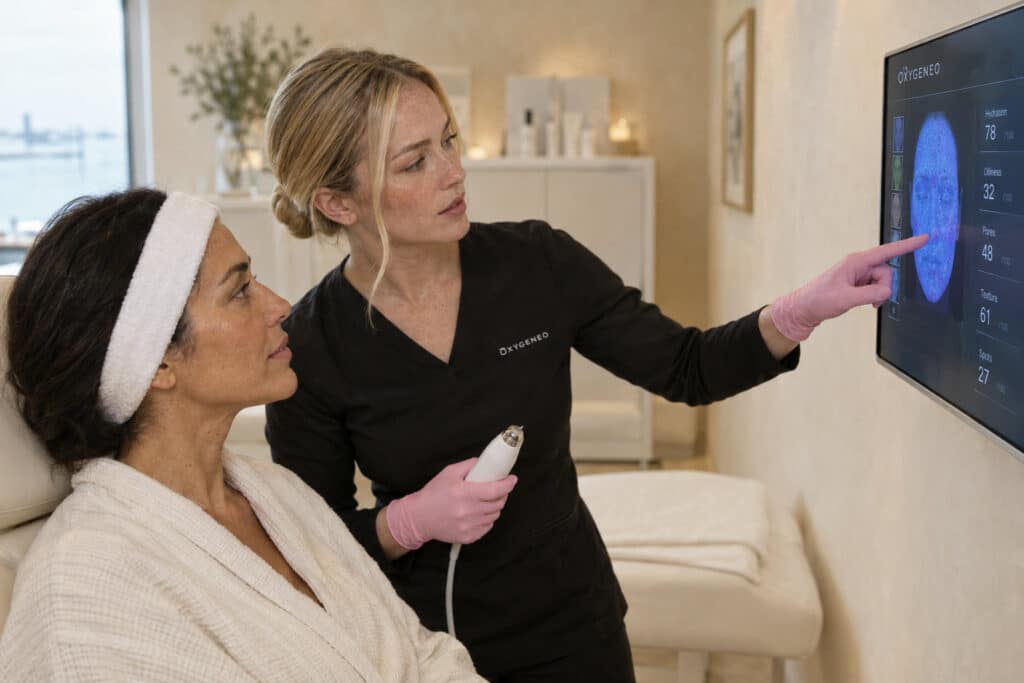
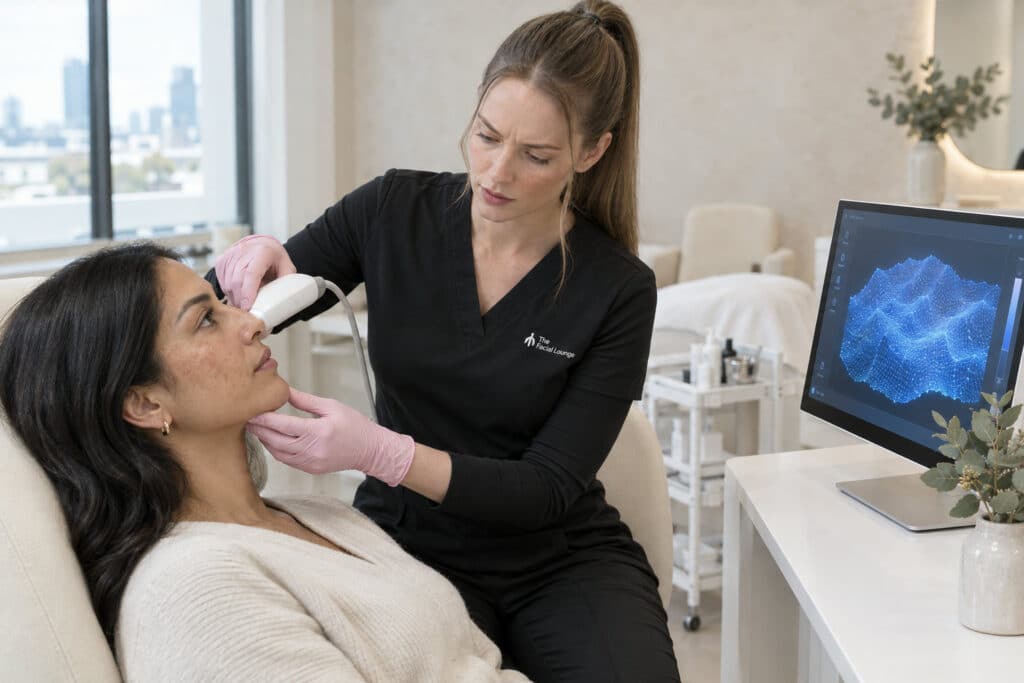
3D Skin Analysis adds a look beneath what the mirror shows, mapping pigment, texture and other surface concerns before any treatment is chosen. At The Facial Lounge it is the foundation of every protocol, so the peel-versus-resurfacing call is made from imaging rather than from what a friend tried.
If you are someone with post-acne marks along the jaw and visibly textured cheeks, the analysis helps separate which marks are pigment and which are texture casting shadows. Those two problems want different tools. Getting that distinction right is often the difference between steady fading and frustration.
Is melasma treated the same way as sun spots?
Melasma is not treated the same way as sun spots, because it is driven by hormones, heat and light and tends to flare with irritation. Aggressive resurfacing or strong peels can sometimes make melasma look worse, which is why it calls for a particularly cautious plan.
If you suspect melasma, confirm the diagnosis with your physician or a dermatologist first. This guide covers what a boutique esthetician can address with melasma and where medical care takes over.
What happens at home after either treatment?
Home care after a peel or TriFractional session decides whether results hold. A common mistake is skipping SPF year-round: winter UV still reaches your skin, and newly renewed skin is especially vulnerable to fresh pigment. Health Canada recommends broad-spectrum sunscreen with SPF 30 or higher for sun protection.
Another common mistake is mixing too many active ingredients at once. Layering retinoids, acids and brightening serums right after resurfacing can irritate skin, and irritation is exactly what triggers rebound pigment. Keep the routine simple until your esthetician says otherwise.
A 3D Skin Analysis maps pigment and texture so the treatment matches the actual problem.
Surface pigment leans toward a KB Pure peel; pigment tangled with texture leans toward TriFractional.
Reactive or deeper skin tones start gentler, because inflammation is the trigger for new spots.
Daily broad-spectrum SPF and a pared-back routine keep faded pigment from returning.
How do KB Pure peels and TriFractional compare side by side?
KB Pure Advanced Peels and TriFractional resurfacing each win in a specific situation. Neither is universally better for uneven tone, and the table below matches each to the skin it suits.
| Factor | KB Pure Advanced Peel | TriFractional Resurfacing |
|---|---|---|
| How it works | Chemical exfoliation of outer layers | Fractional radiofrequency energy in micro-zones |
| Best for | Surface sun spots, freckling, dullness | Pigment with texture, scarring or large pores |
| Wins when | Skin is reactive and tone is the main concern | Texture is making tone look uneven |
| Rebound pigment risk | Present if strength is too high for the skin | Present if settings are too aggressive for the skin |
| Recovery | Varies by peel strength; confirm at consultation | Varies by settings; confirm at consultation |
| Starting point | 3D Skin Analysis for both |
Pricing for peels and TriFractional sessions depends on your protocol, so confirm it at your consultation. For how a plan compares with single visits, see TriFractional cost per visit vs a personalized plan.
When the Answer Is Different
The peel-for-surface, TriFractional-for-texture rule has real exceptions. These situations change the answer, sometimes completely.
Are you breaking out right now?
Active breakouts change the plan, because inflamed blemishes keep producing new marks while you treat the old ones. Calming the acne usually comes first. This guide explains treating hyperpigmentation and active breakouts together.
Are you pregnant, nursing or on medication?
Pregnancy, nursing, certain medications and some medical conditions can affect whether a peel or resurfacing treatment is appropriate. Pregnancy can also trigger melasma. Speak with the clinic and your physician before booking either treatment.
Is a big summer or vacation coming up?
Heavy sun exposure right after resurfacing increases the chance of new pigment. Many people find fall and winter the easier season for spot work, since afternoons by the lake and long patio summers are behind them. Timing matters as much as technique.
Our view
In our opinion, people overweight the treatment name and underweight their own skin’s reactivity. The dark spots and uneven tone facial peel vs TriFractional debate online often frames one as more advanced. That framing misses the point. The best treatment is the one your skin tolerates without fighting back.
We also think patience is underrated. Expecting overnight results from advanced treatments leads people to push strength too fast, and that is how rebound pigment starts. Steady, calibrated progress plus daily SPF beats one aggressive session.
FAQ
Can I combine a peel and TriFractional for dark spots?
Combining a peel and TriFractional is sometimes part of a staged protocol, but rarely in the same session. Whether and how to sequence them depends on your 3D Skin Analysis and how your skin recovers, so it is decided at consultation.
Is TriFractional safe for darker skin tones?
TriFractional resurfacing uses radiofrequency rather than pigment-targeting light, which is one reason it is considered for a range of skin tones. Deeper skin tones are still more prone to post-inflammatory hyperpigmentation, so conservative settings and a 3D Skin Analysis come first.
How soon will I see dark spots fade?
Dark spot fading is gradual with both KB Pure peels and TriFractional resurfacing, and it varies by person and pigment depth. Your esthetician can outline a realistic timeline after your 3D Skin Analysis rather than promising a fixed date.
Do I need to stop my skincare before a peel?
Pausing certain actives before a KB Pure Advanced Peel, such as retinoids or exfoliating acids, is commonly advised to reduce irritation. Bring your full product list to your consultation so the clinic can tell you what to pause and for how long.
Sources
- Causes of dark spots, including inflammation, and higher risk in deeper skin tones – American Academy of Dermatology
- Sunscreen and sun safety guidance – Health Canada
- KB Pure Advanced Peels treatment details – The Facial Lounge
Have a similar question about your own spots? Every plan starts with a 3D Skin Analysis, so you leave knowing whether a peel, resurfacing or something gentler fits your skin. Browse all treatments or book below.
The Facial Lounge
The Facial Lounge is a premium aesthetic skincare boutique at 100 Queen St., Unit 202, Mississauga, ON.
Book a 3D Skin Analysis: Peel or TriFractional for Your Dark Spots?
- Oxygeneo vs AQUAPURE vs TriFractional: Which Facial in Mississauga Actually Delivers After One Session
- A Client Asked: “Should My Anti-Aging Facial in Mississauga Target Uneven Tone or Fine Lines First?” How to Set Treatment Priorities
- VoluDerm RF Microneedling vs TriFractional Resurfacing: Choosing the Right Corrective Facial in Mississauga for Textured Skin
- A Client Asked: “I Have Both Hyperpigmentation and Active Breakouts, Which Facial in Mississauga Addresses Both Without Making Either Worse?”
- Korean Glass Facial vs Imperial Lift & Tone: Which Signature Facial in Mississauga Suits Your Skin Goal


Related Posts