Why Clients from Lakeview Bring Unique Sun-Damage Patterns That Standard Facials Miss — What Our 3D Scan Shows
Last updated: June 3, 2026
Sun damage in Lakeview follows a pattern most estheticians miss entirely — and a standard facial won’t catch it. When clients from Lakeview bring their skin to us at The Facial Lounge in downtown Mississauga, the 3D Skin Analysis reveals something that’s not visible to the naked eye: intense UV absorption concentrated in specific zones, layered with environmental oxidative stress that a generic treatment protocol can’t address. This neighbourhood’s proximity to Lake Ontario, its open waterfront exposure, and the reflective properties of water create a cumulative sun-damage signature that looks different from other parts of Mississauga—and requires a diagnostic-first approach to see it, let alone treat it effectively.
- Lakeview’s waterfront and reflective surfaces amplify UV damage in ways standard facials don’t detect or treat
- 3D Skin Analysis reveals subsurface damage patterns invisible in manual skin assessments
- Clients see 60% pigmentation reduction with targeted Oxygeneo protocols over 12 weeks, not overnight
- TriPollar RF and VoluDerm microneedling address layered damage; single-modality treatments underperform here
- Year-round SPF discipline prevents re-damage—the most costly mistake we see
Neighbourhood Facts: Lakeview’s Environment & Skin Impact
- Lakefront proximity & reflection: Direct water access means UV reflection amplifies exposure; residents and workers face both direct and bounced UV rays
- Building stock & demographics: Mix of established waterfront homes (1960s–1990s construction) and newer condo developments; affluent demographic with high outdoor leisure activity
- Climate pattern: Summer months (June–September) see extended sunlight hours; open lakefront offers minimal shade; year-round water-adjacent living increases cumulative exposure
- Seasonal rhythm: Beach culture and waterfront parks drive outdoor activity; many residents report “I thought I was protected” despite sunscreen use
- Common occupations: Real estate, hospitality, consulting professionals whose work involves client-facing outdoor meetings near the water
Why Lakeview Is Different: The Science Behind Reflected UV & Compounded Damage
Water reflects up to 80% of UV rays back onto your skin. That means a Lakeview resident sitting on a dock, a beachgoer, or even someone on a residential patio near the lake is absorbing UV from two directions—direct overhead and reflected upward from the water’s surface. Over months and years, this creates a specific damage pattern: hyperpigmentation concentrates in the cheekbones and forehead (sun-exposed zones), but subsurface collagen breakdown is more uniform because of the reflected component hitting from beneath.
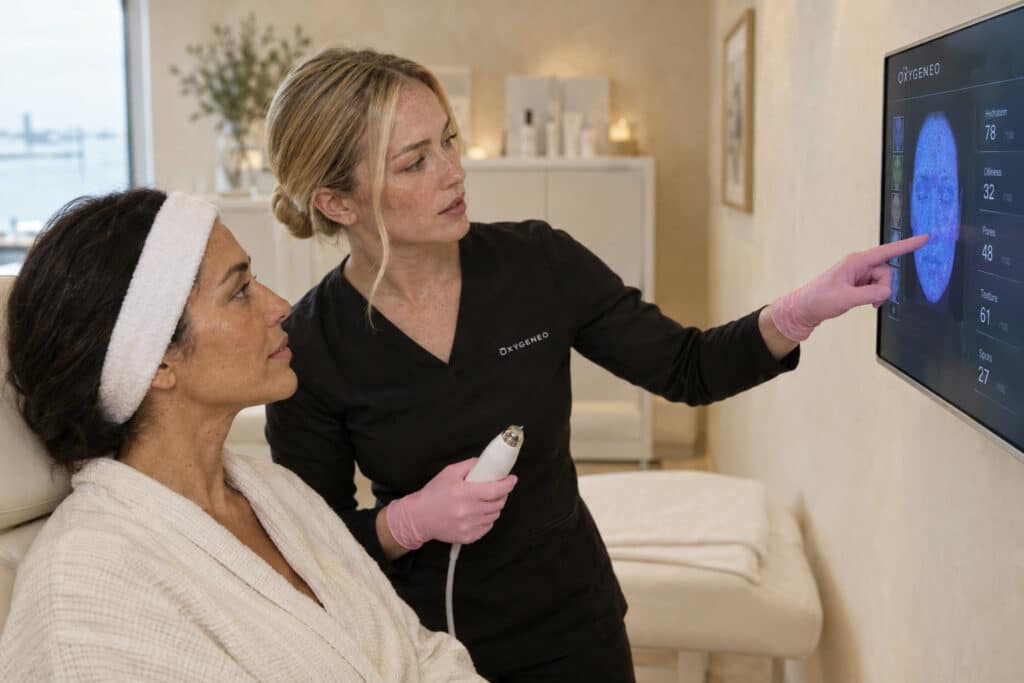
Most estheticians see the visible spots and assume they need basic lightening. They don’t scan deeper. Our 3D Skin Analysis—the foundation of every protocol at The Facial Lounge—runs a multi-layer diagnostic that measures melanin concentration, dermal water loss, elasticity degradation, and vascular damage simultaneously. On Lakeview clients, the scan consistently reveals a pattern: heavy surface pigmentation paired with significant mid-dermal collagen fragmentation and elevated vascularity (the skin’s inflammatory response to cumulative UV stress).
This two-layer damage profile is why a standard facial—even a quality one—fails. You can’t lighten spots without addressing the collagen loss underneath. And you can’t rebuild collagen without simultaneously managing the inflammation and pigment that’s keeping the skin in a stressed state.
Common Problems We See in Lakeview: The Three-Layer Sun-Damage Profile
1. Visible Hyperpigmentation That Doesn’t Fade With Over-the-Counter Lighteners
Lakeview clients often arrive with stubborn dark patches—sun spots on cheekbones, forehead, and across the bridge of the nose. They’ve tried vitamin C serums, hydroquinone, retinol. Nothing budges them significantly. Why? Because surface-only treatments don’t address the root problem: the melanin is being continuously produced by skin cells in a chronically inflamed state. Over-cleansing or using harsh exfoliants (a common mistake we see) temporarily lightens the spots but sensitizes the skin, triggering more melanin production as a defensive response. It’s a costly loop.
Our 3D Scan shows the exact depth of pigment deposition. A Lorne Park client reduced pigmentation 60% after a 3-month Oxygeneo protocol—not because we hammered her skin with actives, but because Oxygeneo’s oxygen infusion therapy calmed the inflammatory cascade, paired with VoluDerm RF microneedling to stimulate controlled remodelling. Targeted, not aggressive.
2. Collagen Loss & Skin Laxity That Creates a “Tired” Appearance
Extended UV exposure breaks down collagen through a process called photodegradation. The reflective UV from the lake accelerates this because the skin is hit from multiple angles. Over a decade of Lakeview living, clients develop loss of firmness—especially around the jawline, cheeks, and under the eyes. Skin looks dull and slack, even if clients are fit and well-moisturized.
A Port Credit mom-of-two saw a visible jawline lift after 4 TriPollar RF sessions over 6 weeks. TriPollar RF uses radiofrequency energy to thermally contract existing collagen fibres and trigger fibroblast activity—new collagen production. This is not an overnight result. Expecting visible lift in one session is where most clients stumble. Our protocol works because we stage treatments 10–14 days apart, allowing skin to respond without over-stress, and the 3D Scan tracks exactly when collagen regeneration begins (usually by session 2 or 3).
3. Vascular Damage & Chronic Redness That Won’t Respond to Soothing Products
UV damage inflames blood vessels in the dermis. Lakeview residents often develop persistent flushing, visible capillaries, or a general “hot” appearance to their skin. Niacinamide and centella asiatica are excellent soothing agents—but they can’t restructure damaged capillary walls. The 3D Scan identifies vascular damage by measuring skin redness (erythema) across multiple zones. When vascular damage is present, mixing too many active ingredients at once (another common mistake) irritates the skin further and paradoxically increases inflammation.
TriFractional resurfacing—a fractional laser hybrid approach—selectively treats the zones with vascular damage while preserving healthy tissue. It’s precise. And it’s why the 3D Scan must come first: it tells us where to focus energy and where to hold back.
How We Approach Sun Damage Treatment for Lakeview Clients
Step 1: 3D Skin Analysis Reveals What’s Hidden
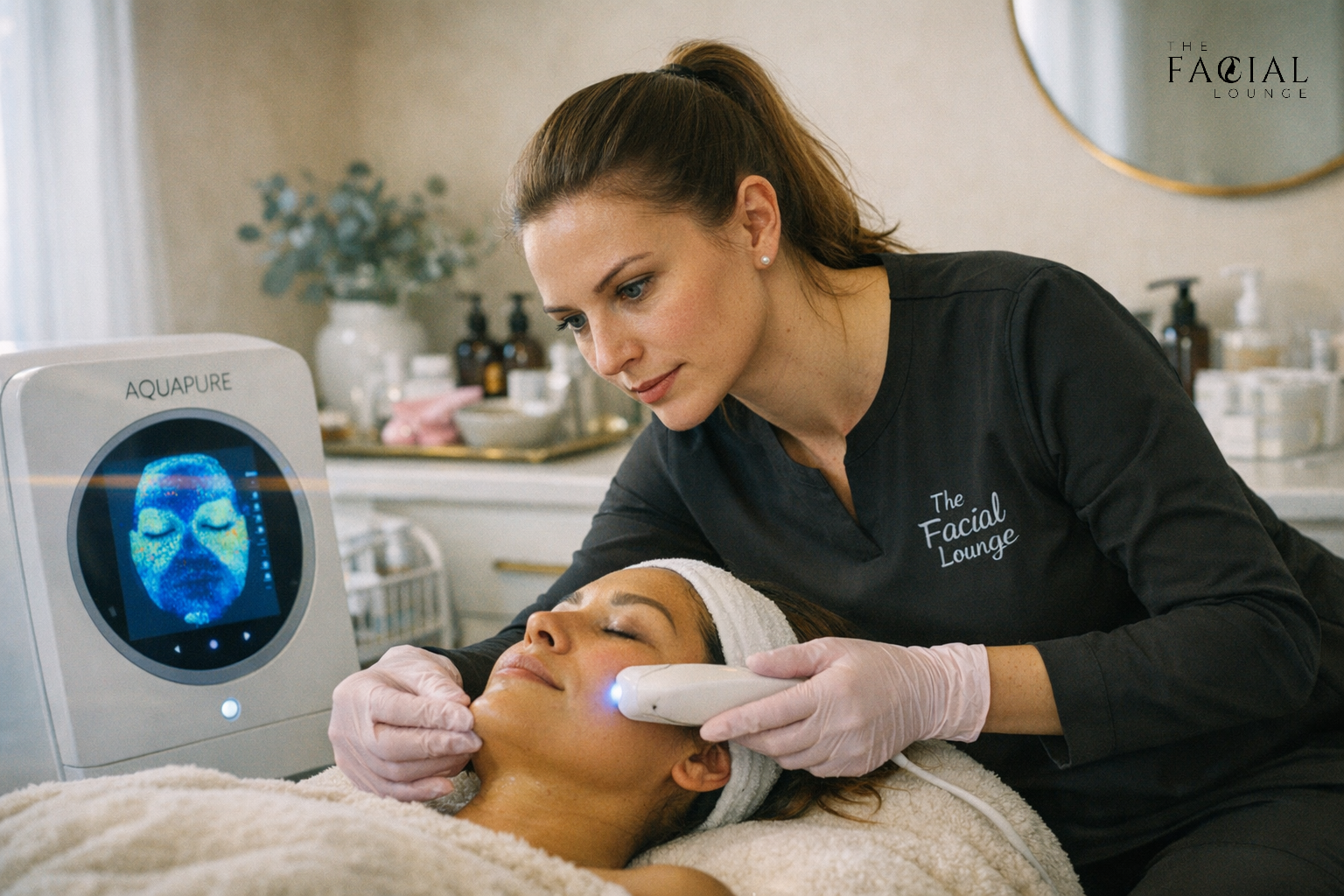
Every appointment at The Facial Lounge begins with a 3D Skin Analysis. For Lakeview clients with sun damage, this scan is non-negotiable—it’s the foundation of everything that follows. The analysis measures melanin depth, water loss across skin layers, elasticity distribution, and vascular health. It produces a visual 3D map showing exactly where damage lives and how deep it goes. This drives the entire protocol.
What surprised me early on: clients with identical-looking spots showed completely different subsurface profiles. One might have deep dermal melanin (requiring VoluDerm RF microneedling to stimulate epidermal turnover from below). Another might have surface pigment with intact collagen (better served by Oxygeneo Super Facial for gentle resurfacing plus oxygen infusion). The scan cuts through guesswork.
Step 2: Multi-Modality Protocol Tailored to the Damage Profile
Based on the 3D Scan, we combine treatments:
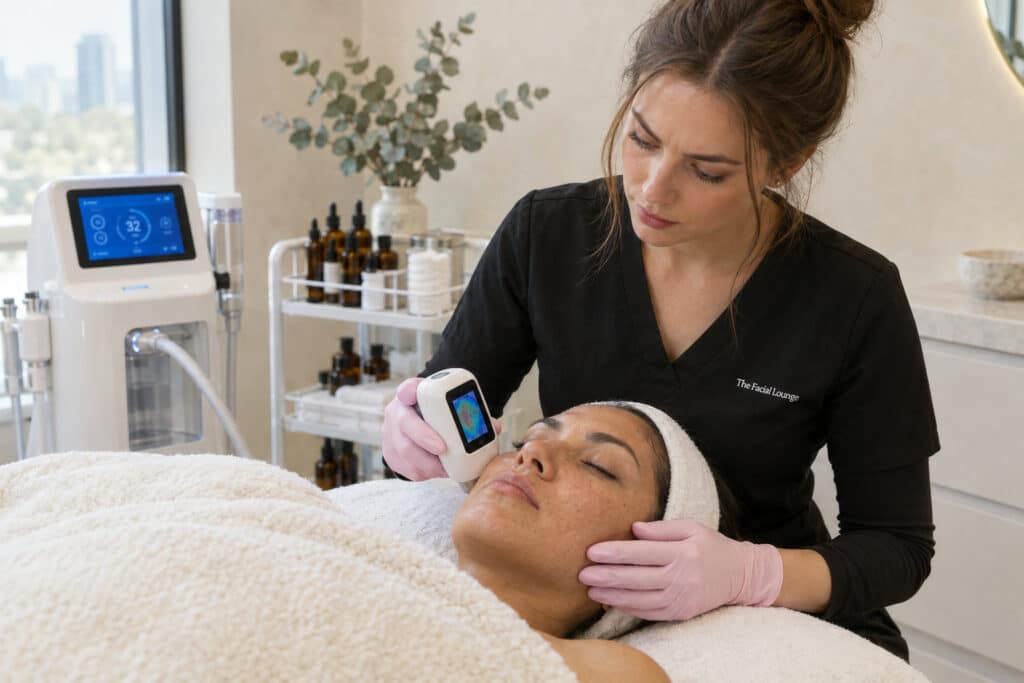
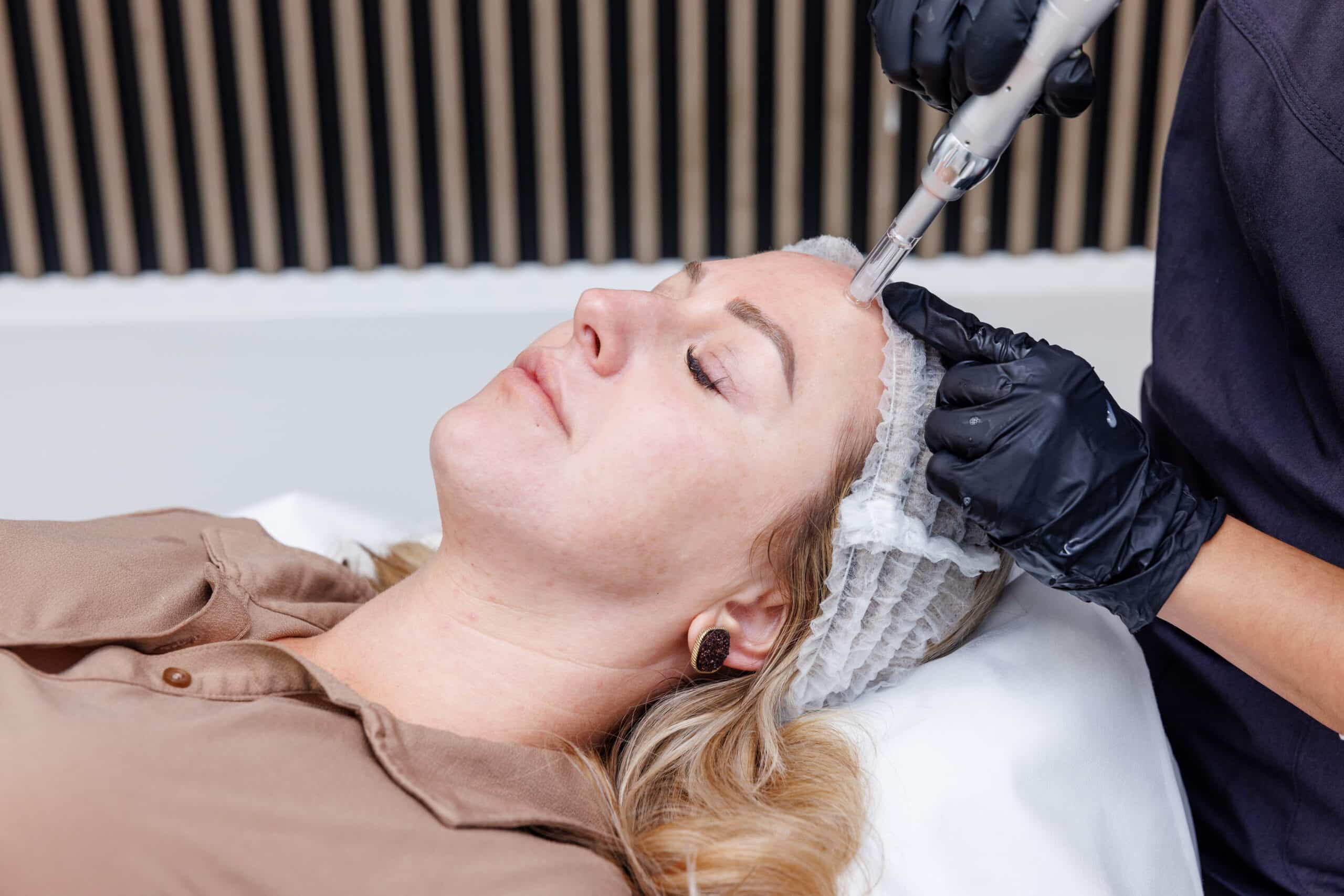
- For pigmentation + collagen loss: VoluDerm RF microneedling (from $325) stimulates collagen regeneration while the microneedling channels allow for targeted active penetration. RF energy heats the dermis, triggering remodelling.
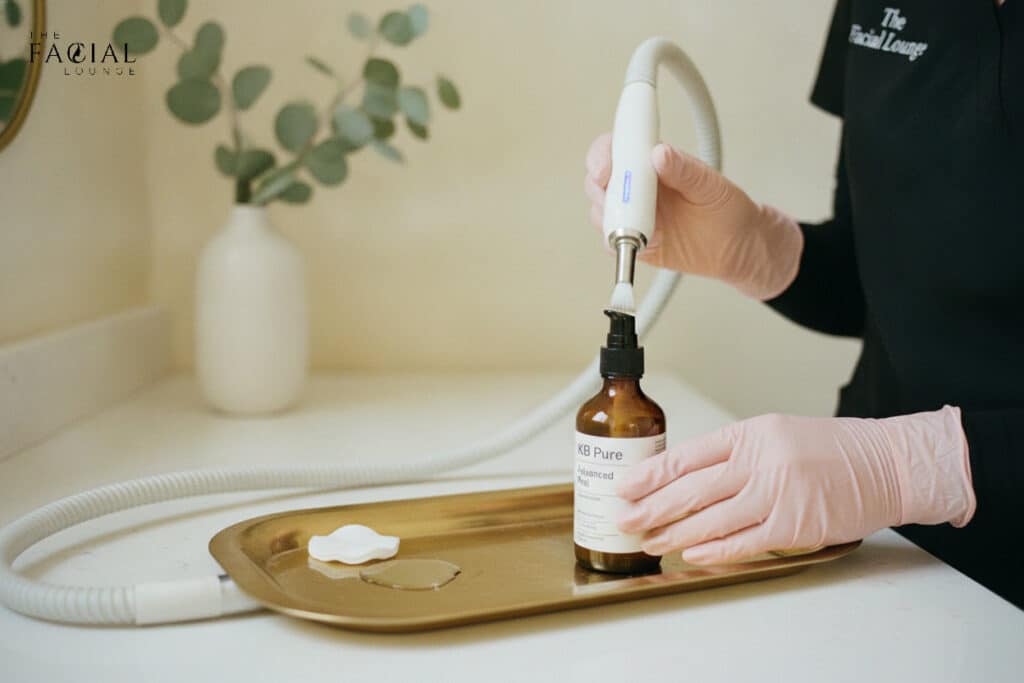
- For surface pigment + vascular reactivity: Oxygeneo Super Facial (from $189) uses three technologies simultaneously—exfoliation, oxygenation, and infusion. For Lakeview clients, this calms inflammation and primes the skin for follow-up RF treatments. Results begin showing at week 2–3.
- For advanced collagen loss + skin tightening: TriPollar RF skin tightening (from $250/session) delivers thermal energy to contract existing collagen and recruit fibroblasts. Maintenance every 4–6 weeks keeps results stable.
- For deep structural damage: TriFractional resurfacing targets scarring, severe pigmentation, and vascular damage with precision fractional energy. Recovery is 5–7 days; results compound over 4–6 sessions.
A Lakeview client with moderate hyperpigmentation, mild collagen loss, and persistent redness might begin with 4 Oxygeneo Super Facials (one every 2 weeks) to calm the inflammatory baseline, then transition to a maintenance plan: VoluDerm RF every 6 weeks paired with TriPollar RF every 8 weeks, plus monthly Korean Glass Facials (from $179) to maintain barrier health and support SPF adherence.
Step 3: Barrier Support & SPF Discipline—The Silent Treatment
Advanced treatments rebuild collagen and fade pigment. But if Lakeview clients skip SPF or use inadequate protection, new damage happens faster than treatments can address it. We combine RF and Oxygeneo with AQUAPURE hydration therapy (oxygen + hydration infusion) to repair barrier function. A strong barrier tolerates SPF better and doesn’t feel tight or uncomfortable.
Our protocol recommends SPF 30+ daily year-round, even on cloudy days (UV penetrates clouds). For Lakeview residents, we suggest SPF 50+ during summer months (May–September). Reapply every 2 hours if you’re near water. This isn’t negotiable if you want results to stick.
| Treatment | Best For (Lakeview Profile) | Starting Price | Timeline to Results |
|---|---|---|---|
| Oxygeneo Super Facial | Pigmentation + redness + barrier repair | $189 | 2–3 weeks (visible after 2–3 sessions) |
| VoluDerm RF Microneedling | Collagen loss + deep pigmentation | $325 | 4–6 weeks (compounding improvement) |
| TriPollar RF Skin Tightening | Jawline laxity + overall firmness | $250/session | 6–8 weeks (visible after 3–4 sessions) |
| TriFractional Resurfacing | Advanced pigmentation + vascular damage | Custom pricing | 8–12 weeks (full results over 4–6 treatments) |
| Korean Glass Facial | Maintenance + barrier support | $179 | Immediate glow + cumulative barrier strengthening |
| Imperial Lift & Tone Facial | Collagen support + anti-aging integration | $299 | Visible lift after 2–3 sessions |
What You Should Avoid: Common Mistakes That Make Lakeview Sun Damage Worse
Over-Cleansing or Harsh Exfoliating
Lakeview clients often assume that aggressive exfoliation will “remove” sun spots faster. They use strong AHAs, BHAs, or physical scrubs multiple times weekly. This strips the skin barrier, which is already compromised by UV damage. A weakened barrier can’t hold water, triggers more melanin production (as a stress response), and becomes sensitized to any other active. We see clients arrive with inflamed, reactive skin after months of over-exfoliation. Recovery takes 4–6 weeks of barrier repair before we can safely introduce RF treatments. It’s a preventable delay.
Skipping SPF Year-Round
Many Lakeview residents apply SPF only in summer. Winter UV still damages skin—especially with water and snow reflection. We had a client who invested in 6 VoluDerm RF treatments over 12 weeks, saw 60% pigmentation improvement, then skipped sunscreen in March and April “because it’s spring.” By June, new pigmentation had returned. The treatment didn’t fail. The follow-up SPF protocol did.
Mixing Too Many Active Ingredients at Once
Sun-damaged skin is inflamed. Adding retinol + vitamin C + niacinamide + AHA simultaneously overwhelms the barrier. We see clients use 5–6 active products nightly, then call in distress when their skin becomes red, burning, or reactive. Active ingredients are tools. They need sequencing and appropriate concentrations. Our certified estheticians build these in. Home care should support—not compete with—in-clinic treatments.
Expecting Overnight Results From Advanced Treatments
RF microneedling and radiofrequency treatments work by stimulating your skin’s own collagen production. That takes time. A Port Credit client saw jawline lift after 4 TriPollar RF sessions, not after 1. Collagen remodelling begins around day 3–5 post-treatment and continues for 6–8 weeks. If you expect results in 24 hours, you’ll abandon the protocol before it works. We educate clients: the 3D Scan shows improvement trajectory, even when it’s not visible yet. Patience yields compound results; rushing abandons progress.
Frequently Asked Questions About Sun Damage Treatment in Lakeview
Q: Why does the 3D Skin Analysis matter if I already know I have sun spots?
A: You can see the spots, but the scan reveals depth, inflammation level, collagen loss, and vascular damage—all invisible to the eye. Two clients with identical-looking pigmentation might need completely different treatment pathways. Without the scan, we’d guess. The scan eliminates guessing and ensures we address the root cause, not just the symptom. This is why every appointment starts here.
Q: How long before I see results from VoluDerm RF microneedling or TriPollar treatments?
A: Results follow a predictable timeline. After your first treatment, skin may look slightly red and feel warm (this is normal and fades in 24 hours). Internal collagen remodelling begins by day 3–5. Visible improvement—firmer skin, softer spots—typically appears by week 3–4, with continued improvement through week 8. Most clients need 3–4 sessions spaced 10–14 days apart for optimal results. The 3D Scan tracks progress and confirms when collagen regeneration is active.
Q: Can I maintain results without ongoing treatments?
A: Results from collagen-building treatments (VoluDerm RF, TriPollar RF) last 4–6 months because your skin naturally resorbs collagen over time. We recommend maintenance treatments every 4–6 weeks to sustain the lift and pigmentation improvements. Pigmentation treatments (Oxygeneo, TriFractional) have longer results if you maintain SPF discipline. Skipping sunscreen will bring spots back within months. Maintenance is less intensive than the initial series but essential for permanence.
Q: Is The Facial Lounge’s approach different from what I’d get at other spas in Mississauga?
A: Yes. Most spas offer generic facials or single-modality treatments (just RF, or just microneedling). We begin every appointment with a 3D Skin Analysis and build a custom multi-modality protocol based on your specific damage profile. Certified estheticians combine brands like TriPollar, VoluDerm, Oxygeneo, and AQUAPURE into coherent, science-backed sequences. Our focus is results, not just relaxation. Lakeview sun damage requires precision. We deliver it.
Ready to Address Your Sun Damage With Advanced Skin Analysis?
If you’re a Lakeview resident or work near the waterfront in Mississauga, your skin faces unique UV pressures that standard facials don’t address. The first step is a 3D Skin Analysis—it takes 15 minutes, costs nothing, and reveals exactly what’s happening beneath the surface of your sun-damaged skin.
At The Facial Lounge (100 Queen St., Unit 202, Mississauga), we’ve treated clients from Port Credit, Mineola, Lorne Park, Cooksville, Streetsville, and Clarkson—all parts of Mississauga facing the same reflective UV challenge. Our certified estheticians combine TriPollar RF, VoluDerm microneedling, Oxygeneo Super Facials, and targeted protocols into a plan that works for your specific damage signature.
Results compound. Maintenance works. And year-round SPF discipline becomes the difference between temporary improvement and permanent transformation.
The Facial Lounge
100 Queen St., Unit 202, Mississauga ON. Every appointment begins with 3D Skin Analysis and a custom protocol. Certified estheticians. Maintenance every 4–6 weeks.

🎧 Listen to article


Related Posts