A Client Asked: “Will VoluDerm RF Microneedling Actually Hurt If I Have Sensitive Skin?” — The Full Answer
Last updated: May 29, 2026
VoluDerm RF microneedling does cause some sensation—a warm prickling or gentle vibration—but it shouldn’t cause sharp pain, especially when your esthetician customizes the protocol based on a 3D Skin Analysis first. If you have sensitive skin, the discomfort is usually 2 or 3 out of 10, manageable without numbing cream for most people.
- VoluDerm RF microneedling creates controlled radiofrequency heat + micro-injuries to stimulate collagen; it’s not painless, but well-tolerated on sensitive skin.
- A 3D Skin Analysis identifies inflammation, barrier function, and rosacea triggers — allowing your esthetician to dial down needle depth and RF intensity for you.
- Post-treatment sensitivity (redness, mild stinging) usually peaks 4–6 hours after and settles within 24 hours with proper care.
- Over-cleansing and skipping SPF year-round are the hidden culprits that turn minor post-treatment sensitivity into real problems.
The Short Answer: Does VoluDerm RF microneedling hurt on sensitive skin?
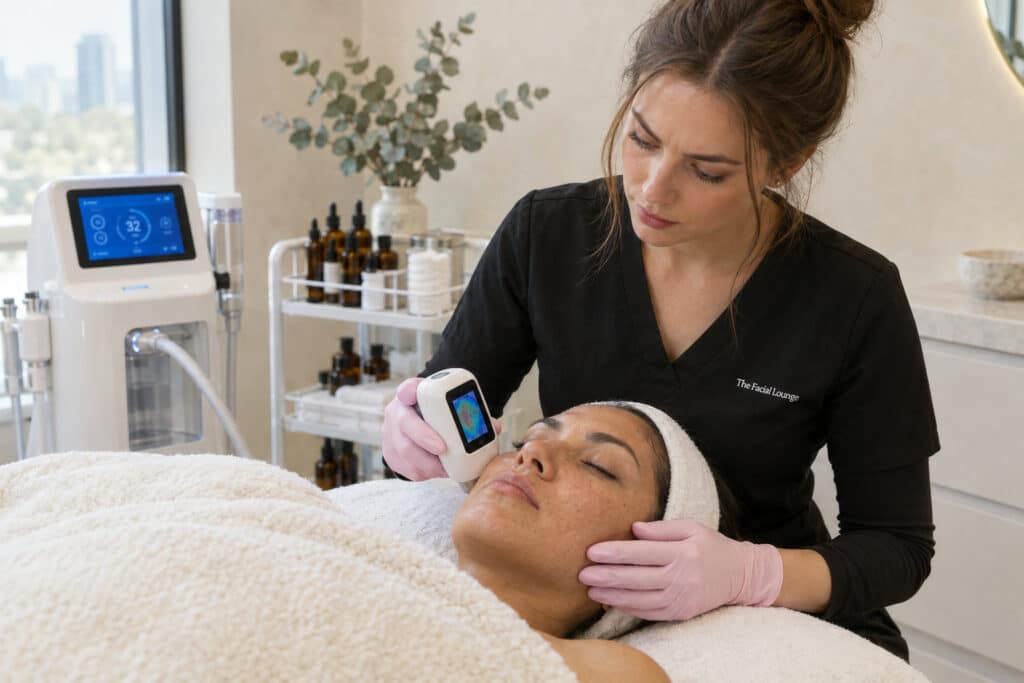
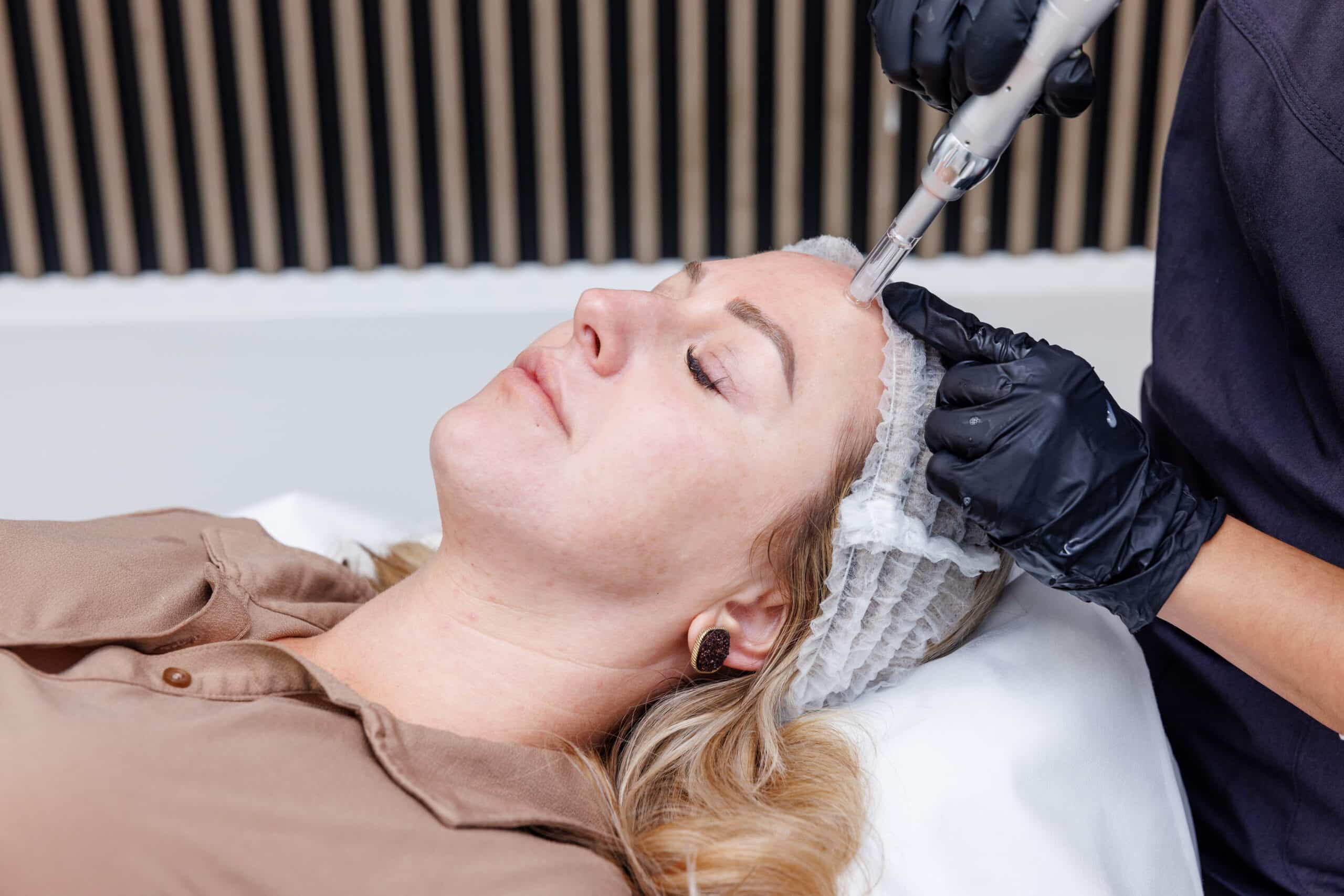
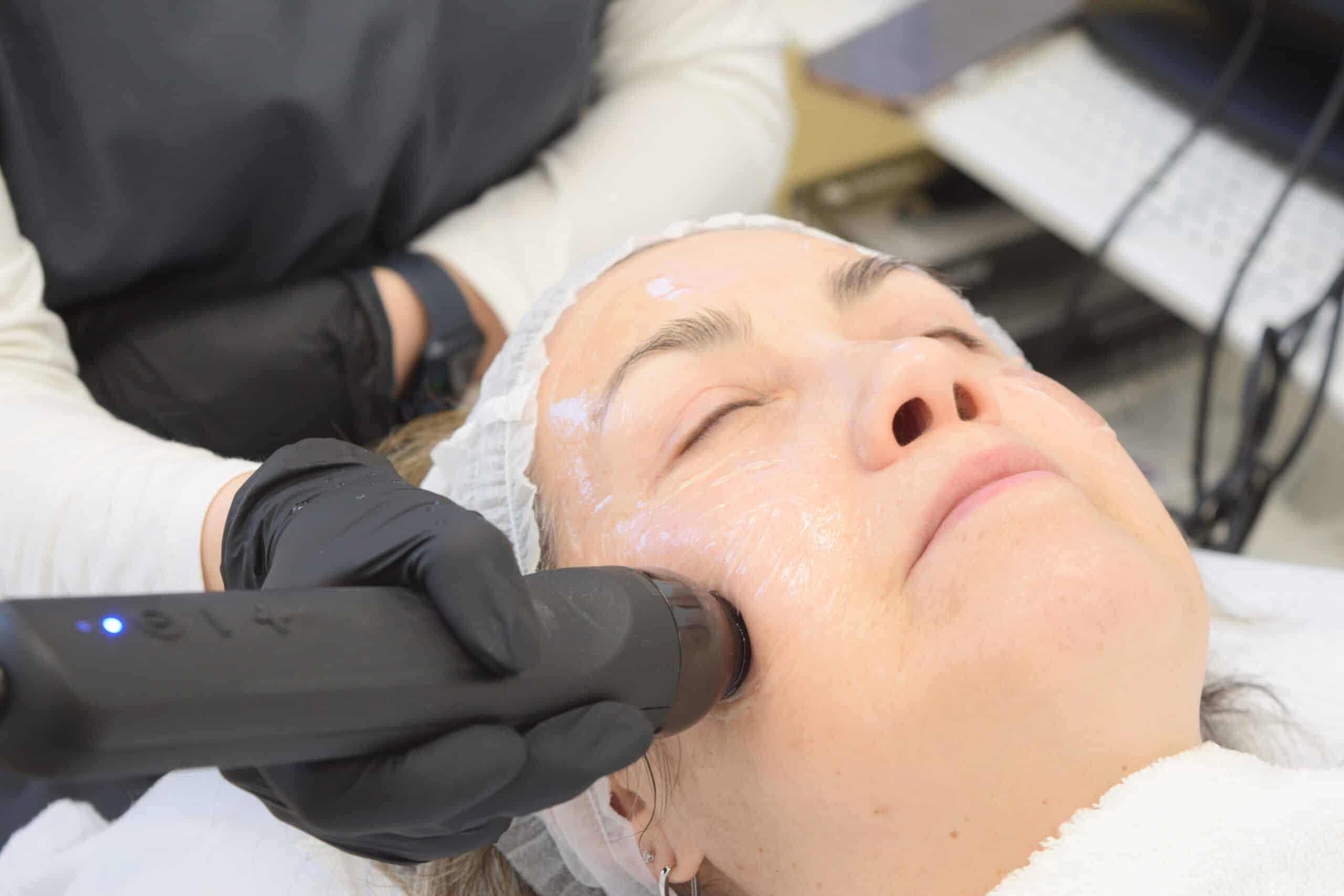
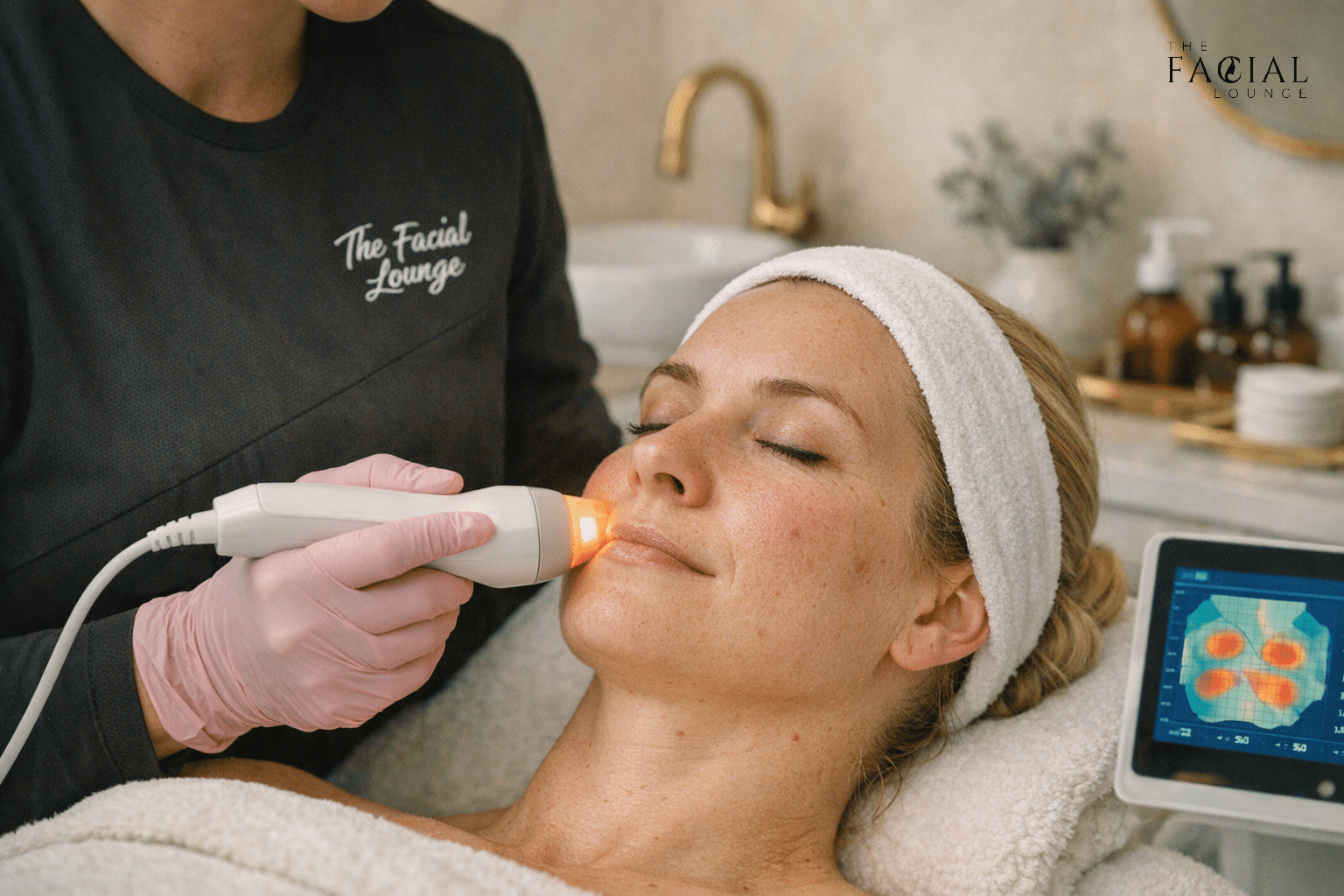
No sharp pain. You’ll feel warmth, vibration, and a light pricking sensation during the 30–45 minute treatment—that’s the radiofrequency energy heating the dermis while microneedles create controlled micro-channels. For clients with sensitive skin, the sensation ranges from mild to moderate; most describe it as “tingly” rather than painful.
The real question is afterward. Post-treatment redness and mild stinging are normal—your skin barrier has been intentionally disrupted to trigger healing. That sensitivity usually fades within 24 hours. But if you have reactive skin (rosacea, eczema, or extreme redness), your esthetician needs to know before the 3D Skin Analysis so the protocol can be adjusted downward.
The Full Answer: Why VoluDerm RF Microneedling Feels Different on Sensitive Skin
1. What You Actually Feel During the Treatment
VoluDerm RF creates two simultaneous sensations: radiofrequency heat and controlled needling. The RF energy warms deeper skin layers (the dermis), which clients describe as a gentle warmth or slight tingling. The microneedles themselves are tiny—0.5mm to 2.5mm depending on the protocol—so the needle sensation is less like a sewing needle and more like a vibrating toothbrush on your skin.
On sensitive skin, this feels more intense because the epidermis (outer layer) is already inflamed or reactive. A client with rosacea or compromised barrier function will notice every pass of the handpiece. But “notice” doesn’t mean “pain”—it means awareness.
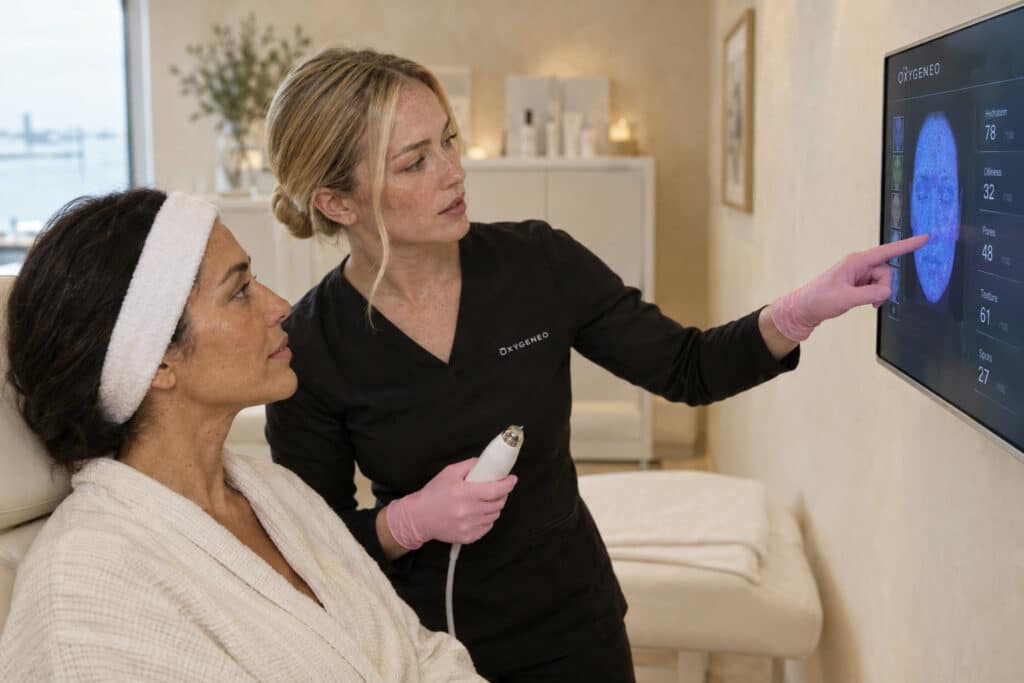
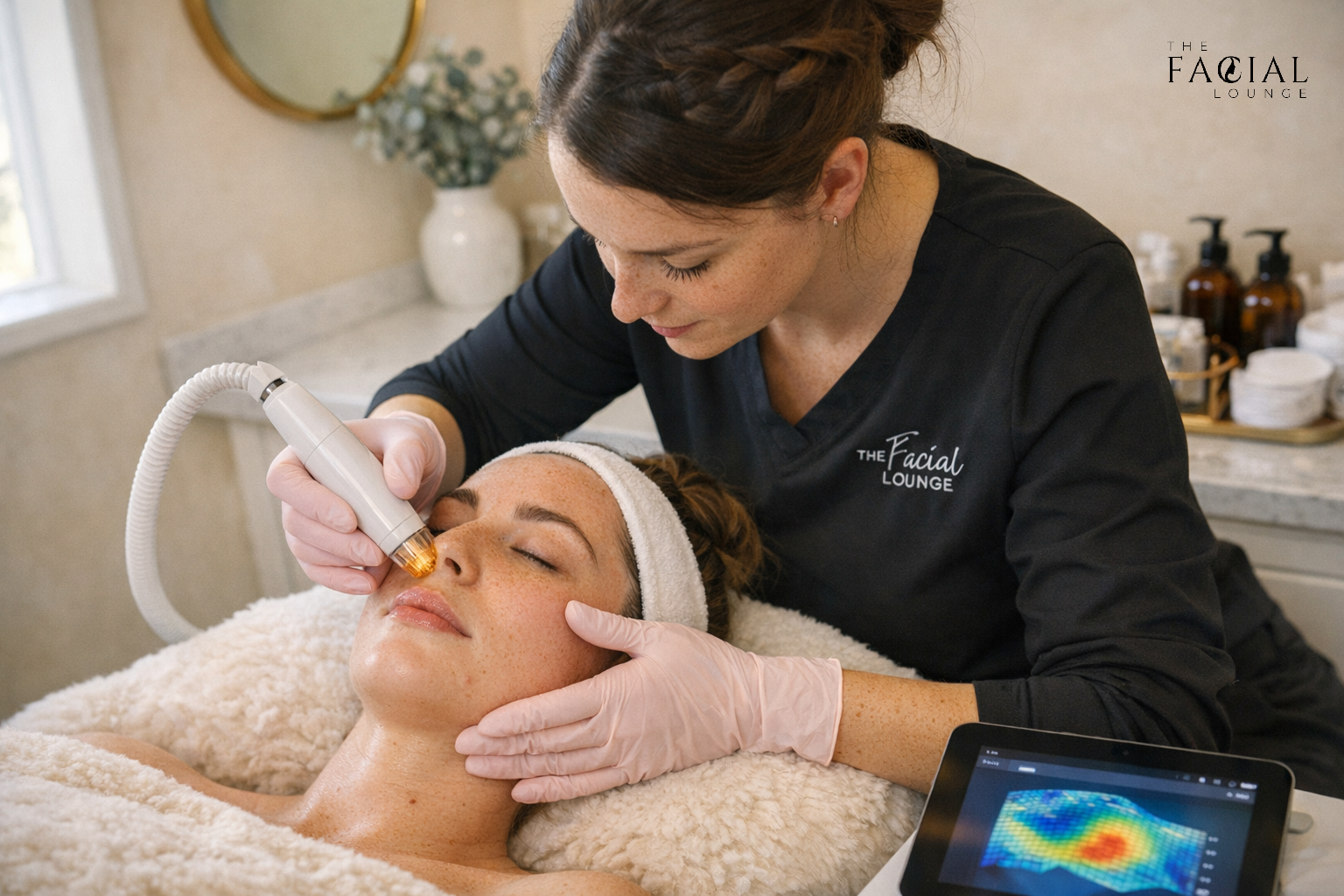
This is where the 3D Skin Analysis changes everything. Before VoluDerm RF is ever applied, our certified esthetician scans your skin in 3D, identifying inflammation, capillary visibility, barrier thickness, and hydration level. If the analysis shows reactive skin, the RF power setting drops 20–30%, and needle depth reduces from 2.0mm to 0.75mm. Same treatment. Different settings. Zero surprises.
2. The Role of Numbing—When It Helps, When It Doesn’t
Most clients with sensitive skin don’t need topical numbing cream for VoluDerm RF. If you’ve had microneedling before (derma roller, stamp-style), you might expect the same pain level—but VoluDerm’s RF component actually distracts your nervous system from the needle sensation by overwhelming it with warmth instead.
That said, if you’re extremely needle-sensitive or have had a panic response to dermal treatments before, a light numbing cream applied 15 minutes pre-treatment can take the edge off without numbing so much that you can’t give feedback to your esthetician. We don’t recommend heavy numbing because your skin’s natural response to the treatment helps us know if settings are right for you.
One note: numbing cream adds a 10-minute buffer to your appointment, and it can slightly reduce the treatment’s efficacy if applied too thickly. It’s optional, not standard.
3. What Happens in the 4 Hours After—The Real Sensitivity Window
The treatment itself might be a 2/10 discomfort. The 4 hours immediately after? That’s when sensitive skin shows its hand.
Your skin is intentionally inflamed—micro-injuries signal your fibroblasts to produce collagen and elastin. Redness is your body healing. Mild warmth and stinging are the inflammatory response at work. On reactive skin, this can feel like a sunburn (but it’s not). Most of our Port Credit and Lorne Park clients report that the sensation peaks around 2–4 hours post-treatment, then subsides as they apply our recommended post-care serum.
By hour 8–10, redness has usually dropped 40–60%. By 24 hours, most clients report it’s almost gone. But here’s the mistake we see: clients skip SPF, touch their face, or over-cleanse that night. Then sensitivity lingers into day 2, and they think it was the treatment. It wasn’t—it was aftercare.
4. Sensitive Skin Conditions That Change the Protocol
Not all “sensitive skin” is the same. The 3D Skin Analysis catches the nuances:
Rosacea-prone: VoluDerm RF is safe, but RF power must stay below 45 watts, and we space treatments 6 weeks apart instead of 4. Clients with active rosacea sometimes benefit from starting with Oxygeneo Super Facial (from $189) instead, which hydrates without heat, then advancing to VoluDerm RF once their capillaries calm.
Eczema or dermatitis: VoluDerm RF is contraindicated during active flare-ups. Once the skin stabilizes and hydration is restored (often with AQUAPURE or oxygen infusion therapy), we reassess. Some eczema-prone clients do beautifully with VoluDerm RF at conservative settings; others need gentler modalities like the Korean Glass Facial (from $179).
Post-inflammatory hyperpigmentation or melasma: These conditions often live on reactive skin. VoluDerm RF’s heat can trigger darkening if not paired with aggressive sun protection. For pigmentation issues, many clients see better results from a hybrid approach: Oxygeneo Super Facial for the first 3 months to normalize barrier function, then introduce VoluDerm RF with SPF 50+ year-round and strict sun avoidance.
General reactivity (chronic redness, sensitivity to every product): This is where a customized frequency matters. A Lorne Park client reduced pigmentation 60% over a 3-month plan by spacing treatments further apart and combining Oxygeneo with conservative VoluDerm RF. The key was patience and progression, not aggressive protocols.
5. The Hidden Mistake That Makes Sensitive Skin Worse Post-Treatment
Here’s what surprises most people: the treatment itself wasn’t the problem. The aftercare was.
We see it constantly. Client receives VoluDerm RF on Friday. Saturday morning they’re excited to use their new chemical exfoliant. Or they shower with their regular cleanser (the one with 3% salicylic acid). Or they hit the gym and sweat without a barrier. Or—worst—they skip SPF because “I’m staying inside.” By Sunday, they’re reporting “the treatment made my skin sensitive for days,” when really, they’ve damaged the healing barrier three different ways.
Post-VoluDerm RF, your skin needs 5 days of minimal ingredients: a gentle cream cleanser, a hydrating serum (we recommend AQUAPURE-based protocols), a soothing moisturizer, and SPF 50+. Full stop. No exfoliants, no vitamin C, no retinol, no mixing active ingredients. We’ve had to redo consultations after clients mixed too many actives post-treatment and thought the treatment had failed them.
Sensitive skin tolerates VoluDerm RF brilliantly if the 48 hours after are protected. Most sensitivity complaints trace back to that window, not the needles.
6. Comparing VoluDerm RF to Other Microneedling Options for Sensitive Skin
You might wonder: should I start with a gentler microneedling instead? Here’s the honest comparison.
| Treatment | Sensation on Sensitive Skin | Downtime | Cost |
|---|---|---|---|
| VoluDerm RF Microneedling | Warm, vibrating (2–3/10 discomfort) | 4–6 hours redness; full recovery 24 hrs | from $325 |
| Oxygeneo Super Facial | Gentle bubbling, no pain (0–1/10) | Minimal; slight glow | from $189 |
| TriPollar RF Skin Tightening | Warm, no needles (1–2/10) | No downtime; mild redness fades 2 hrs | from $250 / session |
| Korean Glass Facial | Soothing gua sha (0/10) | None; immediate radiance | from $179 |
What this shows: VoluDerm RF is stronger than other options, so it drives faster results—a Port Credit mom-of-two saw visible jawline lift after 4 TriPollar RF sessions over 6 weeks. But if your skin is extremely reactive right now, start with Oxygeneo or the Korean Glass Facial for 2–3 months to restore barrier function. Then layer in VoluDerm RF. It’s not a race.
Most sensitive-skin clients see subtle improvements (finer texture, better hydration, early glow) after 2 treatments spaced 6 weeks apart. Dramatic results (firmer skin, visible lift, reduced fine lines) usually emerge after 4–6 sessions at the standard 4–6 week maintenance frequency. But if you’re reactive, we often space treatments 8 weeks apart initially to give your barrier time to fully restore between sessions. Results take longer, but they’re sustainable because we’re not overwhelming your skin.
When the Answer Is Different
If you have active rosacea flare, severe eczema, or are in the middle of a skin barrier crisis: VoluDerm RF is not the right move right now. The treatment’s heat and micro-injuries will aggravate active inflammation. First priority is barrier restoration with hydrating treatments like AQUAPURE or oxygen infusion therapy, often paired with a calming protocol tailored by your 3D Skin Analysis. Once inflammation settles (usually 4–8 weeks), VoluDerm RF becomes an option.
If you’re currently on isotretinoin (Accutane) or have completed it within 6 months: We pause all RF and microneedling. Wait a minimum of 6 months post-treatment, then start with gentler modalities. Your skin’s healing capacity is compromised; does VoluDerm RF microneedling hurt is the wrong question—whether your skin can handle the injury safely is the real one.
If you’re darker-skinned (Fitzpatrick IV–VI) and prone to post-inflammatory hyperpigmentation: VoluDerm RF is safe, but RF settings and frequency need careful calibration. The 3D Skin Analysis is critical here—it measures melanin concentration and inflammation risk. We often recommend spacing treatments 8–10 weeks apart and pairing them with hydroquinone or niacinamide protocols. A single aggressive protocol can trigger months of dark patches.
If you’re expecting zero redness or downtime: Adjust your expectations. VoluDerm RF microneedling works because it creates controlled inflammation. No redness = no collagen stimulation. If you have a wedding Saturday, don’t book VoluDerm RF on Thursday. Plan treatments 10–14 days before events.
Frequently Asked Questions
Can I use my regular skincare products after VoluDerm RF if I have sensitive skin?
No. For 5 days post-treatment, stick to a minimal routine: gentle cream cleanser, hydrating serum (AQUAPURE-based products are ideal), moisturizer, and SPF 50+. Skip exfoliants, vitamin C, retinol, niacinamide serums, and active ingredients. We know it’s boring—but this is where most clients inadvertently extend their sensitivity window. Once redness has completely resolved, you can reintroduce actives one at a time, 3 days apart.
Will VoluDerm RF make my rosacea worse?
Not if the protocol is customized. The 3D Skin Analysis identifies visible capillaries and inflammation—your esthetician will lower RF power and needle depth specifically for rosacea-prone skin. Many rosacea clients see long-term improvement because VoluDerm RF remodels collagen and strengthens the dermal matrix, which stabilizes capillaries. But during the first 48 hours post-treatment, expect extra redness. That’s healing, not damage.
How often should someone with sensitive skin get VoluDerm RF treatments?
Standard frequency is every 4–6 weeks for maintenance and results. But if you have reactive skin, we often start at 6–8 weeks apart, then move to 6 weeks once your skin adapts. The 3D Skin Analysis before every session tells us whether you’re ready to progress or whether we need to stay conservative. Don’t let anyone push you into more frequent sessions if your barrier isn’t recovering.
Is there a risk of lasting damage if VoluDerm RF goes wrong on sensitive skin?
Lasting damage is extremely rare with VoluDerm RF when performed by a certified esthetician and when the 3D Skin Analysis drives settings. The bigger risk is user error at home—over-cleansing, mixing actives, or skipping SPF afterward can extend redness and sensitivity into a drawn-out recovery. Book with professionals who do a 3D assessment first, not just a form. Our Mississauga clients routinely see beautiful results on sensitive skin because we customize before we treat.
The Facial Lounge
3D Skin Analysis customizes every VoluDerm RF treatment for sensitive skin. Certified estheticians. Mississauga.

🎧 Listen to article


Related Posts