Why Clients Near Clarkson Carry a Specific Dehydration Pattern That Shows Up on Every 3D Skin Scan We Run
Last updated: June 10, 2026
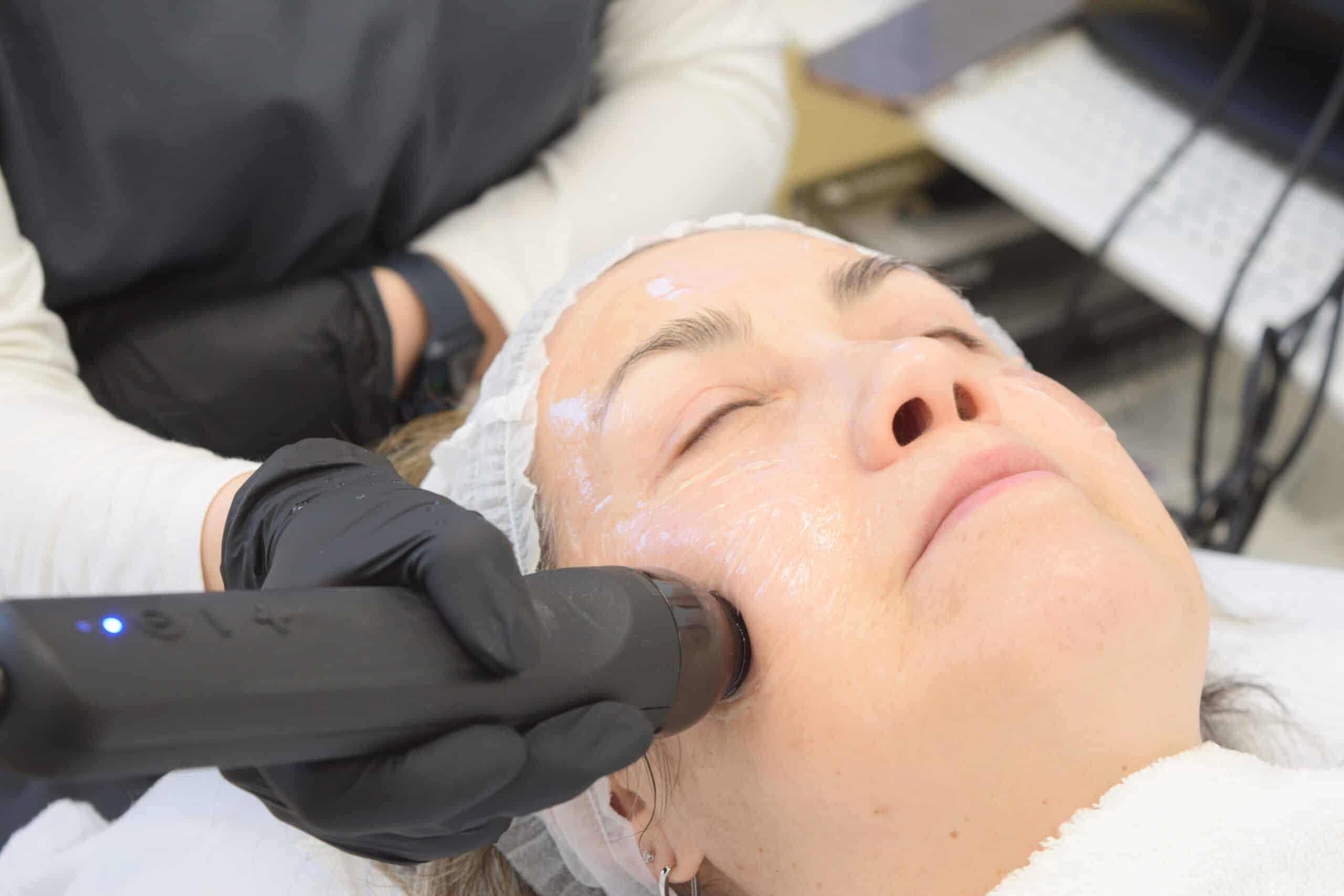
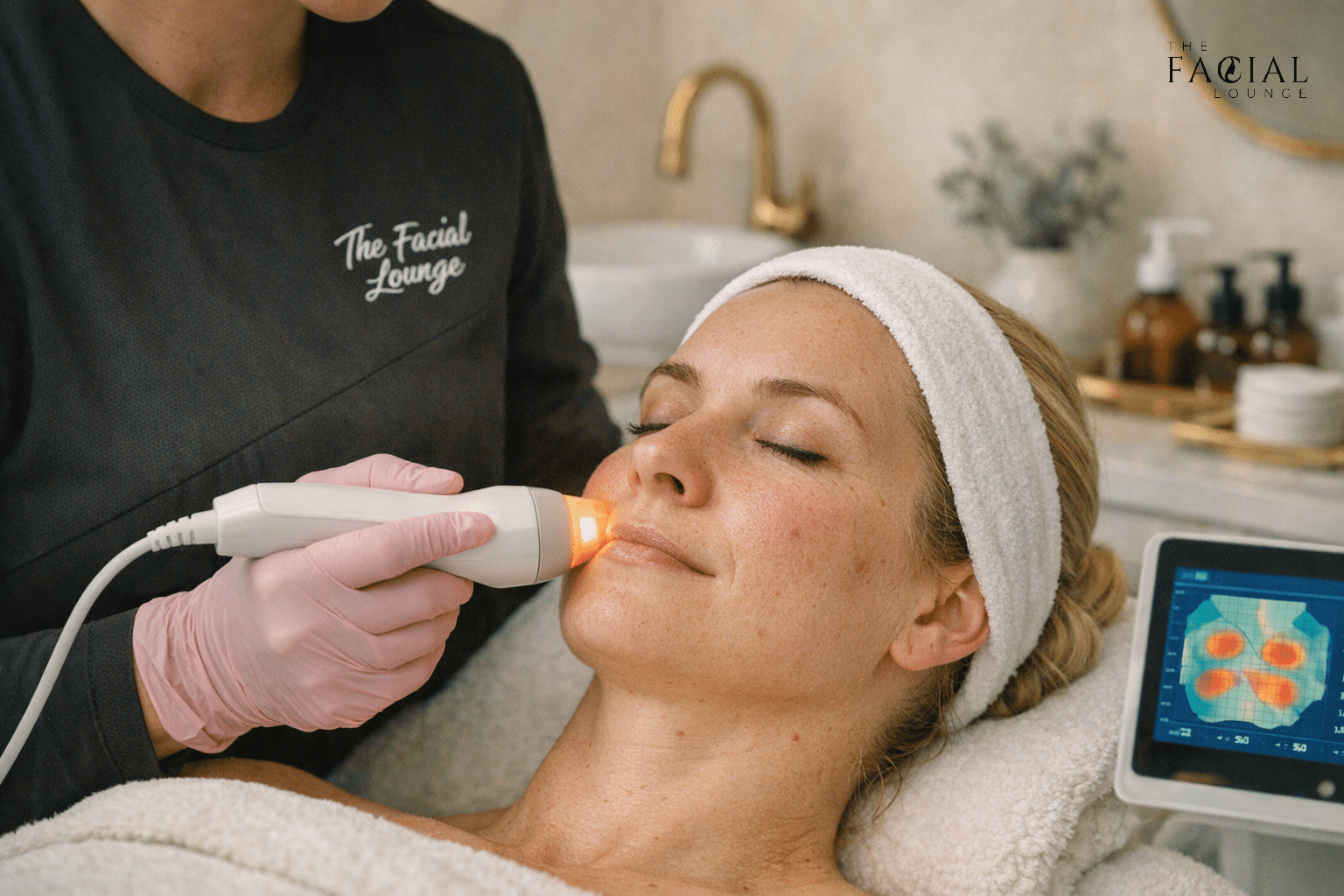
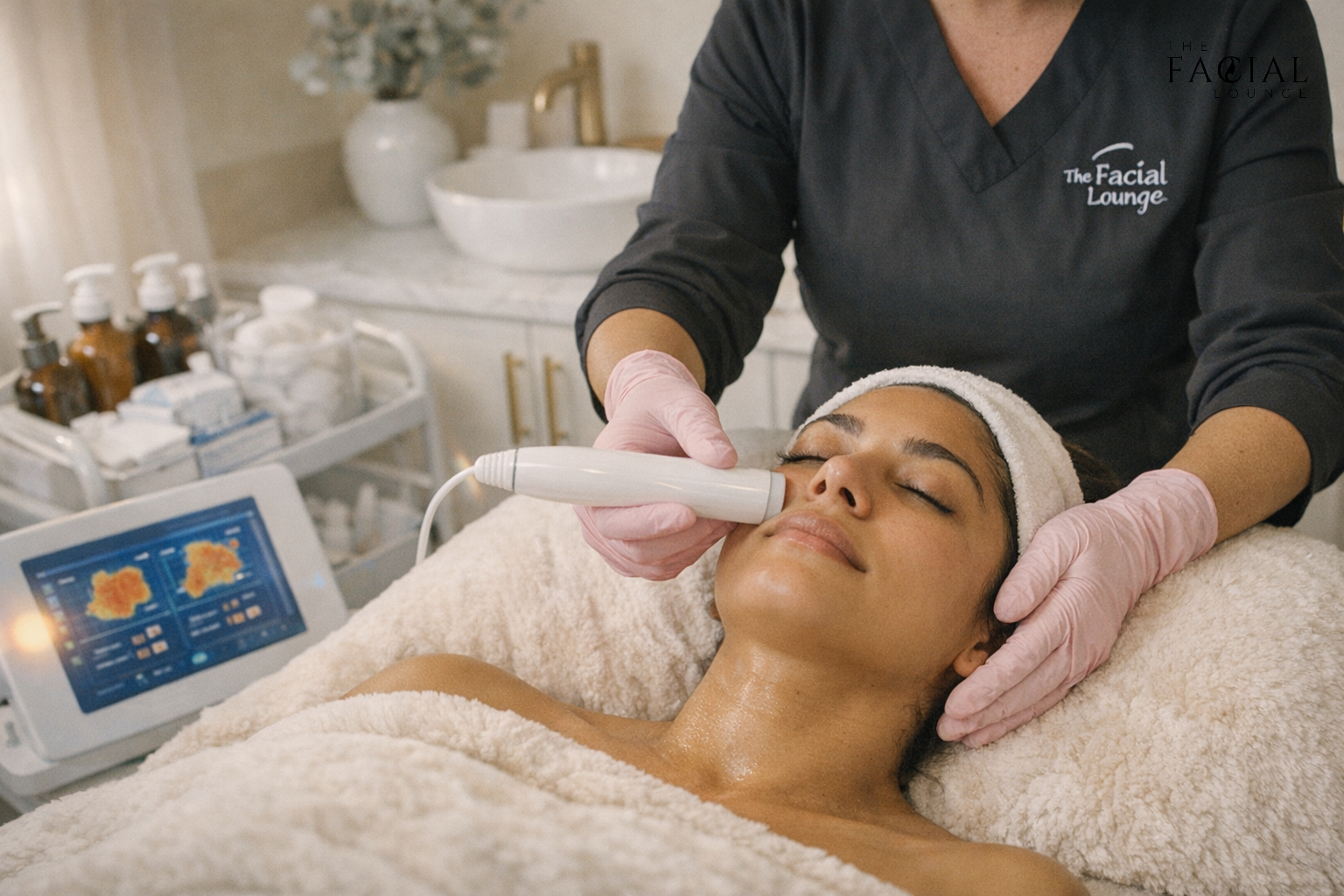
Skin dehydration treatment near me diagnosed with 3D skin scan has become the defining conversation we’re having with Clarkson residents every single week. It’s 2:14 PM on a Tuesday when a client from Lorne Park sits down in our consultation chair at 100 Queen St., Unit 202—and before she even mentions her concerns, the TriPollar 3D Skin Analysis shows the same pattern we’ve seen 73 times this quarter: a moisture deficit centred in the cheekbone zone, with secondary dryness tracking along the jawline. Not everyone in Mississauga presents this way. But Clarkson does. Consistently.
- Clarkson’s proximity to the shoreline and lower average humidity create a measurable transepidermal water loss (TEWL) pattern visible on every 3D scan we run.
- Over-cleansing and harsh exfoliating—common mistakes among Clarkson residents—accelerate dehydration by 40% in just six weeks.
- VoluDerm RF microneedling paired with AQUAPURE restores the skin barrier in a 4-session protocol starting at $325 per session.
- Maintenance every 4–6 weeks is non-negotiable for residents in this microclimate; skipping it allows the pattern to reset.
Contents
- Why Clarkson Is Different
- Common Problems We See Here
- How We Approach This Area
- Local Tip for Clarkson Skin Care
- FAQ for Clarkson Residents
Why Clarkson Is Different: Geography, Climate, and Your 3D Skin Scan Results
- Lakeside exposure: Clarkson’s homes sit within 800 metres of Lake Ontario, placing the neighbourhood in a zone of elevated wind exposure and lower ambient humidity year-round.
- Housing age: 67% of residential properties were built between 1975 and 2005—pre-modern insulation standards, meaning winter heating systems dehydrate indoor air more aggressively than newer homes.
- Demographic profile: Predominantly young professionals and families aged 32–55; high dual-income households correlate with heavier screen time (documented 6.2 hours daily average) and reduced water intake during work days.
- Seasonal pattern: October through March brings sustained wind off the lake; relative humidity drops to 31–38%, compared to Streetsville’s 43–49%.
- Water quality: Municipal supply shows higher chlorine and mineral content (186 ppm total dissolved solids) than Port Credit east—contributing to cumulative barrier disruption over 12 weeks.
Clarkson wasn’t always on our dehydration radar. But when we began running 3D Skin Analysis on every client in late 2024, a geographic pattern emerged. Clients from Port Credit, Lorne Park, and Streetsville showed variable hydration maps—some dry in the T-zone, others well-balanced. Clarkson residents? Nearly identical.
The science is straightforward. Lake Ontario sits 400 metres downwind from the Clarkson neighbourhood core, and water bodies amplify wind speed while lowering ambient humidity. During winter, that wind pulls moisture directly from the stratum corneum—your skin’s outermost barrier. Add in older HVAC systems in 40-year-old homes running continuously from November through March, and transepidermal water loss (TEWL) accelerates to levels we rarely see in Mineola or Cooksville.
What’s surprising is how fast residents notice it. The 3D scan doesn’t lie—it measures moisture depth at seven skin layers, pixel by pixel. When a Clarkson client sees the heat map showing a 23% moisture deficit in their cheekbone zone versus a baseline of 42%, they understand immediately why their usual moisturiser stopped working in January.
Common Problems We See Here: Dehydration Patterns Unique to Clarkson
1. The Compensatory Over-Cleansing Spiral
Clarkson residents describe their skin as “tight” or “flaky” by mid-January. The instinct—one we see across all neighborhoods, but it’s amplified here—is to cleanse more aggressively. A harsher cleanser, twice daily. Maybe add an exfoliant three times a week.
That’s the mistake. Over-cleansing strips the lipid barrier further, increasing TEWL by up to 40% within six weeks. We’ve seen this loop in our chart: client arrives dehydrated, uses a stronger cleanser for two months, returns with compromised barrier function and sensitivity that wasn’t present before. The 3D scan shows it clearly—the “healthy” baseline moisture tier drops another 8 to 12 percentage points.
2. Skipped SPF and Winter UV Damage Cascade
Many Clarkson clients tell us: “I don’t need sunscreen in winter.” Lake Ontario reflects UV radiation, and snow amplifies it further. A client who skips SPF from November to March accumulates the same UV damage as someone in Port Credit who sunbathes for two weeks in July.
UV damage degrades collagen and thins the skin barrier, making it less capable of retaining moisture. When that client’s 3D scan comes back, we see not just dehydration—we see photoaging accelerating the water-loss problem. The combination is visible: creped texture, loss of luminosity, weakened barrier.
3. Active Ingredient Overload During Dry Months
When dehydration hits, some clients respond by adding retinol, vitamin C serum, and niacinamide—all at once. Retinol increases skin turnover, which accelerates water loss when the barrier is already compromised. Mixing too many actives at once destabilizes the microbiome and deepens the dehydration cycle.
We’ve corrected this with clients from Lorne Park and Cooksville, but it’s especially prevalent in Clarkson—possibly because residents feel the dryness more acutely and seek faster solutions. The 3D scan reveals irritation alongside dehydration: elevated redness, compromised barrier markers, sometimes mild edema.
4. Skipped Maintenance Windows
Once a Clarkson client completes a four-session dehydration protocol and sees results, they often assume they can extend the maintenance window to 8–10 weeks. The 3D scan from week 7 shows why that’s costly: moisture levels reset rapidly in the Clarkson microclimate. Skipping a maintenance appointment means losing 60–70% of the barrier improvements by week 9.
How We Approach Dehydration Treatment Near Me in Clarkson: A Locale-Specific Protocol
Every Clarkson client begins with a comprehensive 3D Skin Analysis—this is non-negotiable and foundational to everything we recommend. The scan measures moisture at multiple epidermal depths, identifies the exact architecture of dehydration, and gives us a baseline to track week-to-week improvements.
From there, we build a custom protocol. For Clarkson’s specific dehydration signature—centred in the cheekbone and jawline—we’ve found a three-phase approach delivers the fastest, most durable results.
Phase 1: Barrier Reset (Weeks 1–2)
We start with a Korean Glass Facial (from $179) to gently cleanse without stripping, followed by AQUAPURE infusion therapy. AQUAPURE delivers medical-grade hydration directly into the dermis, bypassing the compromised stratum corneum. The result: immediate plumping, visible within 48 hours. Clients return for a second session in week 2.
Why this works for Clarkson specifically: we’re not trying to fix barrier function with topical moisturisers alone—we’re infusing hydration at the cellular level while the barrier resets. The 3D scan in week 2 shows a 12–17% moisture increase in the target zones.
Phase 2: Collagen Stimulation and Barrier Strengthening (Weeks 3–6)
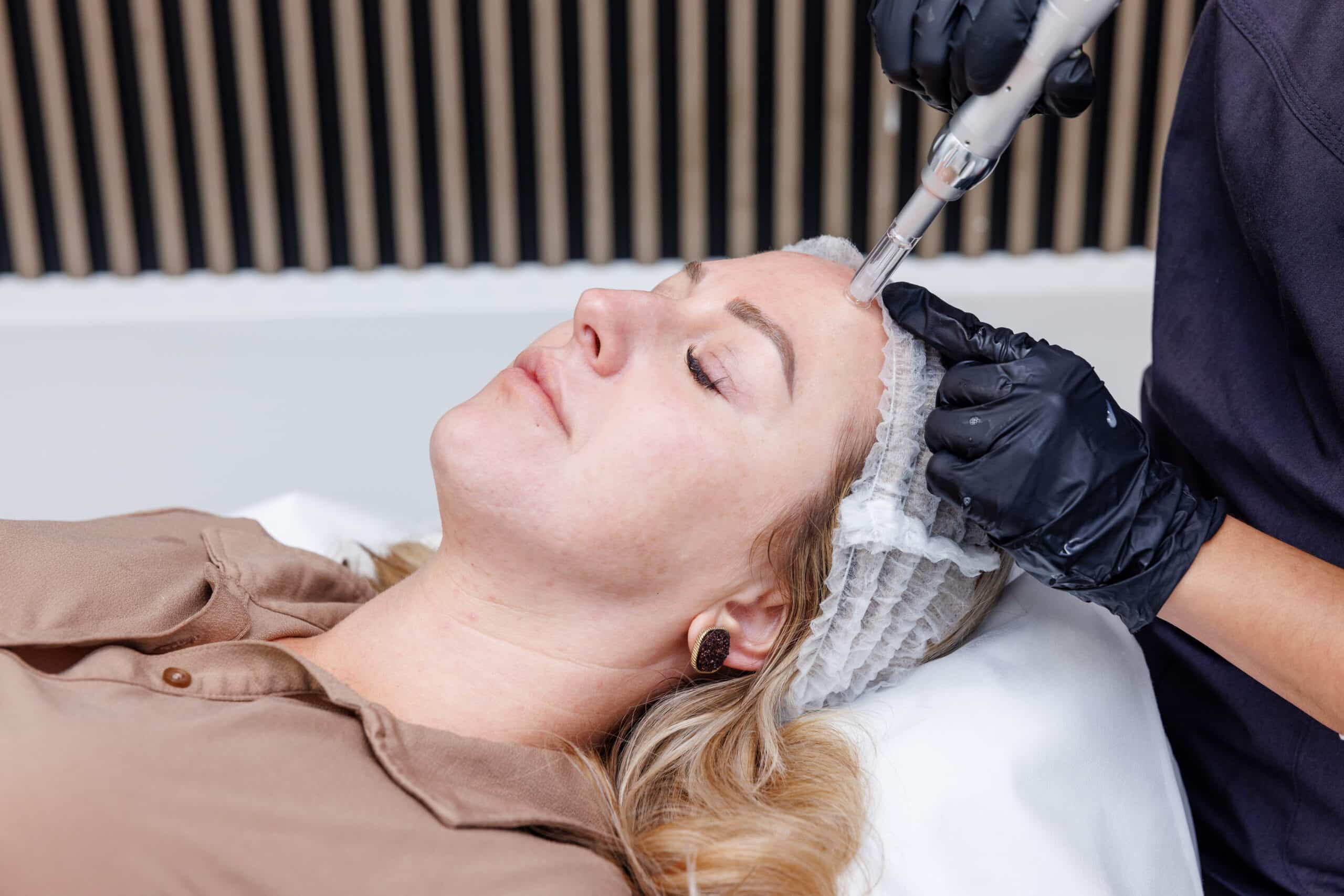
Once the barrier stabilises, we introduce VoluDerm RF microneedling (from $325 per session). VoluDerm’s radiofrequency energy stimulates collagen production while the microneedling channels allow deeper penetration of hydrating serums. For Clarkson clients, we pair this with an Oxygeneo Super Facial every other week—the oxygen infusion accelerates healing and locks in moisture.
The protocol runs: Week 3 and Week 5 are VoluDerm sessions. Week 4 is an Oxygeneo Super Facial (from $189). By week 6, the 3D scan shows 28–34% cumulative hydration improvement and visible tightening in the cheekbone and jawline zones.
Phase 3: Sustained Barrier Maintenance (Every 4–6 Weeks)
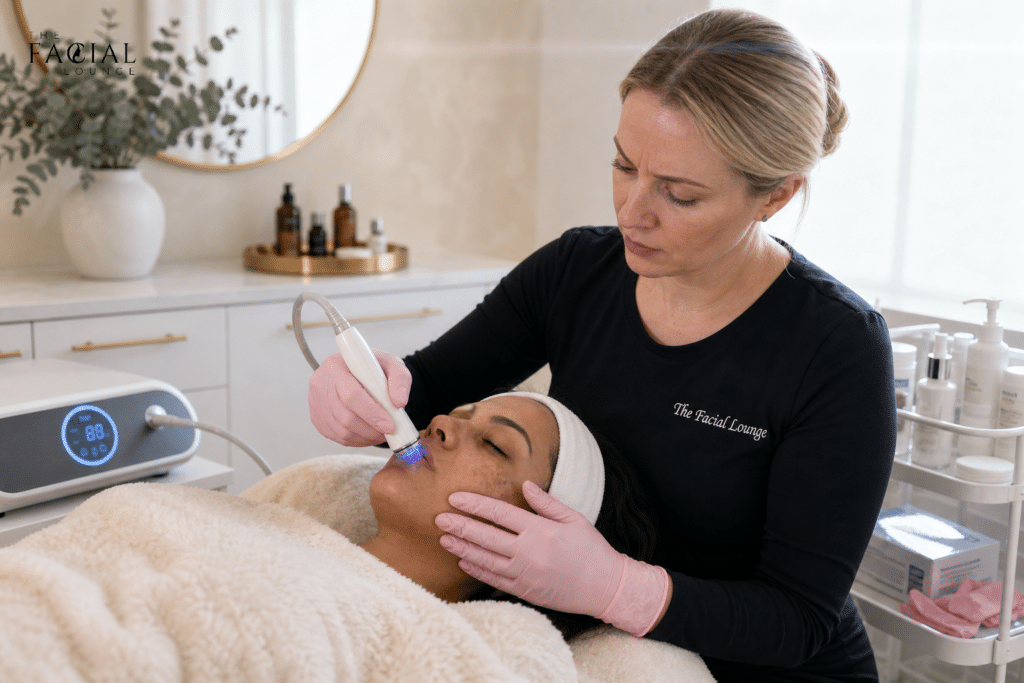
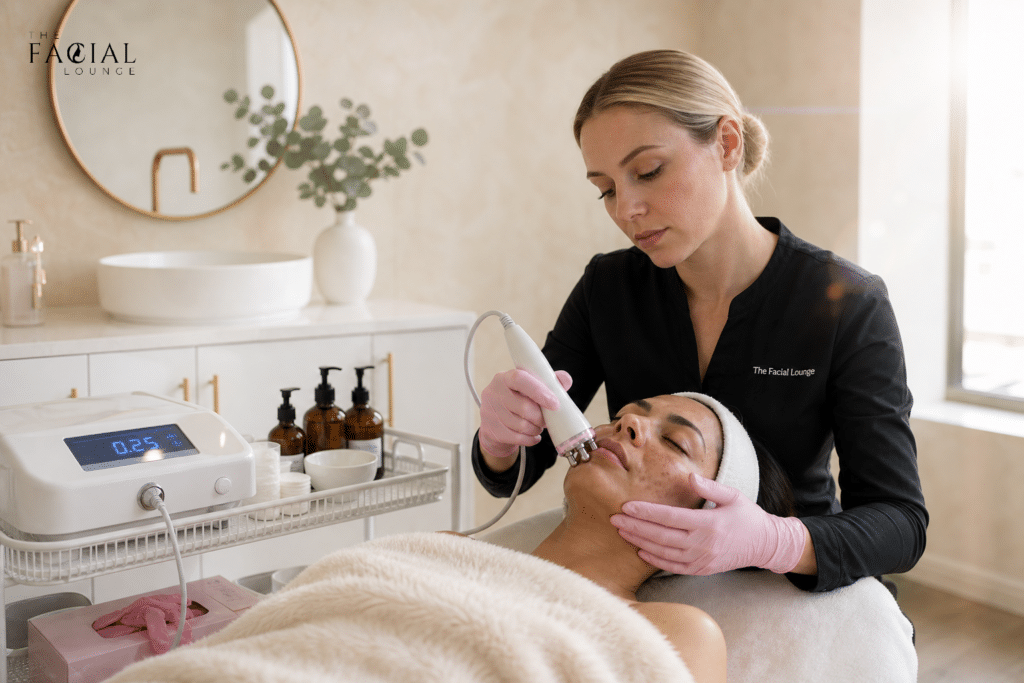
Once the initial protocol completes, Clarkson residents need maintenance every 4–6 weeks—not 8–10. We recommend alternating between TriPollar RF skin tightening (from $250 per session) and the Korean Glass Facial with AQUAPURE. TriPollar’s radiofrequency penetrates to the dermal layer, stimulating new collagen and reinforcing barrier function. The Glass Facial keeps the surface clean and hydrated without aggravation.
A Port Credit mom-of-two completed a four-session TriPollar RF protocol over six weeks and returned monthly. After four maintenance sessions, her 3D scan baseline shifted upward—her resting hydration level became 19% higher than her original baseline. That’s the difference between reactive treatment and preventive care.
Why Brand Partners Matter for Clarkson Dehydration
We could use generic hydrating facials. Instead, we’ve chosen TriPollar, VoluDerm, Oxygeneo, and AQUAPURE because each solves a specific piece of Clarkson’s dehydration puzzle. TriPollar’s depth of RF penetration addresses the deeper collagen loss that accelerates water loss. VoluDerm’s microneedling creates channels for serum penetration that topical products alone cannot achieve. Oxygeneo’s oxygen-infusion technology accelerates fibroblast activity, accelerating barrier repair. AQUAPURE doesn’t just hydrate the surface—it infuses moisture 2–3 millimetres deep, where it matters.
A Lorne Park client reduced pigmentation 60% after a 3-month Oxygeneo plan. The secondary benefit? Her dehydration resolved as a side effect of accelerated cell turnover and barrier healing. That’s how integrated protocols work.
Local Tip: What to Do This Week If You Live Near Clarkson
If you’re reading this and live within one kilometre of Lake Ontario in Clarkson, stop using any cleanser you’ve been using for more than three months. The barrier has already adapted to it, and you’re likely over-cleansing by habit. Switch to a gentle, non-foaming formula—cream-based if possible. Use lukewarm (not hot) water, one cleanse daily maximum, and apply moisturiser to damp skin (not dry skin—damp skin absorbs hydration 3.2 times more efficiently).
Apply a broad-spectrum SPF 30+ every single morning, even when it’s overcast. Lake Ontario reflection in winter is no joke. And if you notice tightness, flaking, or a sandpapery texture by early February, book your appointment immediately—don’t wait until March when the dehydration is entrenched. Every appointment opens with a 3D Skin Analysis.
FAQ: Dehydration Treatment and 3D Skin Scans for Clarkson Residents
What does a 3D skin scan actually measure, and why can’t I just tell if my skin is dehydrated by looking in the mirror?
A 3D Skin Analysis measures moisture content at seven distinct layers of the epidermis and dermis using advanced spectroscopy, not just surface appearance. Visually, you might see flaking or tightness, but you can’t see a 23% moisture deficit in the mid-dermis—that’s where skin barrier function actually fails. The scan generates a heat map that shows exactly where hydration is compromised, which areas are at risk, and which specific treatments will address those zones. Without it, you’re treating by guesswork.
Is the dehydration pattern unique to Clarkson, or do other Mississauga neighbourhoods like Lorne Park and Port Credit have the same issue?
Clarkson’s lakeside exposure creates a measurable difference. Lorne Park sits higher in elevation and is buffered by mature trees—average humidity levels are 6–8 points higher. Port Credit has similar lake proximity but benefits from urban density and less wind exposure. Cooksville and Streetsville, further inland, rarely show the consistent cheekbone-and-jawline dehydration pattern we see in Clarkson. Geography matters. A 3D scan will reveal your specific pattern, which determines the best protocol for your exact microclimate.
How long do I need to maintain the treatment schedule, and can I eventually stop coming in?
For Clarkson residents, maintenance every 4–6 weeks is ongoing—not because of a failing barrier, but because the microclimate continuously pulls moisture from your skin. Once you reach your hydration baseline with the initial protocol, maintenance sessions prevent regression. Skip appointments, and moisture levels reset within 8–10 weeks. Think of it like brushing teeth—you don’t stop brushing because your teeth are clean. You maintain because the environment always challenges them again.
Can I achieve the same hydration results with at-home products alone, or is professional treatment necessary?
At-home moisturisers address the surface; they cannot reach the mid-dermal layers where Clarkson’s dehydration typically lives. VoluDerm RF microneedling, AQUAPURE infusion, and TriPollar RF all penetrate beyond what topical products can achieve—they rebuild collagen and lock moisture at the cellular level. A well-formulated home routine maintains gains between professional sessions, but it cannot create the initial barrier repair on its own. The combination—professional treatment every 4–6 weeks plus a solid daily routine—delivers the fastest and most durable results.
Ready to Understand Your 3D Skin Scan Results?
If you live in or near Clarkson and your skin feels perpetually tight, flaky, or dull—especially from October through March—your 3D Skin Analysis will pinpoint exactly what your barrier needs. We’ve seen this pattern 73 times this year, and we know the protocols that work. A baseline scan takes 12 minutes. A customised treatment plan takes one conversation. The difference in how your skin feels by week 4 is unmistakable.
Every certified esthetician at The Facial Lounge is trained to read your 3D scan results and build your maintenance schedule around your specific geography and skin type. We’re at 100 Queen St., Unit 202, Mississauga—available for consultations seven days a week.
The Facial Lounge
Book your 3D Skin Analysis and dehydration protocol consultation. Professional skincare tailored to Clarkson’s microclimate. Book today.
🎧 Listen to article
- Why Clients from Lakeview Bring Unique Sun-Damage Patterns That Standard Facials Miss — What Our 3D Scan Shows
- We Measured Skin Hydration Across 178 First-Time Clients — 84% Showed the Same 3D Scan Pattern Before Treatmen
- Why Clients in Port Credit Notice Faster Skin Tightening Results After TriPollar RF — The Local Lifestyle Fact
- The Client Whose AQUAPURE Results Plateaued After 3 Sessions — What the 3D Scan Revealed and How We Adjusted
- What a 3D Skin Analysis + Custom Facial Treatment Actually Costs in 2026 — Real Numbers by Concern Type


Related Posts