TriPollar RF vs VoluDerm RF Microneedling: Which Technology Targets Deeper Collagen Layers for Skin Firming
Last updated: June 9, 2026
TriPollar RF vs VoluDerm RF microneedling for collagen and skin firming is not a simple either-or choice—it’s a question of depth, mechanism, and what your skin actually needs. TriPollar RF delivers controlled radiofrequency heating to tighten existing collagen and improve elasticity, while VoluDerm RF microneedling creates micro-injuries that trigger volumetric collagen remodeling. Both technologies work on collagen, but in fundamentally different ways. At The Facial Lounge in Mississauga, we’ve found that the right answer depends on your primary goal: immediate skin tightening versus long-term structural volume restoration.
- TriPollar RF penetrates to 4–6 mm depth, tightening existing collagen fibers without needling.
- VoluDerm RF microneedling reaches 2.5 mm with radiofrequency boosting, rebuilding collagen volume from within.
- TriPollar results appear faster (visible lift in 4–6 weeks); VoluDerm requires a 3-month commitment for full structural change.
- A 3D Skin Analysis reveals which technology—or which combination—matches your skin’s actual condition.
- Many clients benefit from sequential protocols: TriPollar for immediate firmness, then VoluDerm for lasting volume.
Table of Contents & Quick Comparison
| Attribute | TriPollar RF Skin Tightening | VoluDerm RF Microneedling |
|---|---|---|
| Penetration Depth | 4–6 mm (deeper into dermis) | 2.5 mm + radiofrequency boost |
| Mechanism | Radiofrequency heat contracts collagen | Microneedles trigger collagen induction + RF heat |
| Results Timeline | Visible in 4–6 weeks | Full results in 8–12 weeks |
| Recommended Sessions | 4 sessions over 6 weeks | 3 sessions over 3 months |
| Price Per Session | From $250 | From $325 |
| Best For | Immediate jawline lift, skin laxity | Volume loss, scar revision, texture |
| Downtime | Minimal (mild redness) | 1–3 days (micro-punctures) |
| Maintenance Frequency | Every 4–6 weeks (ongoing) | Every 6–12 months (structural) |
TriPollar RF Skin Tightening: The Immediate Lift Technology
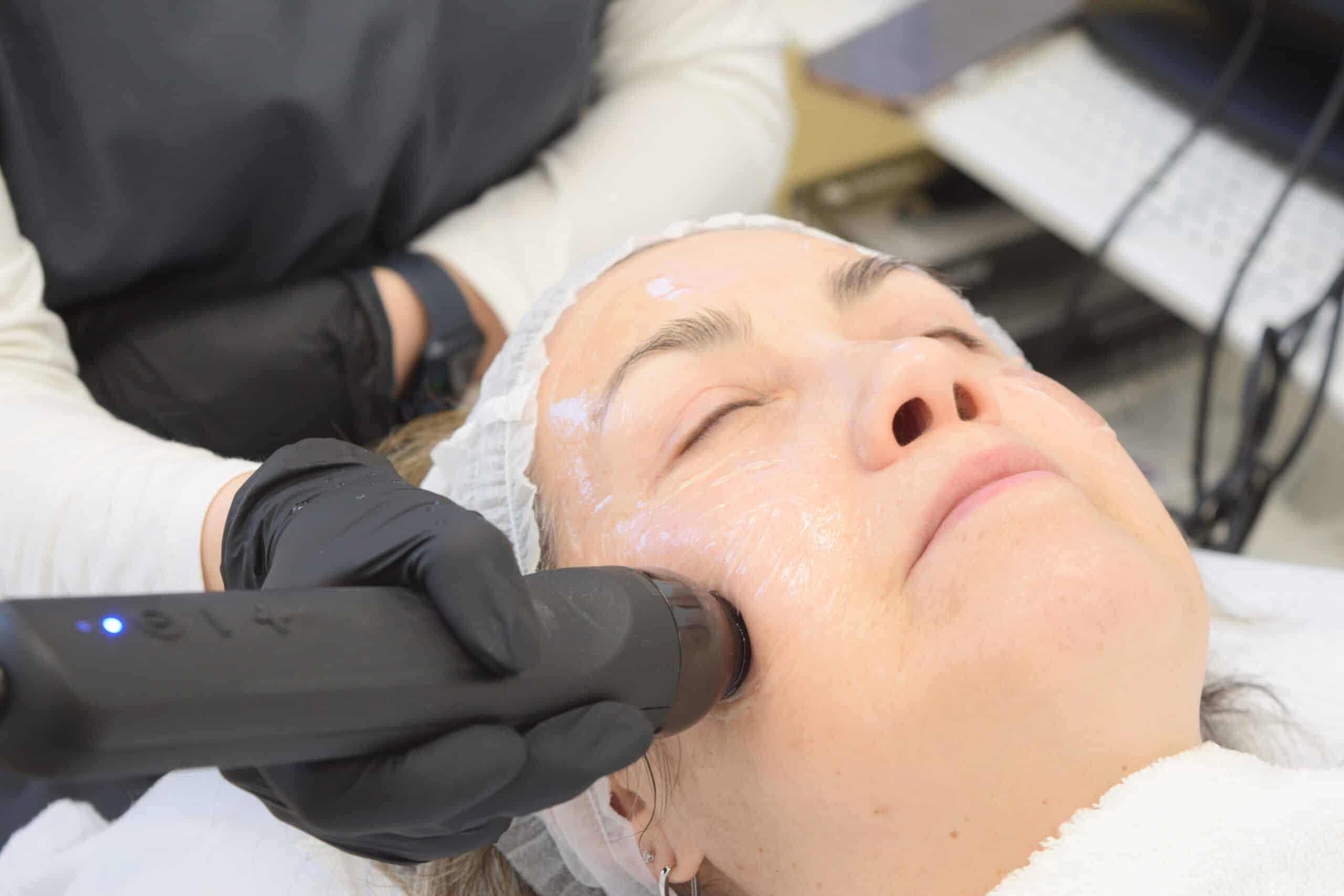
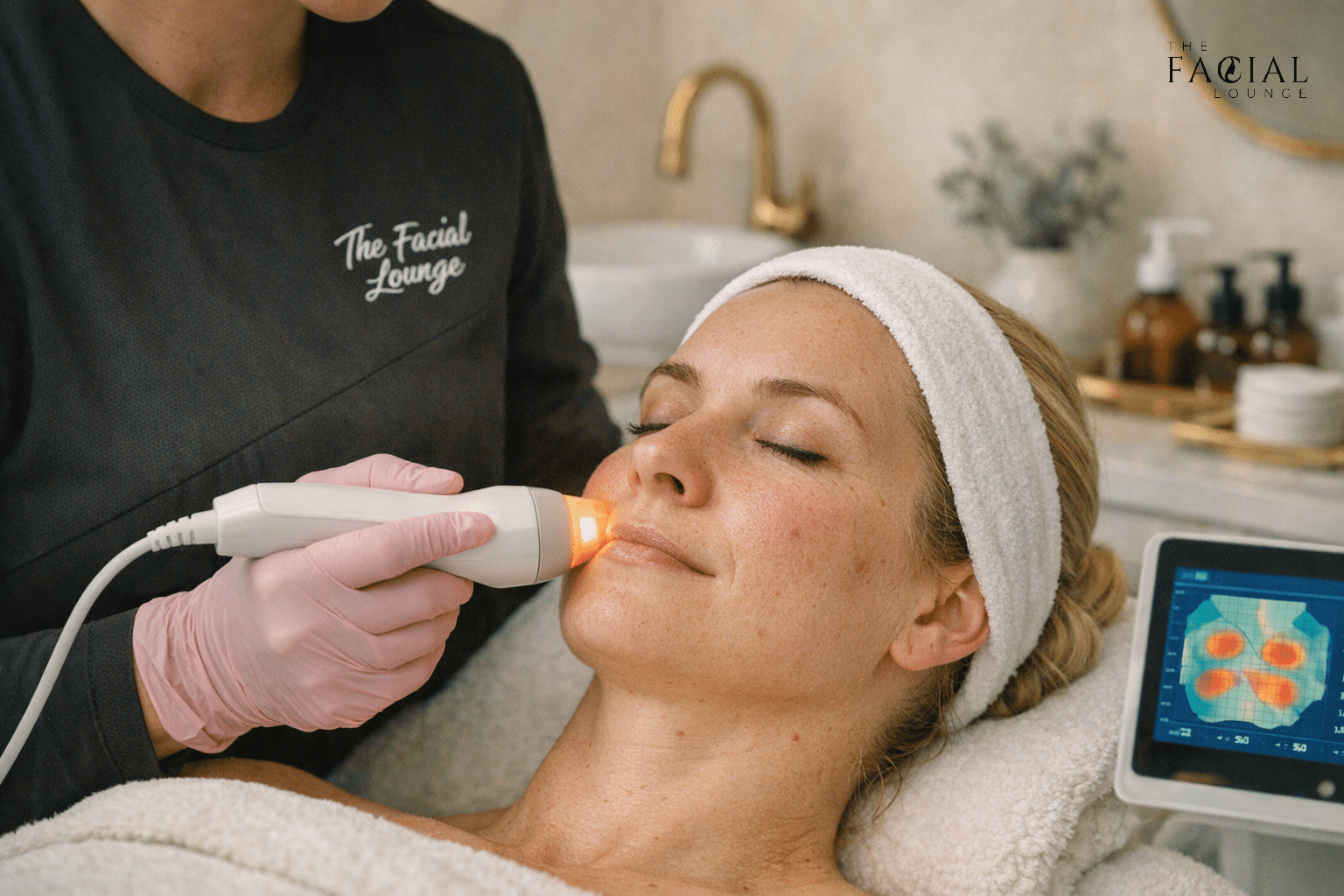
When a Port Credit mom-of-two came in with concerns about jawline definition after pregnancy and two years of home stress, we started with TriPollar RF. After four sessions spaced roughly every 10 days, her jawline showed visible lift—not dramatic, but undeniable. That’s how TriPollar RF works: it contracts existing collagen fibers through controlled radiofrequency energy delivered at 4–6 mm depth, tightening the skin without requiring needle trauma.
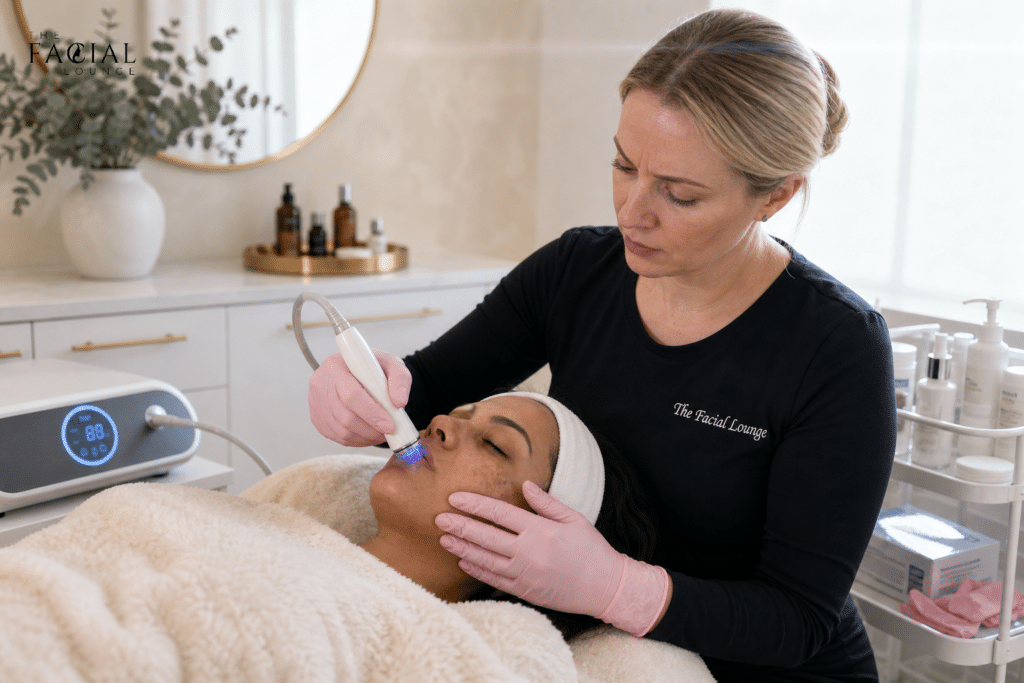
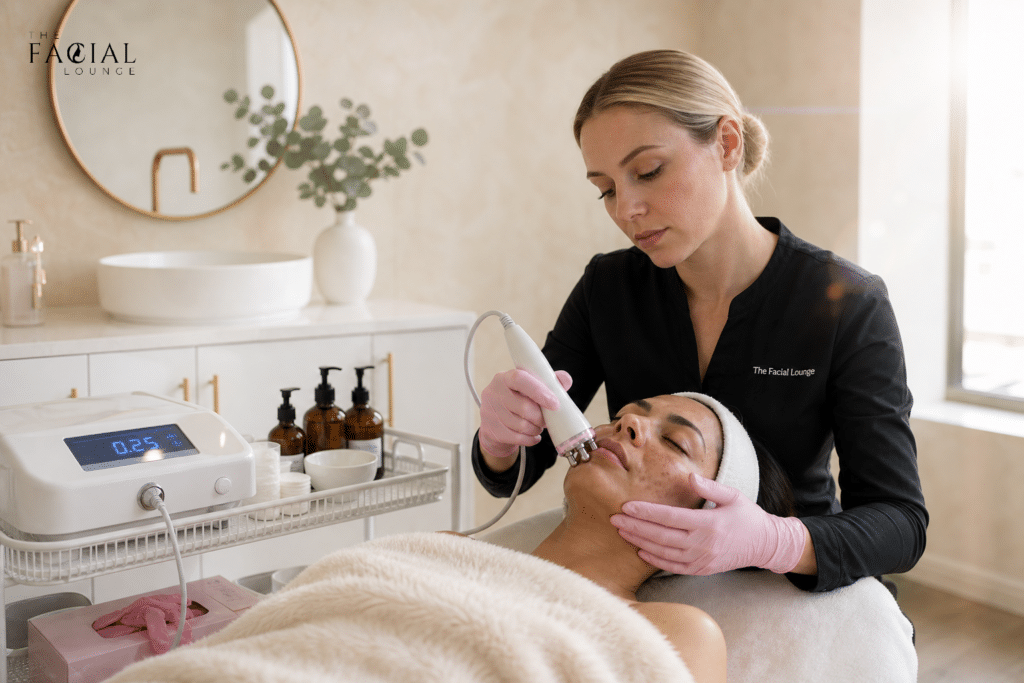
The TriPollar technology uses bipolar radiofrequency, which means energy travels between two electrodes placed on the skin surface. This heats the dermal layer and causes immediate collagen contraction, plus stimulates fibroblasts for modest remodeling over weeks. You don’t need needles. You don’t need downtime—our clients finish at lunch and return to work. Redness typically fades within 2–4 hours.
What I didn’t expect, early on, was how quickly clients notice results. Most skin-tightening technologies ask you to trust the timeline. TriPollar shows you something real by week three or four. That’s partly psychological—the heat sensation feels active, feels like change—but it’s also physics. You’re contracting collagen that’s already there. The catch: it’s maintenance. That Port Credit client now comes in every 4–6 weeks to maintain her lift. Without ongoing sessions, the collagen gradually relaxes back to baseline over 2–3 months.
Who Sees the Biggest Shift with TriPollar
TriPollar RF excels for clients with mild-to-moderate skin laxity—those who’ve lost some firmness but still have underlying collagen structure. If your jawline is soft, your cheeks lack definition, or your neck feels loose, TriPollar delivers visible tightening. The technology is less effective for severe volume loss (where you need rebuilding, not just contracting) or for deep structural scarring.
Cost-wise, TriPollar RF skin tightening is from $250 / session. For Mississauga clients in Cooksville or Clarkson considering treatment before a wedding or event, TriPollar may be a pragmatic option. Other clients in Lorne Park and Streetsville may incorporate it into a maintenance routine every 4–6 weeks.
VoluDerm RF Microneedling: The Collagen Reconstruction Standard
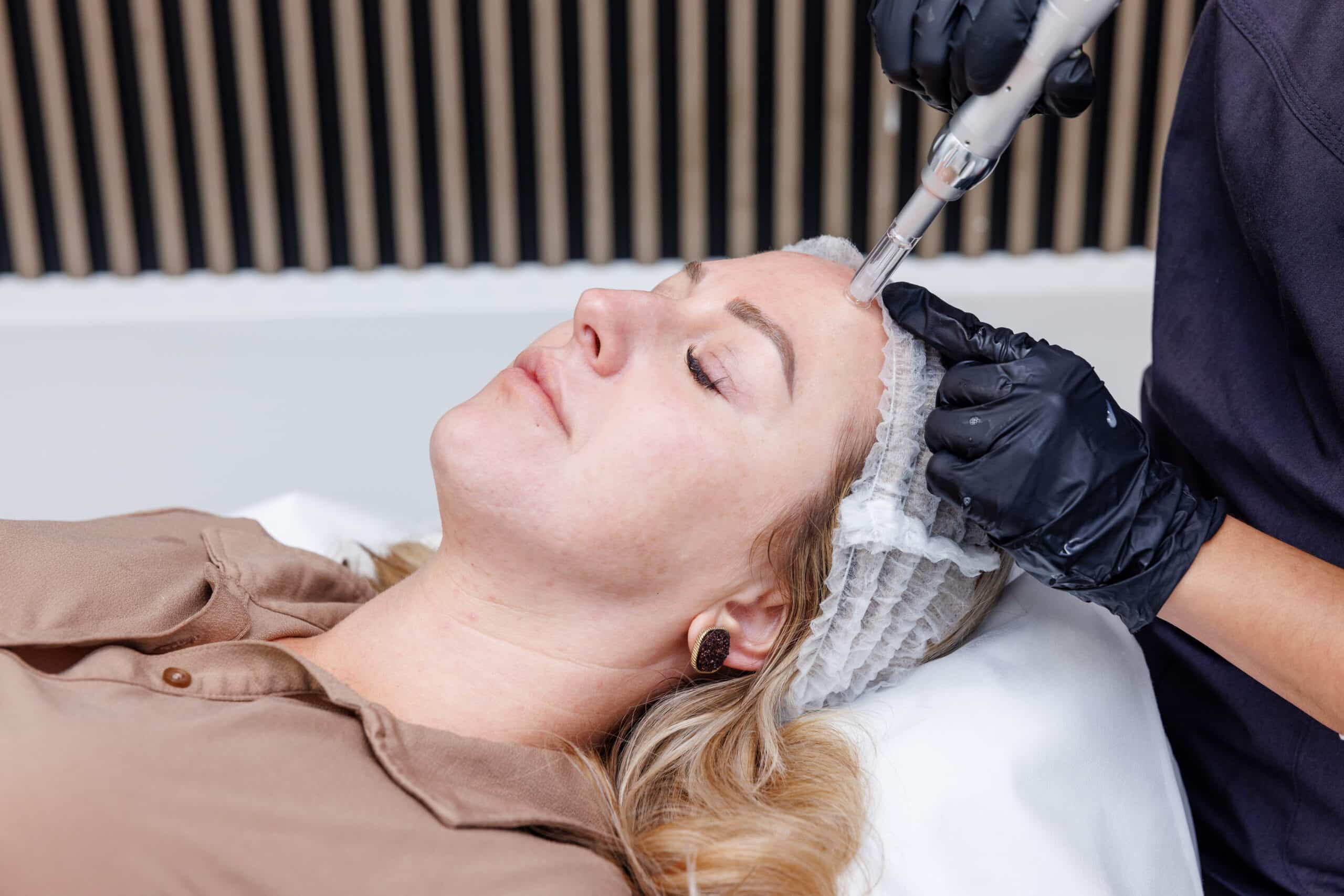
VoluDerm RF microneedling works on a different principle entirely. Instead of heating existing collagen, it creates controlled micro-injuries (via 640 gold-coated microneedles) that reach 2.5 mm into the dermis, then delivers radiofrequency energy inside those channels. The body interprets this as trauma and launches a three-month healing cascade: inflammation, collagen synthesis, and new dermal matrix deposition. You’re not tightening. You’re building.
A Lorne Park client with sun-damaged skin and uneven pigmentation came in frustrated after 20 years of inconsistent sunscreen use. Her skin showed hollowed cheeks, rough texture, and mottled brown patches. We designed a three-month VoluDerm RF protocol: one session, then a second at week four, then a third at week eight. By week 12, her skin was visibly thicker, more resilient. Her pigmentation improved 60% (she was thrilled; we tracked it with our 3D Skin Analysis imaging). That structural rebuild is what VoluDerm delivers.
The Collagen Induction Phase: What Happens Under the Skin
When VoluDerm needles penetrate, they trigger three distinct phases of healing. First, inflammation: your immune system recognizes the micro-punctures and floods the area with growth factors. Second, proliferation: fibroblasts activate and begin laying down new collagen and elastin strands. Third, remodeling: over 8–12 weeks, this new collagen cross-links and integrates into your existing dermal architecture.
The radiofrequency component amplifies this. RF energy heats tissue in and around the needle tracks, further stimulating collagen synthesis and improving blood flow. The combination is more potent than needling alone, which is why VoluDerm clients see structural results that stick. Once collagen is rebuilt, it doesn’t simply fade in a few months like TriPollar’s contraction-based results.
Downtime is the trade-off. Expect redness and mild swelling for 1–3 days post-treatment. Many clients describe a “sandpaper” texture for 24 hours as micro-crusts form. By day two or three, skin is usually presentable. This is where education matters. We’ve had clients expect zero downtime and were shocked by the reality. A Lakeview accountant once booked VoluDerm before a major client dinner. One session later, she looked like she’d had a minor allergic reaction. We’ve learned to be explicit: VoluDerm requires patience and planning.
Cost and Long-Term Value
VoluDerm RF microneedling is from $325. TriPollar RF skin tightening is from $250 / session. Treatment timing and maintenance are tailored through a custom protocol, with maintenance typically every 4–6 weeks.
For clients with significant volume loss, scarring, or textural damage, VoluDerm is often the smarter investment because it addresses the root problem: insufficient collagen. TriPollar’s maintenance treadmill suits clients focused on preserving existing firmness without structural deficits.
Understanding Depth: Why 4–6 mm Versus 2.5 mm Matters
Dermal depth is not linear in terms of skin-aging impact. The superficial dermis (0–1.5 mm) handles fine lines and texture; the mid-dermis (1.5–3 mm) holds volume and elasticity; the deep dermis (3–6 mm) supports structural support and skin tightness. TriPollar RF’s 4–6 mm reach makes it a deep-layer technology, ideal for tightening. VoluDerm’s 2.5 mm penetration—though shallower—is optimized for collagen induction because it triggers a broad healing response that extends deeper than the needle itself.
Think of it this way: TriPollar heats the deep dermis, contracting existing structure. VoluDerm wounds the mid-dermis, triggering a healing response that rebuilds the entire dermal zone. Neither is universally “deeper” in outcome; they target different problems.
The Role of 3D Skin Analysis in Choosing the Right Technology
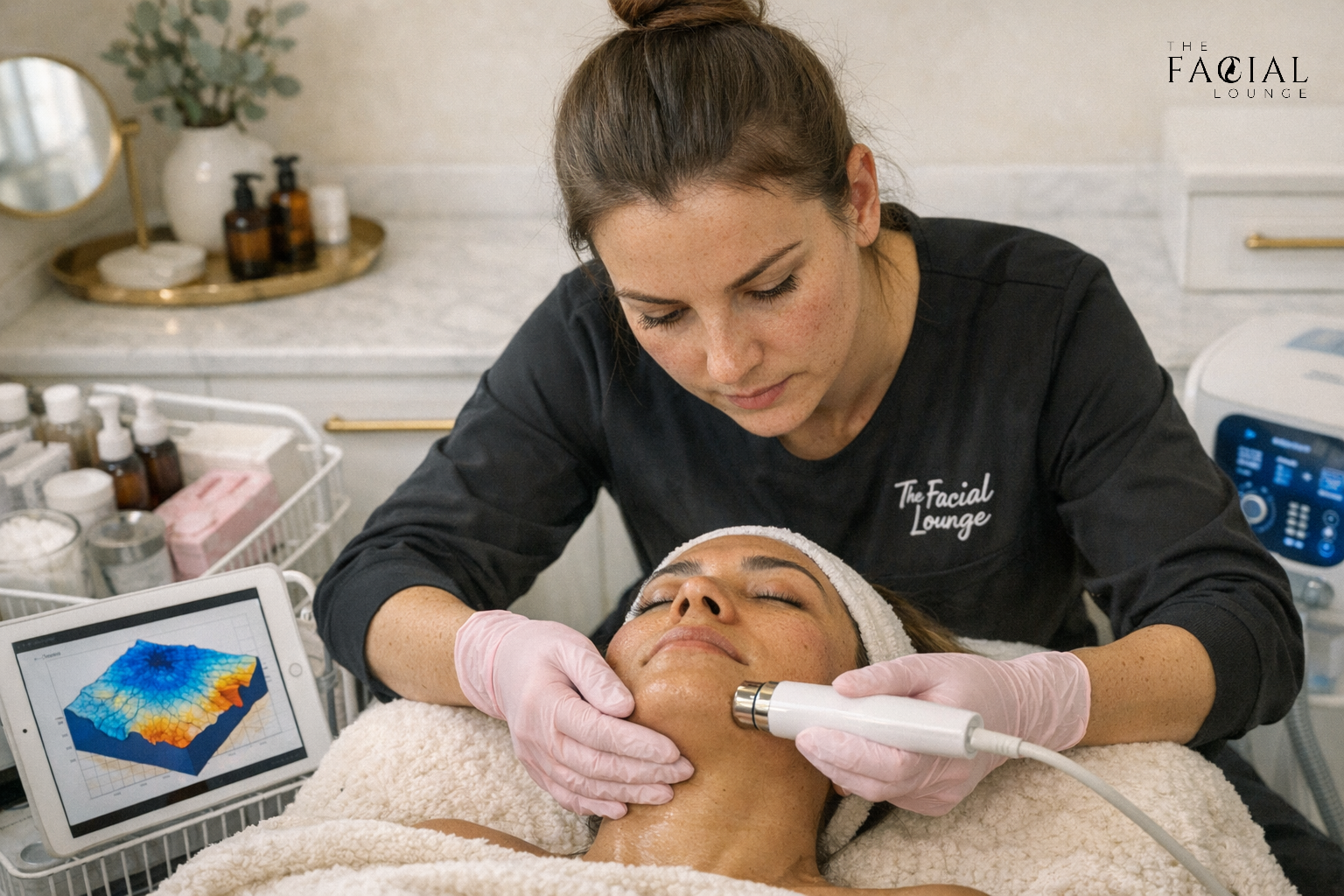
Every protocol at The Facial Lounge starts with a 3D Skin Analysis. This imaging captures dermal density, collagen distribution, hydration levels, and pigmentation mapping. It’s not guesswork. When you sit with one of our certified estheticians and see your skin rendered in 3D, the choice between TriPollar and VoluDerm becomes obvious.
A client with high dermal density but loose, lax skin almost always benefits from TriPollar first—you have the collagen, it just needs tightening. A client with visible collagen loss, thin dermis, and hollow areas needs VoluDerm to rebuild. Many clients—especially those over 45 in the Mineola and Port Credit demographics—benefit from both, sequenced strategically.
Every appointment begins with a 3D Skin Analysis that drives a custom protocol based on your skin condition.
When to Choose Which: The Decision Matrix
- Your primary concern is skin laxity or sagging (jawline, neck, cheeks).
- You want visible results within 4–6 weeks.
- You have minimal downtime tolerance and need to look camera-ready soon.
- Your dermal density is good, but elasticity has declined.
- You’re willing to commit to maintenance every 4–6 weeks indefinitely.
- You’re under 50 with mild-to-moderate firmness loss.
- You have visible volume loss, hollow cheeks, or thin skin.
- You want structural, long-lasting collagen rebuilding.
- You’re willing to tolerate 1–3 days of redness and micro-puncturing.
- You have atrophic scars, textural damage, or uneven pigmentation.
- You want results that sustain 6–12 months with minimal maintenance.
- Your skin shows signs of advanced sun damage or collagen depletion.
Combining Both: The Sequential Protocol Advantage
Here’s what we’ve discovered through hundreds of treatments: many clients see better outcomes by combining both technologies in sequence, rather than choosing one. The strategy is TriPollar first (4 sessions, weeks 1–6) to achieve immediate firmness and skin tightening, then VoluDerm RF (3 sessions, weeks 9–16) to rebuild and reinforce collagen structure. By week 16, you have both the tightness and the volumetric support.
A sequential plan is priced per session, with protocol details set after your 3D Skin Analysis.
We typically recommend sequential protocols for clients over 45, anyone with past sun damage, or those seeking dramatic visible transformation. Clients under 40 with mild concerns often do fine with TriPollar alone; clients with severe volume loss sometimes skip TriPollar and go straight to VoluDerm for efficiency.
Common Mistakes: What We’ve Learned From Real Clients
Expecting Overnight Results from Advanced Treatments
One mistake we see repeatedly: clients book TriPollar and expect a facelift after session one. Firming is gradual. By session two or three, change becomes visible, but true results unfold over 4–6 weeks as collagen remodeling progresses. With VoluDerm, patience is even more critical—the full effect takes 8–12 weeks. Clients who don’t understand this timeline often feel disappointed at week two and abandon the protocol before it works.
Mixing Too Many Active Ingredients Simultaneously
Post-TriPollar or VoluDerm, the skin is actively remodeling. Layering retinol, vitamin C, glycolic acid, and peptide serums all at once overwhelms the barrier and triggers irritation. We’ve had clients hobble in with compromised skin after aggressive home routines combined with professional treatments. The rule: simplify. Gentle cleanser, hydrating toner, a single active (usually a peptide serum or lightweight retinol, not both), moisturizer, and SPF. That’s it. Your professional treatment is already the active ingredient.
Skipping SPF Year-Round
After VoluDerm, your skin is in an active healing state with new, vulnerable collagen. Unprotected UV exposure can damage this nascent collagen and undo 40% of your results. We’ve tracked this through post-treatment 3D scans. Clients who skip SPF post-VoluDerm show noticeably slower collagen maturation. Even in winter, UVA penetrates cloud cover. Minimum SPF 30 daily, reapplied every two hours if outdoors. Non-negotiable.
Over-Cleansing or Over-Exfoliating Post-Treatment
After VoluDerm, some clients think they need to aggressively exfoliate away the micro-crusts. Wrong. Over-exfoliating disrupts the healing cascade and can trigger prolonged inflammation or temporary hyperpigmentation. The crusts flake off naturally in 3–4 days. Use only lukewarm water and a soft washcloth. No scrubs, no brushes, no acid exfoliants for at least five days post-treatment. This is where patience and restraint matter most.
Our Verdict: Which Technology Wins?
There’s no universal winner. TriPollar RF wins if you need visible tightening fast, value maintenance ease, and prefer minimal downtime. VoluDerm RF wins if you’re addressing volume loss, scarring, or textural damage and can commit to a 12-week protocol. For lasting transformation—the kind clients still show us in photos a year later—VoluDerm delivers deeper structural change. For confidence boosts and routine maintenance, TriPollar is unbeatable.
The Port Credit mom’s visible jawline lift from four TriPollar sessions? Real. The Lorne Park client’s 60% pigmentation improvement and skin thickening from three VoluDerm sessions? Also real. The difference is intention: one was tightening existing structure, the other was rebuilding lost collagen. Both worked because both clients chose the technology that matched their skin’s actual needs—as revealed by 3D Skin Analysis.
A combination approach using TriPollar and VoluDerm may be part of a custom protocol guided by your 3D Skin Analysis.
Frequency and Maintenance: What Realistic Commitment Looks Like
After your initial protocol, maintenance depends on which technology you chose. TriPollar requires disciplined spacing: every 4–6 weeks indefinitely. Skip for eight weeks, and firmness gradually softens. It’s like gym routine for your dermis. VoluDerm, once the initial three-session series is complete, typically needs a touch-up once annually—occasionally twice if you’re heavily sun-exposed or over 50.
For clients combining both, the rhythm is: TriPollar every 4–6 weeks ongoing, plus one VoluDerm session annually. Many clients batch their TriPollar in clusters (four sessions over 6 weeks, then a two-month break) rather than spreading them indefinitely, which reduces annual cost. We’ve found clients who maintain this way report more sustainable results than those who abandon all maintenance after their initial protocol.
Pairing With Other Boutique Treatments for Maximum Impact
TriPollar and VoluDerm don’t exist in a vacuum. At The Facial Lounge, we layer them into broader protocols using complementary technologies. Many clients combine VoluDerm with Oxygeneo Super Facial treatments (starting at $189) for immediate hydration and glow while collagen rebuilds. Others pair TriPollar with our Korean Glass Facial (from $179) for skin barrier support and luminosity.
We also use AQUAPURE oxygen infusion therapy as an inter-treatment recovery boost, especially post-VoluDerm. The oxygen calms inflammation and accelerates healing. For clients with stubborn textural issues, we sometimes follow VoluDerm with a single TriFractional resurfacing session to smooth remaining rough patches. These combinations are custom-designed during your 3D Skin Analysis consultation—no two protocols are identical.
Why Location and Boutique Care Matter: The Mississauga Advantage
The Facial Lounge is nestled at 100 Queen St., Unit 202, right in downtown Mississauga—accessible to clients across Port Credit, Mineola, Lorne Park, Cooksville, Streetsville, Clarkson, and Lakeview. Because we’re a boutique aesthetic studio (not a sprawling medical spa), every appointment receives hands-on attention from certified estheticians who remember your skin from visit to visit. Protocols evolve based on your actual results, not a predetermined template.
A Port Credit client didn’t just get four TriPollar sessions; she got four sessions calibrated by the same esthetician, who noticed her jawline responding slightly differently than expected and adjusted heat settings to optimize lift. That personalization is hard to scale in larger medical spas where staff rotate and protocols are standardized. It’s the difference between a car wash and a hand detail.
Frequently Asked Questions
Can I do TriPollar and VoluDerm in the same week?
No. If you’re combining them, we space them 2–3 weeks apart so your skin recovers fully from one technology before introducing the next. TriPollar causes minimal disruption, but VoluDerm creates micro-punctures; stacking them invites unnecessary inflammation and extends downtime. Sequential spacing optimizes results and safety.
How long before I see results from TriPollar RF versus VoluDerm RF?
TriPollar shows visible tightening by week 3–4 and peaks by week 6. VoluDerm has a slower timeline: visible improvement by week 4, but full collagen maturation takes 8–12 weeks. This is why our Port Credit client saw jawline lift quickly from TriPollar, while our Lorne Park client’s pigmentation and skin texture steadily improved over three months from VoluDerm—different mechanisms, different timelines.
Is one technology safer than the other?
Both are FDA-cleared and safe when administered by trained estheticians. TriPollar has minimal risk because there’s no wounding; redness and warmth are temporary. VoluDerm carries slightly higher risk if the operator uses incorrect depth settings or applies uneven pressure, which can cause burns or prolonged downtime. At The Facial Lounge, our certified estheticians follow rigorous protocol, and we’ve had zero adverse events over hundreds of treatments. Choosing a reputable, certified provider matters more than the technology itself.
Which technology is better for acne scars—TriPollar or VoluDerm?
VoluDerm RF is the clear winner for atrophic (indented) acne scars because it rebuilds collagen volume beneath the scar. TriPollar tightens surface skin but doesn’t fill depressed scars. Many acne-scar clients benefit from a VoluDerm series (3 sessions) followed by optional TriPollar for overall firmness. A 3D Skin Analysis will show exact scar depth and guide the best approach.
Ready to Choose Your Path to Firmer, Fuller Skin?
Book an appointment at The Facial Lounge to discover whether TriPollar RF, VoluDerm RF microneedling, or a strategic combination is right for your skin.
🎧 Listen to article
- A Client Asked: “Will VoluDerm RF Microneedling Actually Hurt If I Have Sensitive Skin?” — The Full Answer
- Oxygeneo vs Oxygen Infusion Therapy: Which Delivers Deeper Hydration for Dehydrated Skin Types
- Why Clients in Port Credit Notice Faster Skin Tightening Results After TriPollar RF — The Local Lifestyle Fact
- The Client Whose AQUAPURE Results Plateaued After 3 Sessions — What the 3D Scan Revealed and How We Adjusted
- Why Clients from Lakeview Bring Unique Sun-Damage Patterns That Standard Facials Miss — What Our 3D Scan Shows


Related Posts