Sensitive Skin Facial in Mississauga: Should Exfoliation Wait When a Clarkson Client’s 3D Scan Shows Barrier Compromise?
Last updated: October 11, 2026
Published October 11, 2026 · Updated October 11, 2026
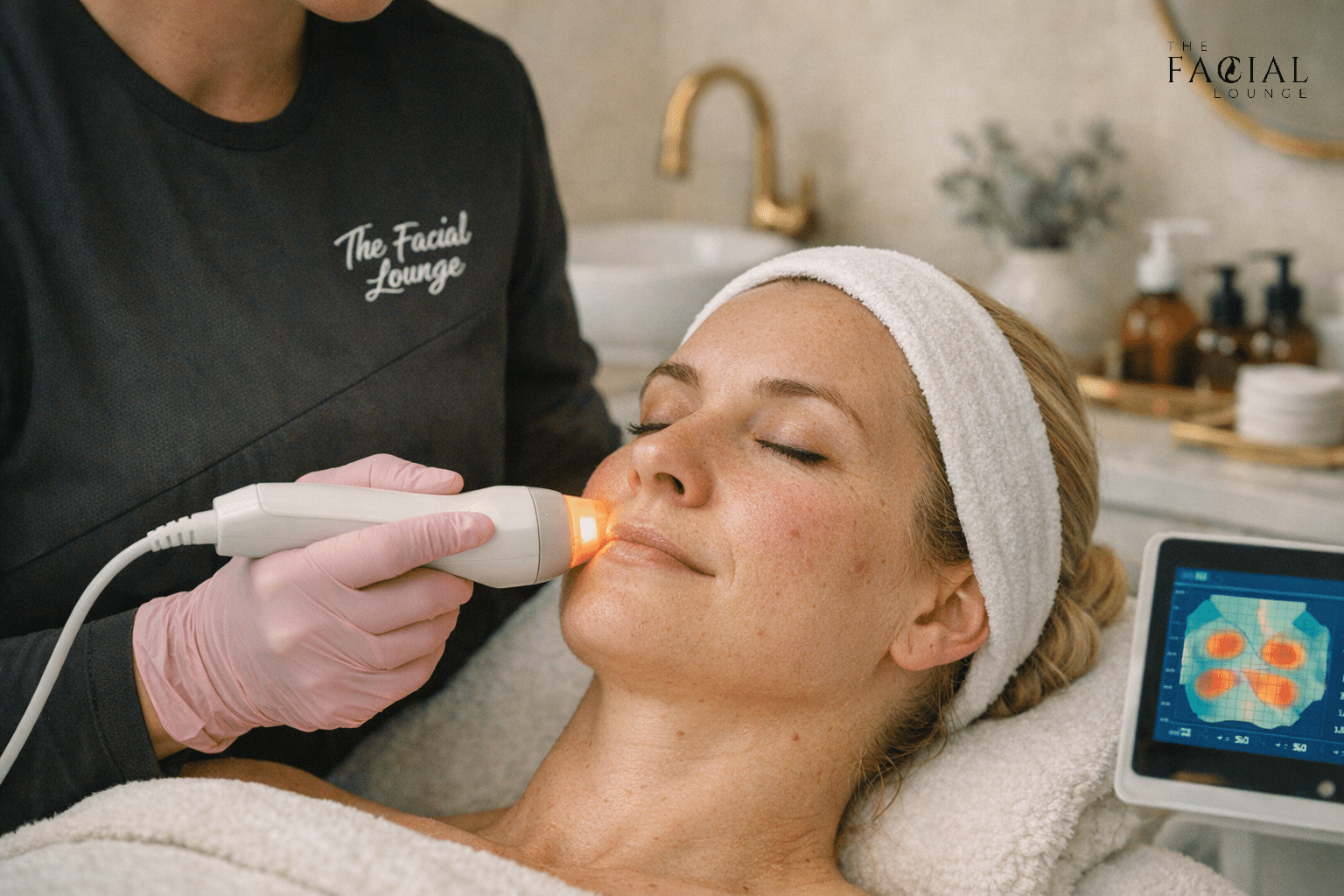
A sensitive skin facial in Mississauga for a Clarkson client whose 3D scan shows barrier compromise should usually postpone exfoliation and start with barrier repair. At The Facial Lounge, the 3D Skin Analysis that opens every appointment is what decides when exfoliation returns, not the calendar or the menu. Understanding that decision before you lie down on the treatment bed changes what you ask for and what you expect to leave with.

- A 3D Skin Analysis is the first step of every protocol at The Facial Lounge, at 100 Queen St., Unit 202, Mississauga.
- When a scan suggests barrier compromise, mechanical and chemical exfoliation are generally paused until the skin settles.
- The Oxygeneo Super Facial starts from $189 and the Korean Glass Facial starts from $179 at The Facial Lounge; which one fits a sensitive client depends on the scan.
- Energy-based treatments such as VoluDerm RF microneedling (from $325) and TriPollar RF skin tightening (from $250 per session) are usually sequenced after the barrier recovers, not during a flare.
- Maintenance facials at The Facial Lounge are typically spaced every 4-6 weeks, which gives a compromised barrier time to respond between visits.
- What a 3D Skin Analysis looks for before any product touches sensitive skin
- Why exfoliation is the step most often paused when the barrier is compromised
- The order in which calming, hydration and resurfacing are layered over several visits
- Which tools at The Facial Lounge suit a reactive phase, and which wait
- The questions worth asking your esthetician before your first sensitive skin facial
Why does exfoliation wait in a sensitive skin facial in Mississauga when a 3D scan shows barrier compromise?
Exfoliation waits because it removes part of the outermost layer of skin, and a compromised barrier is already struggling to hold water and keep irritants out. Taking more away at that moment tends to increase stinging, redness and tightness rather than improve texture.
The skin barrier is the stratum corneum: flattened cells held together by lipids, often compared to bricks and mortar. When that structure is disrupted, water escapes more easily and products that normally feel neutral can start to sting. Dermatology bodies such as the American Academy of Dermatology advise people with sensitive or inflamed skin to be cautious with exfoliation for exactly this reason.
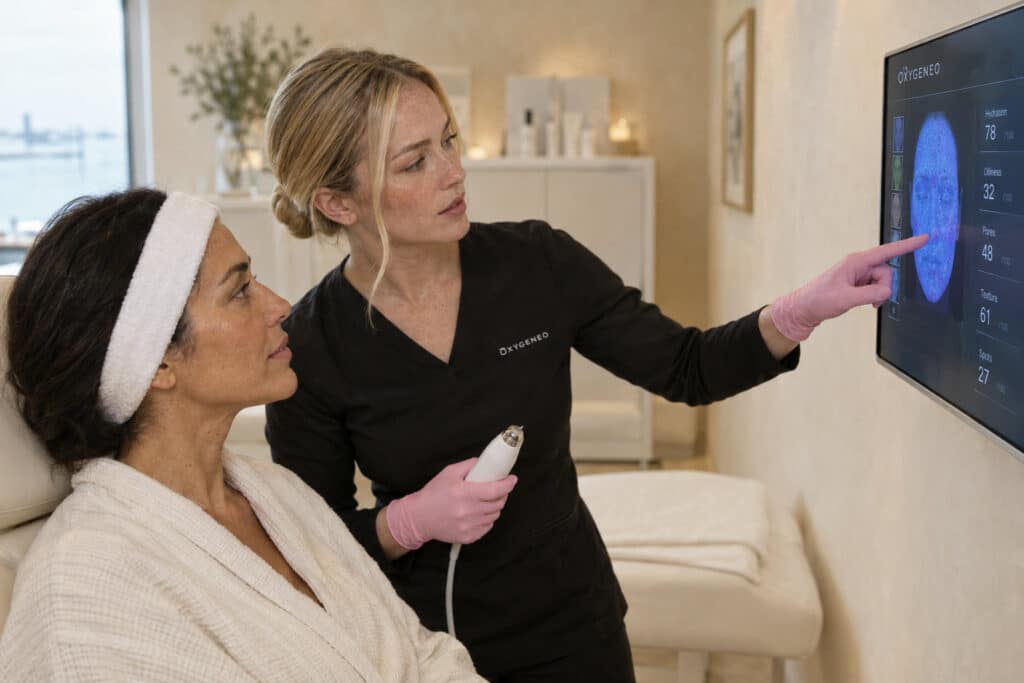
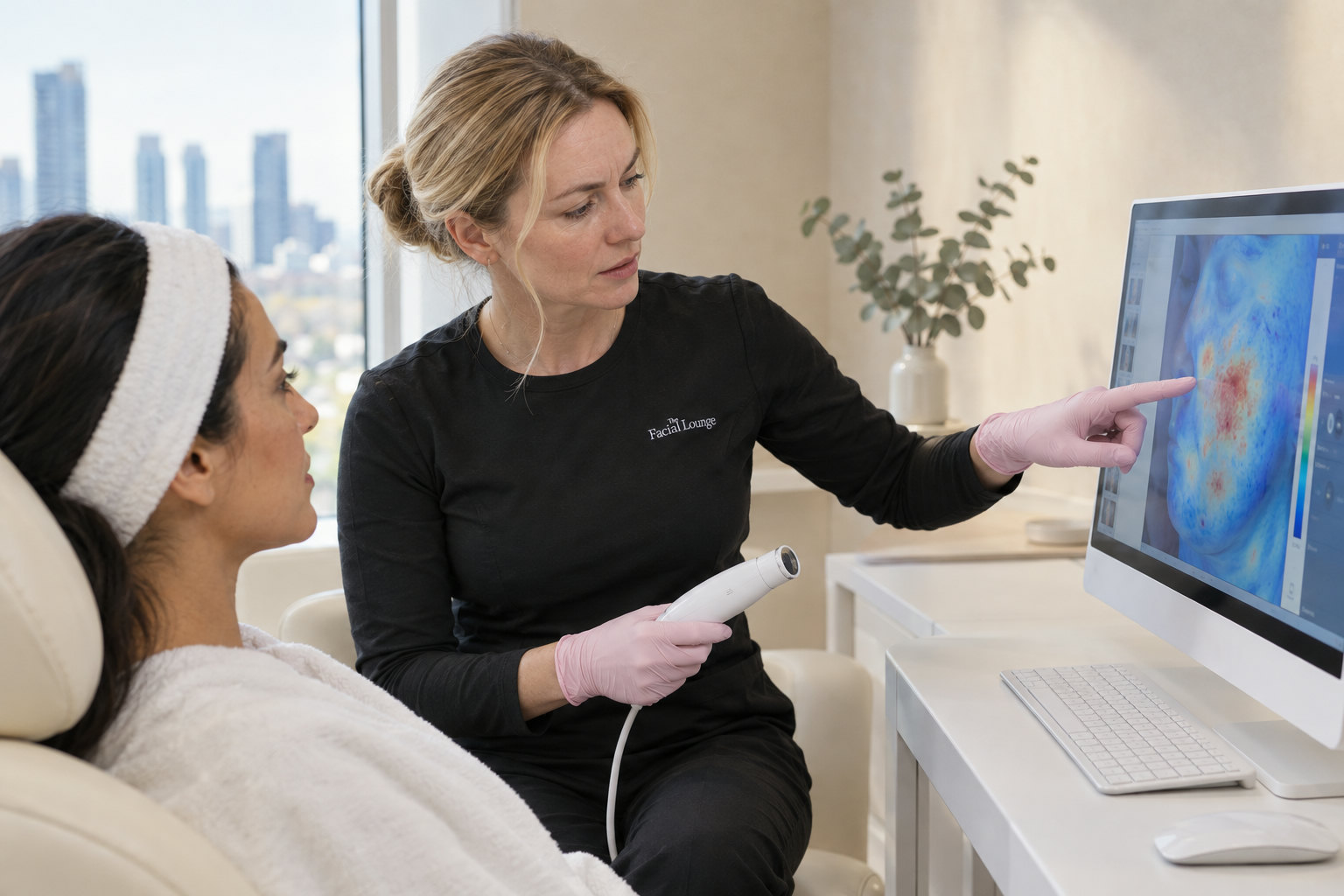
A 3D Skin Analysis does not diagnose a medical condition. What it does is give the esthetician a visual map of the face, showing areas of visible redness, uneven texture and surface patterns that help guide the protocol. If you want to understand what that consultation includes before booking, the breakdown of 3D Skin Analysis and custom facial costs in Mississauga walks through it.
This matters most for one group. If you’re a Clarkson resident whose skin flushes after cleansing, stings under moisturizer that used to feel fine, and looks rough no matter how much you scrub, the answer below is written for you. It is not aimed at someone with resilient, oily skin who simply wants a brighter finish before an event.
The Process, Step by Step
A sensitive skin facial at The Facial Lounge follows a sequence built around the 3D Skin Analysis. The steps below describe the typical flow when a scan suggests the barrier needs support first. Every client’s plan is adjusted to what their own skin shows.
- Intake conversation. Before the scan, the esthetician asks about current products, recent treatments, known sensitivities and anything your physician has told you. Retinoids, prescription topicals, recent sun exposure and pregnancy all change what is appropriate, and medical questions are referred back to your physician.
- 3D Skin Analysis. The face is imaged and reviewed together with you on screen. Areas of visible redness, dehydration patterns and uneven texture are noted, and this map becomes the foundation of the protocol.
- The exfoliation decision. If the scan and the hands-on assessment point to barrier compromise, scrubs, strong acids and aggressive resurfacing are set aside for this visit. The decision is explained to you rather than made silently, so you know why the appointment looks gentler than you might have expected.
- Low-friction cleanse. Cleansing uses a mild, non-stripping approach with minimal rubbing. Over-cleansing or harsh exfoliating at home is a common mistake with reactive skin, and the in-clinic cleanse is designed to avoid repeating it.
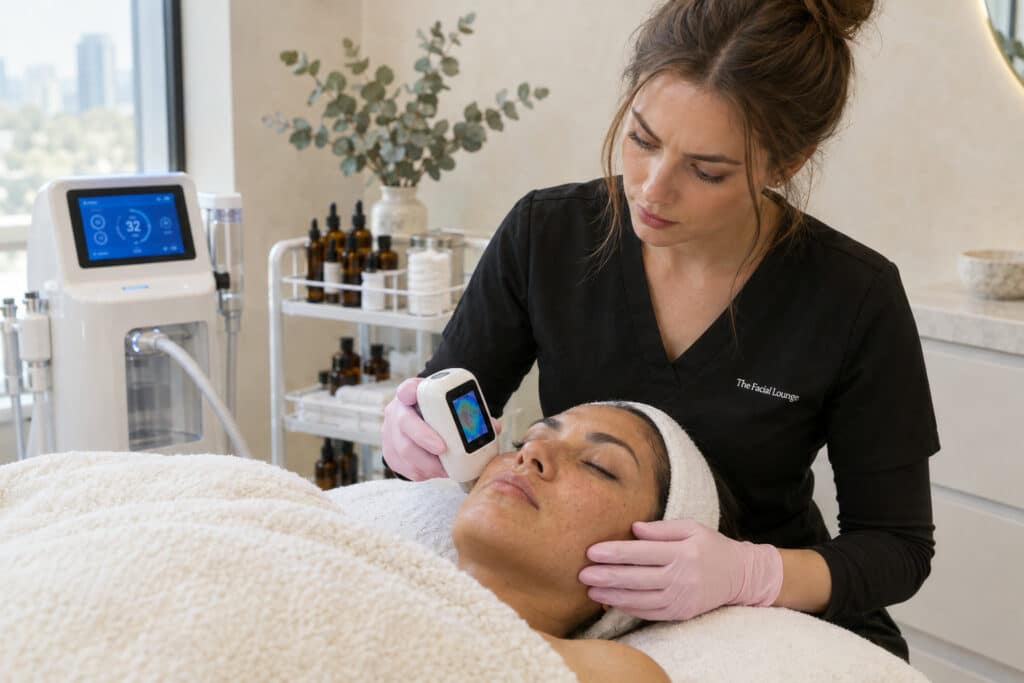
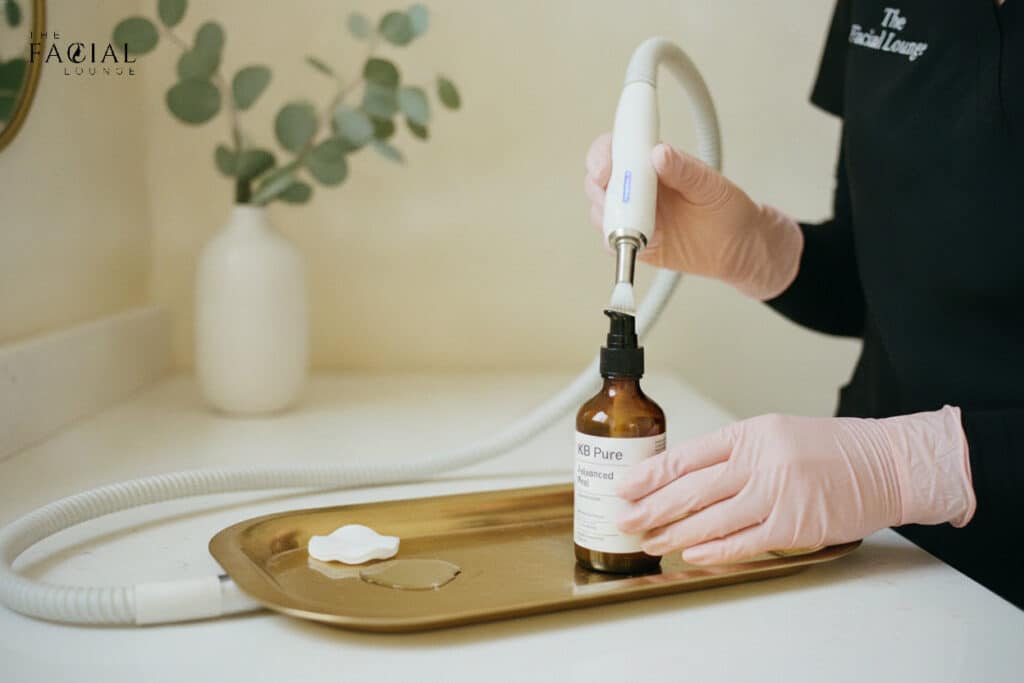
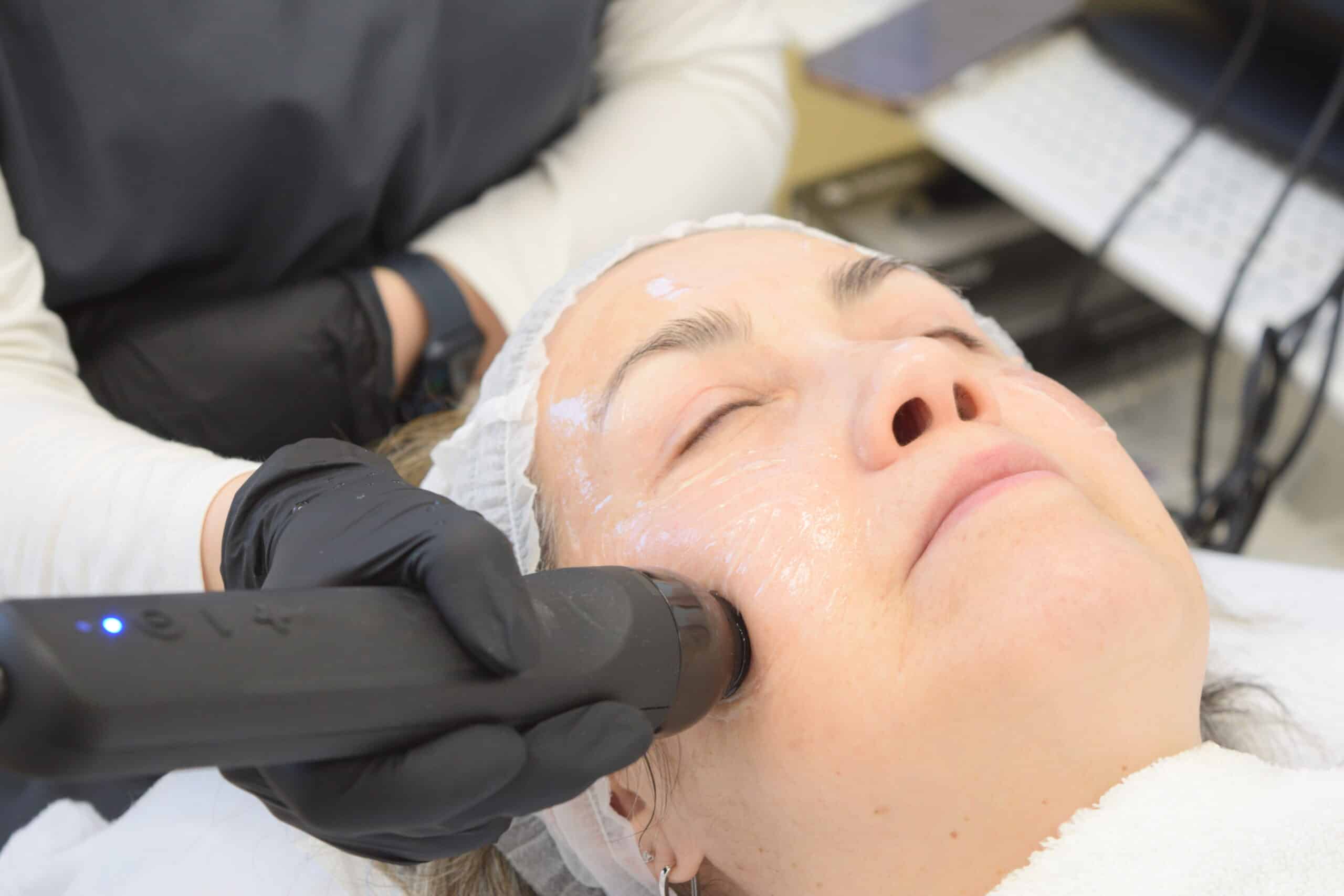
- Calming and hydration layer. Depending on the scan, this may draw on hydrating steps from AQUAPURE or oxygen infusion therapy, with soothing, barrier-friendly products applied in thin layers. The aim is comfort and water retention, not visible peeling.
- Protection and home plan. The session closes with SPF and a simplified routine. Mixing too many active ingredients at once is another common mistake, so the home plan often removes products rather than adding them.
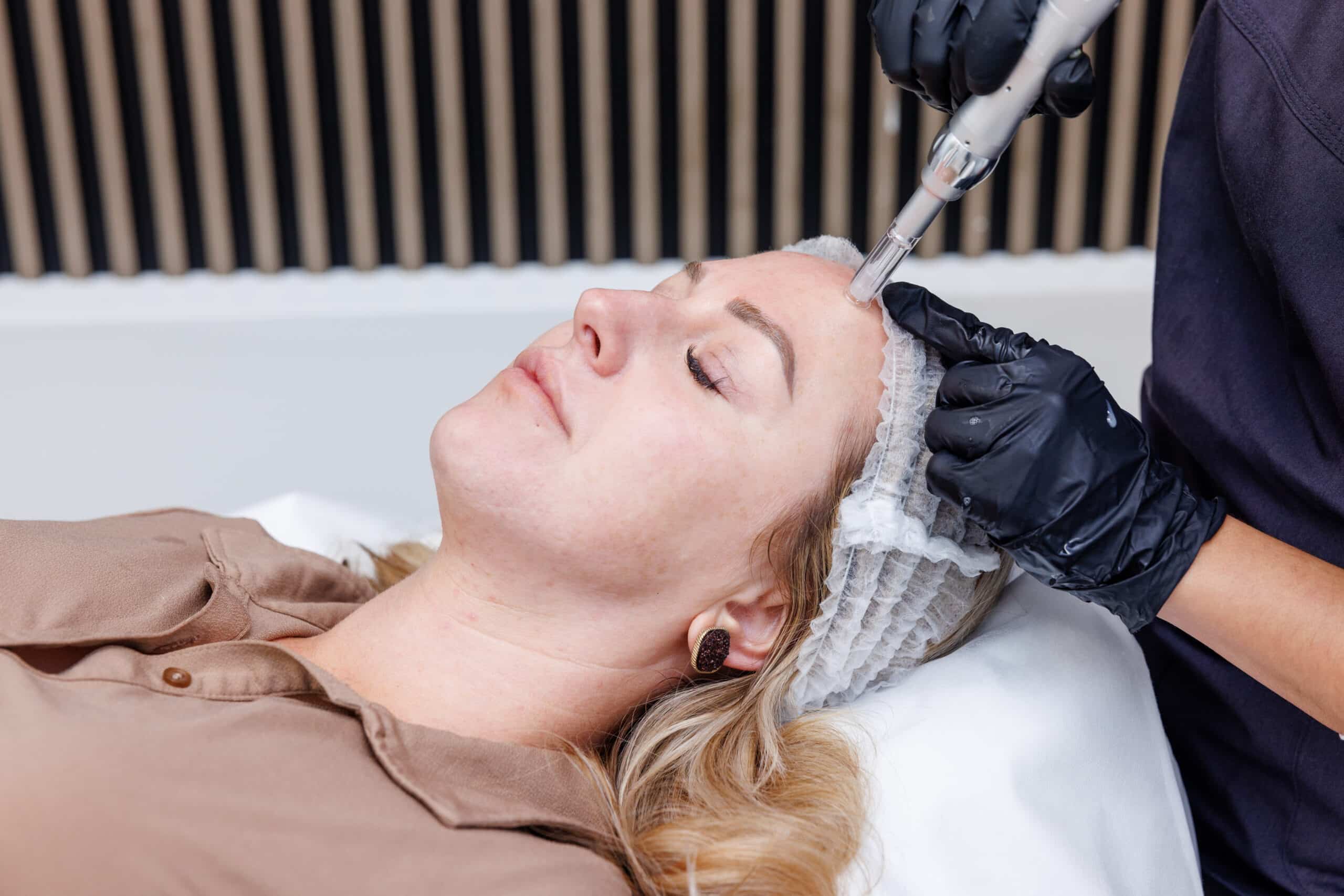
- Follow-up scan. At the next visit, usually within the 4-6 week maintenance window, a new 3D Skin Analysis is compared with the first. Gentle exfoliation, such as the controlled exfoliation step inside an Oxygeneo Super Facial, is reintroduced only if the skin appears ready.
The 3D Skin Analysis comes first, the exfoliation decision comes second, and calming and hydration fill the first visit when the barrier looks compromised. A follow-up scan within the 4-6 week maintenance window decides whether exfoliation returns.
Tools We Use
The Facial Lounge works with a defined set of technologies, and each one has a different place in a sensitive skin plan. The table shows where each typically sits relative to barrier repair. Device descriptions stay at the level each manufacturer and the clinic’s service menu describe.
| Tool or treatment | Purpose | Typical timing for a compromised barrier |
|---|---|---|
| 3D Skin Analysis | Maps visible redness, texture and dehydration to build the protocol | Every visit, before anything else |
| AQUAPURE and oxygen infusion therapy | Hydration-focused steps that support a comfortable, calm finish | Often suitable early, depending on the scan |
| Oxygeneo Super Facial (from $189) | Combines gentle exfoliation, infusion and oxygenation in one treatment, as Pollogen describes it | Usually after the barrier settles, because it includes exfoliation |
| Korean Glass Facial (from $179) | A signature facial focused on a luminous, hydrated finish | Adjusted to the scan; steps can be modified for reactive skin |
| TriPollar RF (from $250 / session), VoluDerm RF microneedling (from $325), TriFractional | Energy-based tightening, texture and resurfacing work | Sequenced later in a plan, once the skin tolerates it |
Notice what is missing from the early column. Resurfacing and energy-based treatments are not bad choices for sensitive skin forever; they are simply better suited to skin that is calm and holding hydration. For a side-by-side look at two of them, the comparison of VoluDerm RF microneedling vs TriFractional resurfacing explains which suits which texture goal.
Does living in Clarkson affect a sensitive skin barrier?
Living in Clarkson does not cause barrier compromise, but its setting along the Lake Ontario shoreline means exposure to wind off the water, and Mississauga winters bring cold outdoor air and dry indoor heating. Wind, cold and low humidity are widely recognized as stressors that can leave skin feeling tight and reactive.
The practical consequence is seasonal. A sensitive skin facial in Mississauga booked in late autumn or winter may lean further toward hydration than the same protocol in summer, and the 3D scan is what shows whether that shift is needed. Summer brings its own pressure through sun exposure, which is why SPF stays in the plan year-round.
If you have tried several facials without lasting change, the earlier piece on a Clarkson client, three facials and what a 3D Skin Analysis revealed covers why identifying the underlying issue first tends to matter more than repeating treatments.
Where It Gets Tricky
The trickiest part of a sensitive skin protocol is that a compromised barrier can look like a texture problem. Rough, flaky patches tempt people toward more exfoliation, when the flaking is often a sign the skin is dehydrated and irritated. Reading that correctly is a judgment call, and it is the reason trained estheticians use the 3D Skin Analysis alongside a hands-on assessment rather than relying on one or the other.
The second tricky area is history. Recent retinoid use, a peel elsewhere, a new acid serum or prescription treatment can all leave skin more reactive than it looks on the day. That is why the intake conversation is not a formality, and why anything that sounds medical, such as a suspected skin condition, is referred to your physician or dermatologist rather than treated in the chair.
The third is timing. Moving to exfoliation, Oxygeneo or energy-based work too early can set progress back. Waiting too long without a clear plan can leave a client feeling stuck. The follow-up scan exists to make that call on evidence. If you have ever had a reaction after a treatment, the article on why skin can look worse after a facial explores the common causes.
What This Means for You as the Customer
For a customer booking a sensitive skin facial at The Facial Lounge, a barrier-first plan means the first visit may feel quieter than a glow-focused facial. Expect less tingling, little or no exfoliation and a strong focus on comfort. That is deliberate.
Expecting overnight results from advanced treatments is a common source of frustration. Barrier repair is gradual and varies from person to person, so no single appointment can promise a specific outcome. What you can expect is a clear explanation of what the scan shows and why the plan is sequenced the way it is.
Useful questions to bring to your appointment:
Ask to see the areas of redness or dehydration that shaped today’s protocol.
Removing an overlapping acid or retinoid often matters as much as anything done in the chair.
Knowing the criteria for the next step makes the plan feel concrete.
Most maintenance visits fall within 4-6 weeks, which is a natural point to compare scans.
The full menu, from the Korean Glass Facial (from $179) to the Imperial Lift & Tone Facial (from $299), is listed on the Facial Lounge services page. Your scan, not the menu, is what decides the order in which any of them make sense.
Our view
In our opinion, people with sensitive skin overweigh exfoliation and underweigh hydration. Smoothness feels like the goal, so scrubbing feels like progress. For a compromised barrier, the more useful question is whether the skin can hold water comfortably, and exfoliation can only build on that foundation.
We also think the most valuable part of a sensitive skin facial in Mississauga is often the home plan. A simpler routine, daily SPF and fewer overlapping actives tend to matter between visits. The clinic appointment sets direction; the weeks in between carry it.
Finally, patience is a skill, not a delay. Waiting on exfoliation when the 3D scan shows barrier compromise keeps more advanced options, from Oxygeneo to TriPollar RF, available later without fighting the skin to get there.
FAQ
Will a sensitive skin facial include any exfoliation at all?
A sensitive skin facial at The Facial Lounge may include no exfoliation on the first visit if the 3D Skin Analysis suggests barrier compromise. Gentle exfoliation is usually reconsidered at a follow-up within the 4-6 week maintenance window, once the skin looks calmer.
Can I book an Oxygeneo Super Facial if my skin is sensitive?
The Oxygeneo Super Facial, from $189 at The Facial Lounge, includes an exfoliation step, so its timing depends on what your 3D scan shows. Many sensitive clients are better suited to it after a barrier-repair phase, and your esthetician will explain the recommendation at the consultation.
Should I stop my skincare products before my appointment?
Skincare products such as retinoids and acids should be discussed with The Facial Lounge when you book, and prescription products with your physician. Do not stop a prescribed treatment on your own; bring a list of everything you use to the 3D Skin Analysis so the protocol can account for it.
How long until I can try RF or microneedling treatments?
RF and microneedling treatments, including TriPollar RF (from $250 per session) and VoluDerm RF microneedling (from $325), are scheduled only once your skin tolerates them, and there is no fixed timeline. Recovery varies by person, so follow-up 3D scans and your esthetician’s assessment guide that decision.
Sources
- Guidance on exfoliating cautiously with sensitive or reactive skin – American Academy of Dermatology
- Treatment menu and published prices (Korean Glass, Oxygeneo, VoluDerm, Imperial Lift & Tone, TriPollar RF) – The Facial Lounge Services
- Clinic location, 3D Skin Analysis approach and maintenance frequency – The Facial Lounge
The Facial Lounge
The Facial Lounge is a premium aesthetic skincare boutique at 100 Queen St., Unit 202, Mississauga, ON.
 Listen to this articleAudio version
- A Client Asked: “Should Hydration Come Before or After Skin Tightening in One Facial in Mississauga?” Here Is
- A Client Asked: “Can I Get a Facial in Mississauga If I Have Rosacea and Active Redness?” — Our Esthetician’s
- The Clarkson Client Who Tried Three Facials in Mississauga Elsewhere Before Her 3D Skin Analysis Finally Ident
- A Client Asked: “Is a Facial in Mississauga Safe During Pregnancy or Should I Wait?” — What Our Estheticians A
- How One Client’s Korean Glass Facial Plan Was Redesigned After Her 3D Scan Revealed Subclinical Redness in 4 Z


Related Posts