A Client Asked: “Is a Facial in Mississauga Safe During Pregnancy or Should I Wait?” — What Our Estheticians Actually Recommend
Last updated: July 24, 2026
Most facials are safe during pregnancy – but not all treatments belong on your skin right now. The answer depends entirely on which facial in Mississauga safe during pregnancy protocol you’re considering: some use RF technology or active ingredients that require extra caution, while others (like our Oxygeneo Super Facial and Korean Glass Facial) work beautifully throughout all three trimesters when guided by a proper 3D Skin Analysis. Here’s what we recommend, and what to avoid.
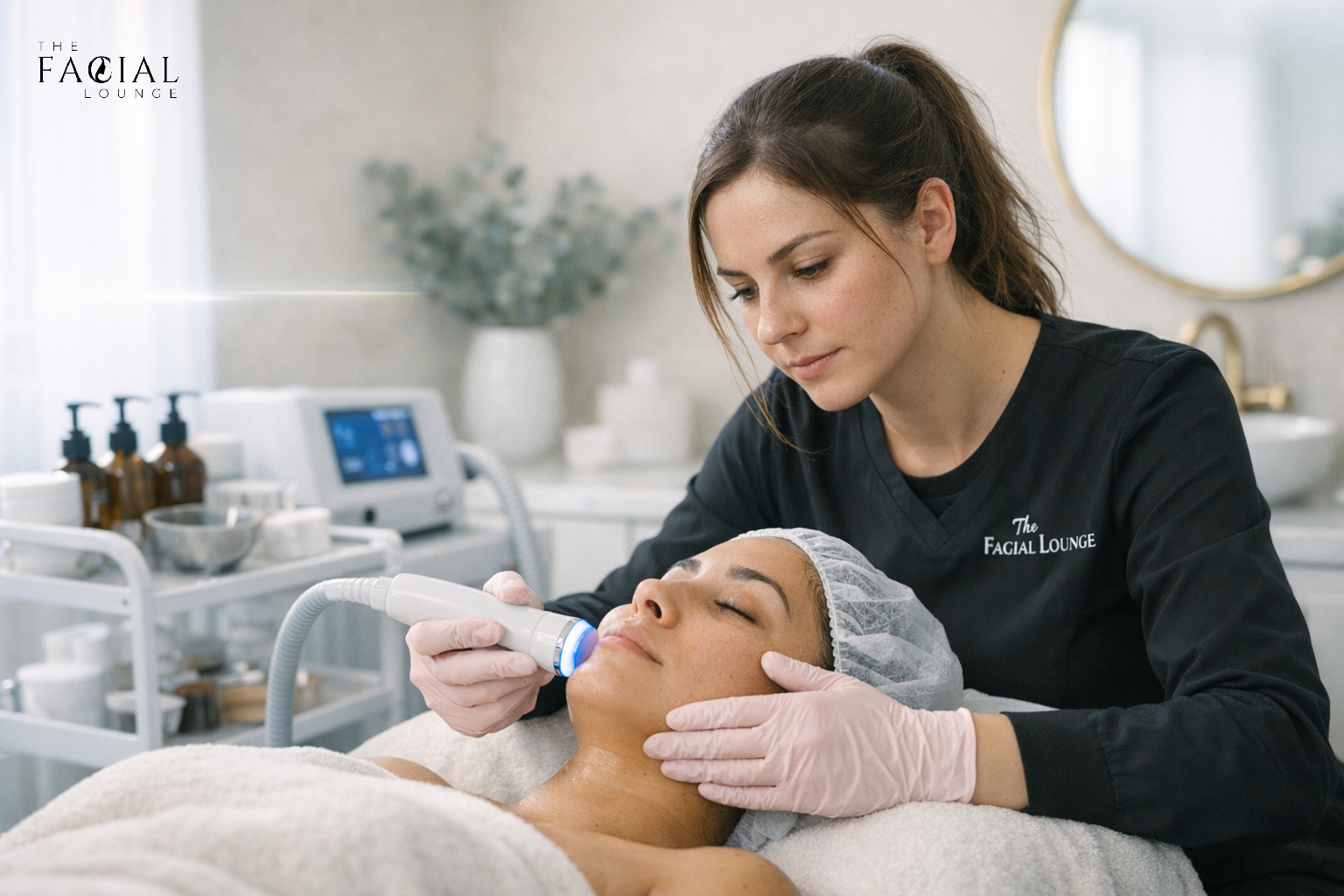

Many facials are pregnancy-safe when chosen carefully. A 3D Skin Analysis at the start of your appointment is the foundation that guides which treatments your skin can handle. RF treatments (TriPollar, VoluDerm), retinoids, salicylic acid, and hydroquinone must be avoided. Gentle hydration facials, oxygen infusion, and non-invasive exfoliation are excellent choices.
The Short Answer
Yes, you can have a facial in Mississauga during pregnancy – provided you choose the right one and avoid RF devices, retinoids, and certain acids. A 3D Skin Analysis performed at your first appointment is non-invasive and safe; it shows our estheticians exactly what your skin needs without any guesswork. From there, we design a custom protocol that typically includes oxygen infusion, gentle hydration, non-invasive exfoliation, or our Oxygeneo Super Facial (which is pregnancy-approved). What you skip: TriPollar RF skin tightening, VoluDerm RF microneedling, TriFractional resurfacing, and any treatment containing retinol, retinoids, or strong chemical peels.
The reason is straightforward. RF (radiofrequency) energy generates heat deep in the dermis to stimulate collagen – during pregnancy, we avoid any modality that raises core body temperature or stresses the system. Retinoids can cross the placental barrier and carry teratogenic risk. But facials that cleanse, hydrate, and gently brighten? Those are not only safe – they’re often exactly what pregnant skin needs.
The Full Answer
Why the 3D Skin Analysis Is Your First Step – Not Optional
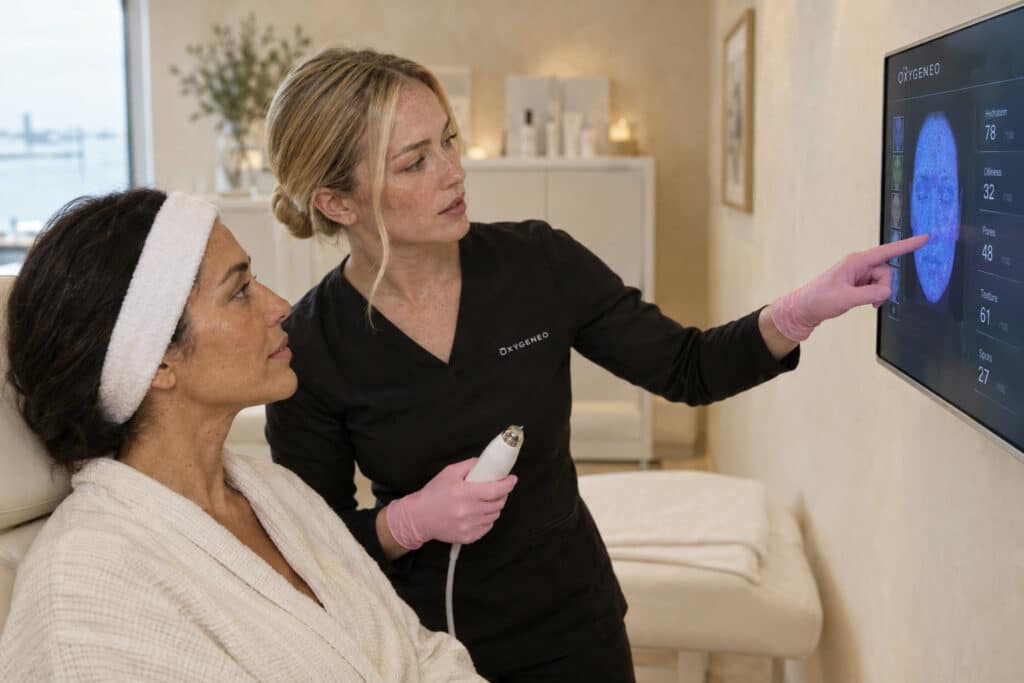
Every facial at The Facial Lounge begins with a 3D Skin Analysis, and during pregnancy, that’s not just routine – it’s your safety baseline. The analysis is 100% non-invasive: it uses optical imaging to map hydration levels, pore size, pigmentation, texture, redness, and skin density without touching your face or applying anything topical.
What the analysis reveals is critical during pregnancy. Many pregnant clients experience hormonal changes that surge melanin production (melasma or “chloasma”), increased sensitivity, dehydration despite normal-looking skin, and compromised barrier function. The 3D readout shows all of this instantly. Our estheticians then use those exact data points to rule out treatments that would aggravate these changes and recommend ones that repair them.
If you’re a pregnant client in Mississauga who’s unsure whether a facial is safe, the 3D Skin Analysis is the conversation-starter that replaces guesswork with certainty.
The 3D Skin Analysis is the first step of every protocol and drives your custom protocol.
Treatments to Avoid: The Hard Line
These are non-negotiable. If an esthetician offers them during pregnancy, politely decline and mention your due date.
| Treatment | Why to Avoid |
|---|---|
| TriPollar RF Skin Tightening | Radiofrequency energy generates heat in the dermis; any modality raising core body temperature is contraindicated during pregnancy. |
| VoluDerm RF Microneedling | Combines microneedling with RF energy; the RF component makes it unsafe. Wait until postpartum. |
| TriFractional Resurfacing | Fractionated laser energy; any heat-based laser is off-limits during pregnancy. |
| Retinol / Retinoids | Vitamin A derivatives can cross the placental barrier; systemic retinoid use is teratogenic. Topical retinol has not been extensively studied in pregnancy – safer to avoid. |
| Strong Chemical Peels (30%+ AHA/BHA) | High-dose acids can irritate already-sensitive pregnancy skin and are systemically absorbed. Mild exfoliation is fine; aggressive peeling is not. |
| Hydroquinone | Depigmenting agent with limited safety data in pregnancy; the ACOG guidelines recommend avoiding. Save melasma treatment for postpartum or nursing period. |
| Microneedling (clinical depth, 1.0mm+) | Deep microneedling triggers systemic inflammation and collagen remodeling; pregnancy hormones and immune shifts make this risky. Shallow, at-home microneedling (0.25-0.5mm) is lower risk, but clinical-grade is best deferred. |
Honestly, the first time we advise a client to wait on TriPollar RF, some push back – they’ve heard it’s the gold standard for skin tightening, and they’re right. It is. But pregnancy alters thermoregulation, blood volume, and vascular tone. Any treatment that deliberately heats the dermis adds unnecessary physiological stress during a time when your body is already managing extraordinary change.
Treatments That Are Safe: The Green List
If you’re a pregnant client in Mississauga, these protocols are safe, effective, and often exactly what your skin needs right now.
Oxygeneo Super Facial (from $189)
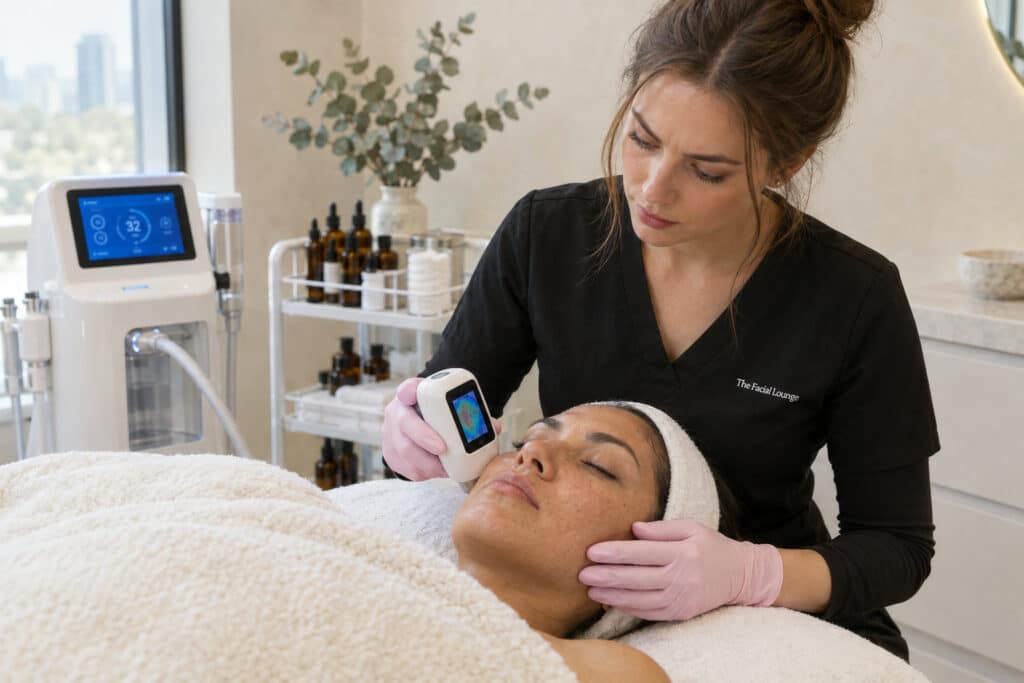
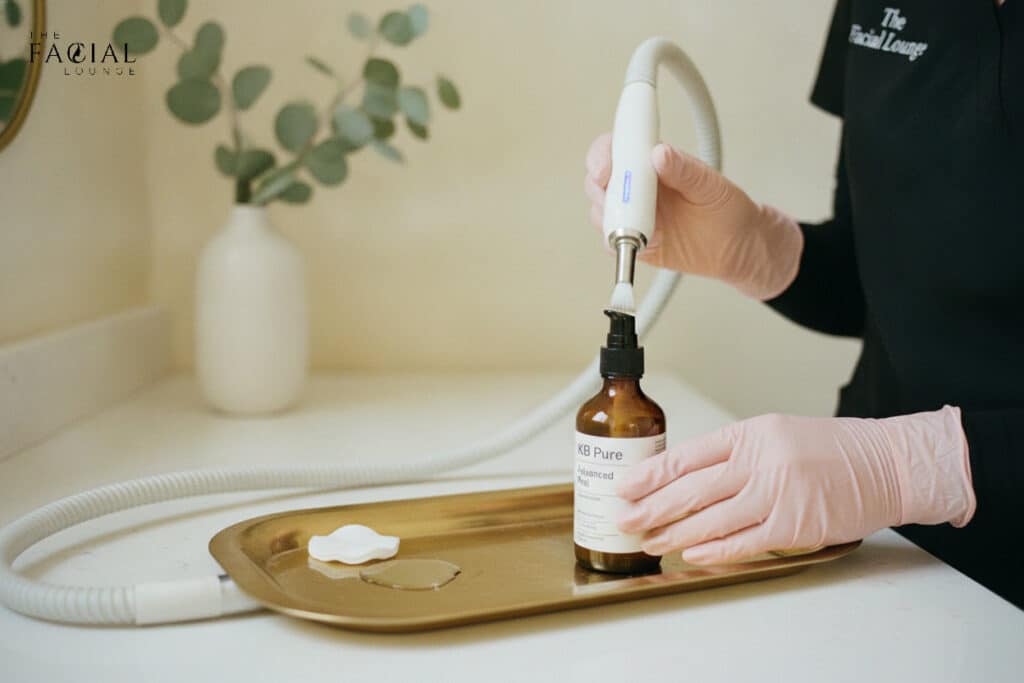
This is our go-to recommendation for pregnant clients. Oxygeneo uses three simultaneous technologies – a gentle exfoliating tip, oxygen infusion, and botanical serums – without RF, heat, or systemic absorption concerns. It hydrates deeply, reduces redness, and brightens without irritation. Safe throughout all three trimesters.
Korean Glass Facial (from $179)
A signature hydrating facial combining gentle exfoliation, patented K-beauty serums, and a protective finish. No heat, no actives, no risk – purely nourishing. Pregnancy melasma? This protocol won’t darken it (unlike some actives) and will restore the skin barrier, which often suffers during pregnancy.
AQUAPURE Hydration Therapy
If dehydration is your main concern, AQUAPURE infuses hyaluronic acid and ceramides without any device stimulation. Pregnancy skin often struggles to hold moisture; this corrects it directly and safely.
Oxygen Infusion Therapy
Delivers oxygen and serums into the skin non-invasively, boosting cellular turnover and radiance. Zero stimulation, zero heat, pure delivery. Particularly effective for the dull, congested appearance some pregnant clients experience.
Mild Manual Exfoliation + Calming Mask
A classic facial with a gentle enzyme or physical exfoliant, followed by a soothing mask. No acids, no RF, no heat – just cleanse, exfoliate lightly, calm, and hydrate. This is always an option.
“What surprises most pregnant clients is how much their skin actually improves during pregnancy when we focus on barrier repair and hydration instead of aggressive resurfacing. By the third trimester, many clients tell us their skin feels smoother and more radiant than before they were pregnant – even though they skipped the RF and retinoids.” – The Facial Lounge Team
The Pregnancy Skin Timeline: What to Expect and When
Pregnancy hormones reshape your skin on a schedule. Understanding this timeline helps you choose the right treatment at the right moment.
| Trimester | Common Skin Changes | Best Facial Protocols |
|---|---|---|
| 1st Trimester | Breakouts, increased oil, sensitivity spikes. Some clients experience a temporary dull complexion due to hormonal surge. | Oxygeneo Super Facial to balance oil and gently exfoliate. Avoid aggressive treatments; your skin is in turmoil hormonally. |
| 2nd Trimester | Melasma onset (“pregnancy mask”); increased blood flow sometimes causes redness; barrier function weakens further. | Korean Glass Facial for hydration and protection. Oxygeneo is still safe and effective. Avoid anything that might worsen melasma (harsh actives, UV). Begin SPF 50 daily if not already. |
| 3rd Trimester | Skin stretching, dehydration worsens, redness may increase. Melasma usually plateaus. Some clients develop pregnancy-induced eczema. | AQUAPURE for deep hydration. Oxygen Infusion to support barrier repair. Mild, calming protocols only. Avoid any stimulation near the breast area if sensitive. |
Postpartum: When You Can Resume Advanced Treatments
The postpartum window is your chance to address what pregnancy left behind. If you delivered vaginally and had no complications, most estheticians clear RF, microneedling, and retinoids after 6-8 weeks. If you had a C-section or complications, wait 8-12 weeks and clear it with your OB-GYN first.
If you’re breastfeeding, retinoids are still somewhat debated – small amounts do transfer to breast milk, though clinical significance is low. Many practitioners recommend waiting until you wean. RF, oxygen, AQUAPURE, and Oxygeneo remain safe throughout breastfeeding.
A Port Credit mom of two we worked with postpartum was eager to undo the melasma and skin laxity pregnancy left behind. After clearing the 8-week mark, she started a 4-session TriPollar RF plan over 6 weeks, and saw a visible jawline lift and tighter cheeklines – exactly what she couldn’t pursue while pregnant. That’s the trade-off: you protect the pregnancy, then you invest in yourself postpartum.
Related Question We Often Hear
Yes. If you’re not yet pregnant but trying, all treatments are fair game – including TriPollar RF, VoluDerm, retinoids, and chemical peels. The only exception: if you’re using oral retinoids (Accutane) for acne, those must be stopped 6+ months before conception. Once you get a positive test, switch to the pregnancy-safe list above and notify your esthetician immediately.
When the Answer Is Different
If You Have a High-Risk Pregnancy
Gestational diabetes, preeclampsia, or placental issues change the calculus. Any treatment that could raise cortisol, cause inflammation, or stress thermoregulation should be discussed with your OB-GYN first. Even gentle facials are fine, but it’s worth a quick call to your doctor – they may recommend holding off entirely until postpartum. This is a “ask your OB” situation, not an esthetician call.
If You Have Pre-Existing Sensitive Skin or Eczema
Pregnancy often triggers or worsens eczema due to immune shifts. If that’s you, the 3D Skin Analysis becomes even more critical – it will reveal inflamed barrier function, and your esthetician will design a protocol using only barrier-repair products (ceramides, hyaluronic acid, niacinamide) and non-invasive delivery. Oxygeneo and AQUAPURE are ideal; avoid even mild exfoliation if your barrier is compromised.
If You’re Experiencing Severe Melasma
The urge to treat it right now is strong – but resist. Hydroquinone, tretinoin, and even vitamin C serums (which can be destabilizing during pregnancy) will have to wait. Instead, commit to physical sunscreen (not chemical; UV filters can absorb systemically during pregnancy) and gentle hydration facials to at least protect the skin barrier and minimize further darkening. A Lorne Park client reduced pigmentation by 60% after a 3-month Oxygeneo plan postpartum – so the treatment works, just on the other side of delivery.
Frequently Asked Questions
You can start in the first trimester, but many estheticians recommend waiting until 12 weeks (past the highest miscarriage-risk window) simply to ease your own anxiety. If you do book earlier, stick to the gentlest protocols – Oxygeneo, hydration facials, oxygen therapy. Avoid any treatment that might increase core temperature or cause significant inflammation.
LED (light-emitting diode) facials are safe during pregnancy. Red and near-infrared LEDs reduce inflammation and support collagen without heat or systemic effects. Blue LEDs help acne. However, The Facial Lounge’s primary light-based technology is RF (radiofrequency), which we avoid during pregnancy. If your chosen clinic offers LED, that’s a good option to explore.
Topical vitamin C is generally considered safe during pregnancy – it’s not systemically absorbed in meaningful amounts. However, unstable or high-dose formulations (especially at pH 3.5 or lower) can irritate already-sensitive pregnancy skin. If you want brightening, ask your esthetician for a gentle, stabilized vitamin C formulation at neutral pH, or stick with safer options like niacinamide and hyaluronic acid.
Every 4-6 weeks is the standard maintenance window for any skin type. During pregnancy, the same frequency applies – just with gentler treatments. Some clients even go 8 weeks between facials if their skin is stable. The 3D Skin Analysis at each visit guides whether to repeat the same protocol or adjust based on hormonal shifts.
Sources
- Pregnancy and Retinoid Use – American College of Obstetricians and Gynecologists (ACOG)
- Radiofrequency Safety and Pregnancy – U.S. FDA Medical Device Classification for RF Devices
- Facial Treatment Guidelines for Pregnant Clients – American Society of Dermatologic Surgeons (ASDS)
- The Facial Lounge Treatment Protocols & 3D Skin Analysis – The Facial Lounge Official Site
The Facial Lounge
Premium aesthetic skincare at 100 Queen St., Unit 202, Mississauga. Every appointment starts with a 3D Skin Analysis tailored to your pregnancy timeline and skin needs.
- A Client Asked: “Will a Facial in Mississauga Actually Help My Hormonal Acne or Just Mask It?” — A Certified E
- A Client Asked: “Is a Facial in Mississauga Actually Worth It If My Skin Issues Keep Coming Back?” — Here’s th
- A Client Asked: “How Many Facials in Mississauga Do I Need Before I Actually See a Difference?” — The Honest P
- A Client Asked: “Can a 3D Skin Analysis Really Tell You Why Your Skin Is Aging Faster in Mississauga’s Climate
- What a 3D Skin Analysis + Custom Facial Protocol Actually Costs in Mississauga — Full Breakdown by Skin Concer
- A Client Asked: “Can I Book a Facial in Mississauga If I’m Currently Using Retinol or a Prescription Cream?” —
- A Client Asked: “Will a Facial in Mississauga Actually Help My Hormonal Acne or Just Mask It?” — A Certified E
- A Client Asked: “Is a Facial in Mississauga Actually Worth It If My Skin Issues Keep Coming Back?” — Here’s th
- A Client Asked: “What Is the Difference Between a HydraFacial and an AQUAPURE Facial in Mississauga?” — The Cl
- A Client Asked: “Can I Get a Facial in Mississauga If I Have Rosacea and Active Redness?” — Our Esthetician’s


Related Posts