A Client Asked: “I Got a Facial in Mississauga Last Month and My Skin Looks Worse — What Went Wrong?” — Our Esthetician’s Honest Diagnostic
Last updated: August 14, 2026
Published August 14, 2026 · Updated August 14, 2026

If you had a facial in Mississauga, skin reaction after treatment, what went wrong is usually answered by one of four things: your barrier was already compromised before you sat down, the protocol was too aggressive for your skin’s current state, your home routine sabotaged the recovery window, or what you are seeing is normal congestion surfacing and not damage at all. In our experience, the last one accounts for a surprising share of the panic calls. The honest diagnostic below tells you how to tell them apart.
- Congestion surfacing after extraction or resurfacing typically appears where you already had blocked pores. New bumps in brand new zones point to a product or occlusion reaction instead.
- Tight, shiny, stinging skin that flakes within 48 hours is the signature of a compromised moisture barrier, most often from over-exfoliation stacked on top of a professional treatment.
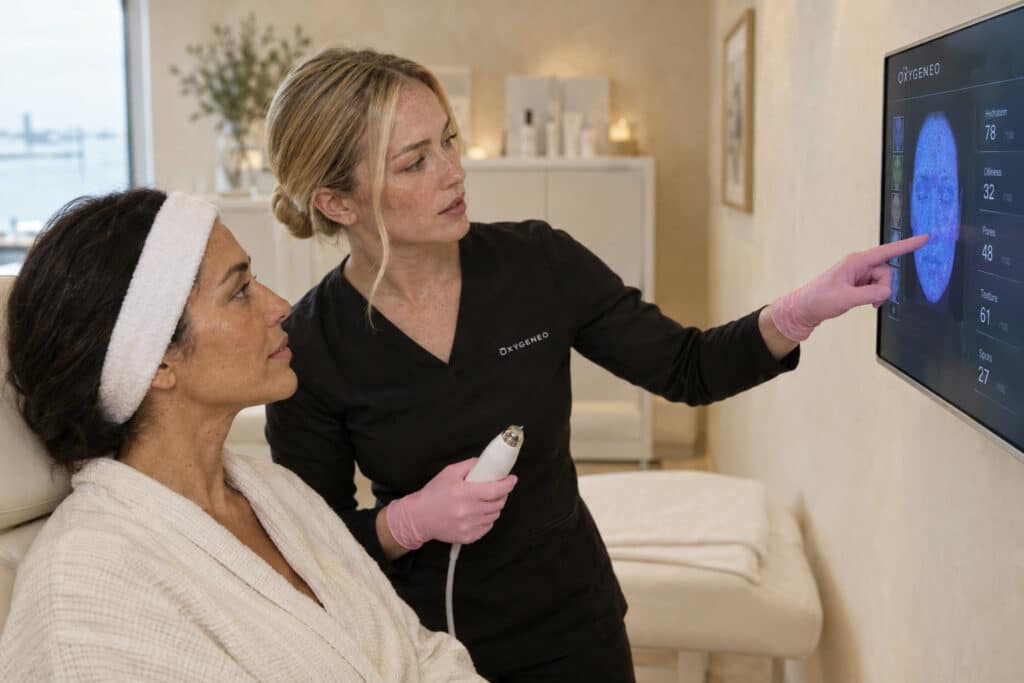
- A 3D Skin Analysis before any protocol maps hydration, pigment depth, and surface texture so the treatment is matched to the skin you have that day, not the skin you had six weeks ago.
- Mixing retinoids, acids, and vitamin C in the week around a facial is the single most common self-inflicted mistake we see.
- Skipping SPF year-round in Mississauga, including grey January weeks, undoes pigmentation work faster than any treatment can build it.
The Short Answer: What Went Wrong After Your Facial in Mississauga
A skin reaction after a facial in Mississauga is most often a barrier issue rather than an allergy, and most often a timing issue rather than a technique issue. Professional exfoliation, extraction, and radiofrequency treatments all temporarily change how permeable and how reactive your skin is. What you layer on afterward, and what you had already been layering on before, decides whether that window closes cleanly or turns into flaking, stinging, and bumps.
This is written for the person who booked a one-off facial somewhere, walked out glowing, and watched it fall apart on day three. If you are the Cooksville professional who squeezed in a lunchtime treatment before a wedding, or the Port Credit parent who finally got two hours to themselves and now regrets it, the diagnostic below is for you. It is not for anyone with blistering, weeping, spreading swelling, or facial pain, which is a call to your physician, not a blog post.
Most post-facial reactions fall into four buckets: surfacing congestion, a compromised moisture barrier, home-routine interference in the 72-hour recovery window, or a protocol that did not match the skin’s condition that day. A 3D Skin Analysis at the start of every appointment exists specifically to eliminate the fourth one.
The Full Answer
Every diagnostic starts the same way at The Facial Lounge: we look at where the reaction is, when it started, and what changed. Location, timing, texture. Those three details separate a normal adjustment period from something that genuinely went sideways in the treatment room.
1. Purging versus a genuine breakout: the location test
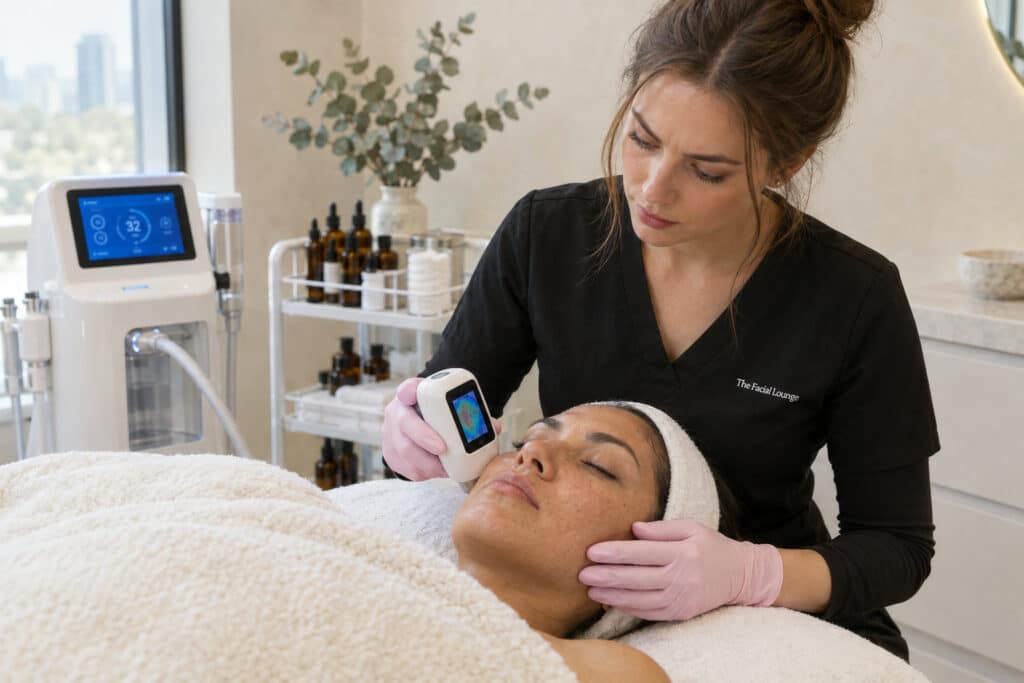
Purging shows up where you already had congestion. If your chin and the sides of your nose have always been your problem zones and small papules appear there in the days after an Oxygeneo Super Facial or microneedling session, that is existing blockage being pushed to the surface faster than it would have arrived on its own. It looks worse before it looks better. That is the deal you made.
A genuine reaction breaks the pattern. Bumps along the jaw and neck when your jaw has never broken out, uniform small pimples across the cheeks in a spray rather than in clusters, or lesions that itch rather than feel tender: those point to something applied, something occlusive, or a contact irritation. Itch is the tell. Congestion does not itch.
“The question we ask before anything else is not ‘what did they use on you’ but ‘where exactly is it’. Congestion surfaces in your existing map. Reactions draw a new one. Nine times out of ten, the client already knows the answer once we ask them to point.” – The Facial Lounge Team
2. The compromised barrier scenario, which is the one we see most
A compromised moisture barrier after a facial in Mississauga feels specific and recognizable: your skin is tight, slightly shiny in a plastic way rather than a dewy way, it stings when you apply your usual moisturizer, and small flakes lift on the cheeks and around the mouth within 24 to 72 hours. Redness sits in patches instead of an even flush.
Here is the part almost nobody says out loud. The facial was usually not the whole cause. It was the last layer on a barrier that was already thin from weeks of over-cleansing and harsh exfoliating at home. Twice-daily foaming cleanser, a scrub, a glycolic pad, and a retinol, all running at once, means your skin walked into the treatment room already spending its reserves. The professional exfoliation was simply the straw.
We see this pattern constantly in clients who describe themselves as having “sensitive skin”. Often it is not innately sensitive skin. It is sensitized skin, which is a state, and states can be reversed.
3. What your home routine did in the 72 hours after
The 72 hours after a professional treatment are the window where your skin is most permeable and least tolerant. Actives that you tolerate perfectly on a normal Tuesday can sting and inflame in that window. The most common self-inflicted mistake we hear about, in almost these exact words: “I thought I should keep the momentum going, so I used my vitamin C serum and my retinol that night.”
Stop every active immediately
Retinoids, AHAs, BHAs, benzoyl peroxide, vitamin C, and exfoliating toners all come off the board until the skin is calm and comfortable to the touch.
Reduce to three products
A non-foaming gentle cleanser, a bland barrier-supporting moisturizer, and a mineral SPF. Nothing fragranced, nothing “brightening”, nothing new.
Wash with lukewarm water only
Hot water and hot showers on the face keep a flushed, reactive barrier flushed. Cool the water down and keep your face out of the direct spray.
Do not pick, and do not add a clay mask
The instinct to “dry it out” with a mask or spot treatment is the fastest route from a two-week recovery to a two-month one with post-inflammatory marks.
Call the clinic that treated you
A reputable boutique wants to know. We would rather have you back in the chair for a look than have you guessing at home for three weeks.
4. Protocol mismatch, and why we start with a 3D Skin Analysis
The 3D Skin Analysis is the foundation of every protocol at The Facial Lounge, and it exists precisely to prevent this category of problem. It reads hydration levels, pigment sitting below the surface, texture, and areas of visible sensitivity before a single product is opened. A skin that photographs as dehydrated and reactive does not get resurfaced that day, regardless of what was booked online.
That is the crux of the mismatch problem elsewhere. Menus get booked by name, not by condition. Someone books a strong exfoliating facial because a friend loved it, and nobody checks whether their barrier can take it that week. Add a course of a prescription acne medication, three days of poor sleep, and a February of dry indoor heating, and the same protocol behaves completely differently on the same face.
Honestly, this is the part that surprises clients most. They expect the answer to be “the esthetician used the wrong machine.” Usually it is “nobody checked the skin’s condition on the day.”
5. The timeline nobody explains properly
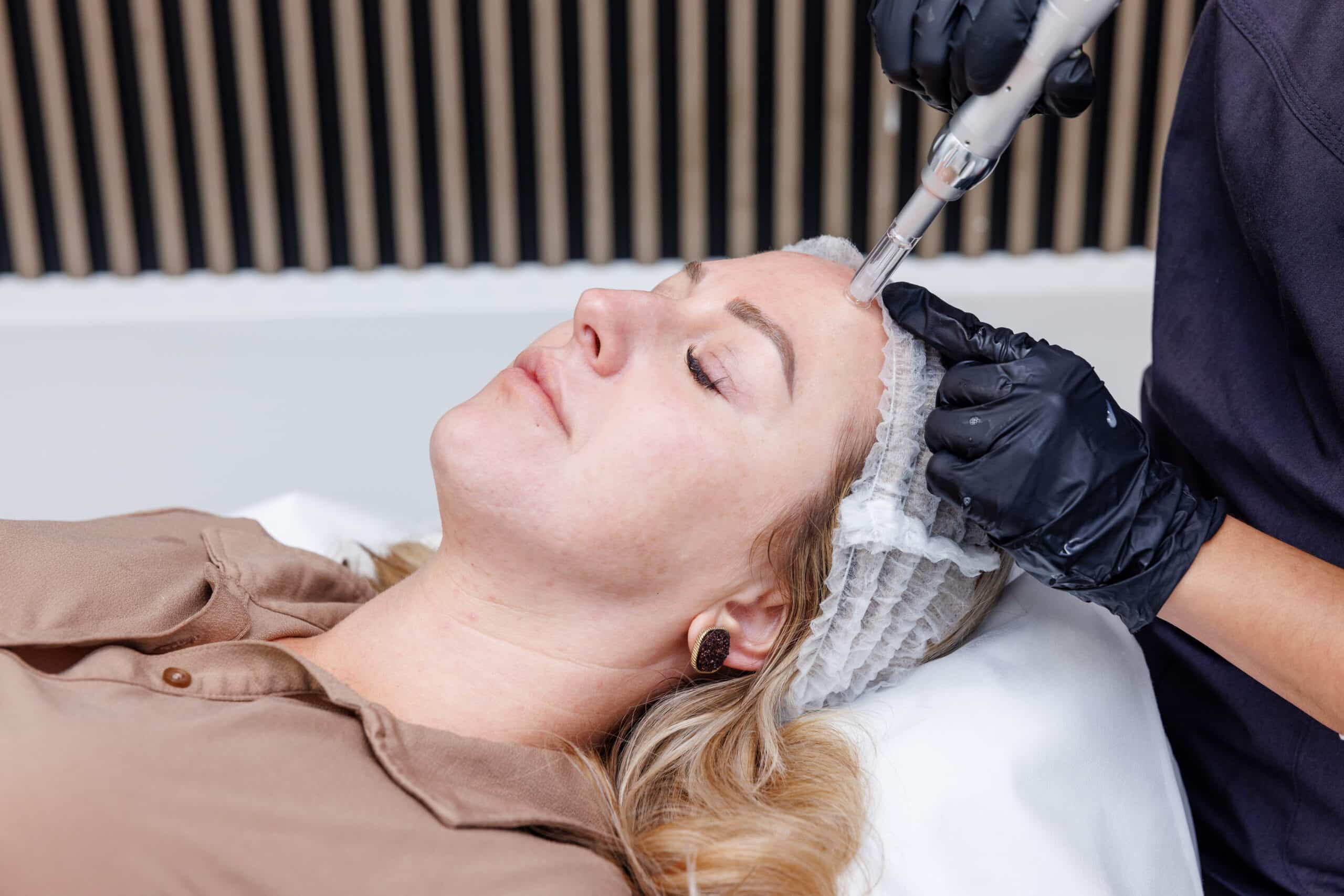
Advanced treatments are selected as part of a custom protocol. VoluDerm RF microneedling from $325 and TriFractional resurfacing are among the available treatment options. Your protocol is based on your 3D Skin Analysis.
Two real examples from our own client work make the point about time. A Port Credit mom-of-two saw visible jawline lift after 4 TriPollar RF sessions over 6 weeks. A Lorne Park client reduced pigmentation 60% after a 3-month Oxygeneo plan. Neither of those results existed at day three. Individual outcomes vary, and both of those clients were on a plan built around their analysis, not a single appointment.
| What you are seeing | Likely reading | What to do next |
|---|---|---|
| Even flush, warm, settles within a day or two | Expected vascular response to stimulation or heat-based treatment | Bland moisturizer, mineral SPF, no actives |
| Small bumps in your usual congestion zones | Congestion surfacing after extraction or resurfacing | Do not pick. Let it run its cycle. Report at your next visit |
| Tight, stinging, flaking in patches | Compromised moisture barrier, often pre-existing | Three-product routine, lukewarm water, pause all exfoliation |
| Itchy raised welts, swelling, spreading rash | Possible contact or allergic reaction | Contact your physician. Tell the clinic which products were used |
| Dark marks where a spot has healed | Post-inflammatory pigmentation, common in deeper skin tones | Daily SPF without exception, discuss a pigment-focused plan |
| Blistering, weeping, crusting, or facial pain | Outside the scope of aesthetic aftercare | Seek medical care the same day |
When the Answer Is Different
Not every post-facial skin reaction in Mississauga fits the four-bucket diagnostic. Several situations change the reading entirely, and pretending otherwise would be dishonest.
If you are on prescription acne or rosacea medication
Oral and topical prescription treatments meaningfully change how skin responds to exfoliation, heat, and needling. This is not a judgement call for an esthetician to make alone, and it is not one for an article to make at all. Speak with the clinic and with your prescribing physician before booking, and disclose the medication at consultation even if you started it recently.
If the reaction started during the appointment, not after
Immediate stinging, burning, or swelling on the table points toward a contact reaction to a specific product rather than a delayed barrier issue. Ask the clinic for the exact product names and ingredient lists. Keep that list. It is the most useful thing you can bring to your physician and to any future clinic.
If you have a deeper skin tone
Skin with more melanin is more prone to post-inflammatory hyperpigmentation, which means an inflammatory event that would fade invisibly on one person can leave a mark that lingers on another. The practical implication is that aggressive protocols carry a different risk profile and pigment-safe settings and SPF discipline matter more, not less. Raise this explicitly at consultation so the protocol is built for it.
If it is winter in Mississauga
Indoor forced-air heating from November through March pulls moisture out of the stratum corneum all day, and the walk from a warm car to a cold parking lot at Port Credit or Clarkson repeats a thermal shock cycle your skin has to absorb. The same protocol that felt effortless in September can feel harsh in February on the same client. And the SPF still applies. Skipping SPF year-round because “it’s cloudy” is one of the most reliable ways to undo pigmentation progress in this city.
If you are pregnant or breastfeeding
Certain modalities and ingredients are avoided during pregnancy and breastfeeding as a matter of routine practice. Tell the clinic at booking and confirm with your physician. We will adjust the protocol rather than proceed with a standard one.
How We Rebuild Skin That Reacted Somewhere Else
When someone arrives at our Queen Street location after a facial elsewhere went badly, the first appointment is deliberately unexciting. A 3D Skin Analysis, a conversation about every product currently in the bathroom cabinet, and often no active treatment at all that day. Rebuilding a barrier is a subtraction exercise before it is an addition exercise.
From there, your protocol is tailored to your skin concerns. Oxygeneo Super Facial from $189, the Korean Glass Facial from $179, AQUAPURE, and oxygen infusion therapy are available options. TriPollar RF skin tightening from $250 per session, VoluDerm RF microneedling from $325, and the Imperial Lift & Tone Facial from $299 may also be part of your custom plan after analysis.
Maintenance for most clients settles around every 4 to 6 weeks once things are stable. Targeted plans for acne, anti-aging, pigmentation, and sensitive skin run on their own cadence. You can read more about our approach on our services page or about the analysis itself on our about page, and pricing sits on the booking page.
For reactive skin concerns in Mississauga, targeted plans are tailored to your skin. Oxygeneo Super Facial from $189, the Korean Glass Facial from $179, and stronger modalities such as TriPollar RF from $250 per session may be considered after the 3D Skin Analysis, the first step of every protocol.
Frequently Asked Questions
How long does redness normally last after a facial in Mississauga?
Facial experiences vary by treatment and individual skin concerns. The Korean Glass Facial from $179 and VoluDerm RF microneedling from $325 are available as part of tailored care. Because protocols differ between skin types, your certified esthetician can discuss your protocol after your 3D Skin Analysis. Redness with pain or swelling is a reason to contact your physician.
Can I book a new facial in Mississauga while my skin is still reacting from the last one?
Booking a new facial while skin is actively reacting is not something we recommend without an in-person look first. At The Facial Lounge on Queen Street in Mississauga, that visit starts with a 3D Skin Analysis and frequently ends with a barrier-repair plan and no active treatment that day. Adding a second treatment on top of an unresolved reaction is how a two-week problem becomes a two-month one.
Is purging after a facial a real thing or a marketing excuse?
Purging after a facial is real, and the location test separates it from an excuse: congestion surfaces in the zones where you already had blocked pores, typically the chin, nose, and forehead. Bumps appearing in brand new areas, or lesions that itch, are not purging and should be reported to the clinic that treated you. Any clinic that uses “it’s just purging” to explain a spreading, itchy, or painful reaction is not being straight with you.
What should I stop using before a facial in Mississauga to avoid a reaction?
Before a facial in Mississauga, most clients are advised to pause retinoids, AHAs, BHAs, scrubs, and benzoyl peroxide in the days leading up to the appointment, and to avoid waxing the treatment area. The exact pause window depends on the modality booked, so confirm it with the clinic when you book rather than guessing. Mixing too many active ingredients at once, before and after treatment, is one of the most common causes of an avoidable reaction we see.
Sources
- Sun protection guidance including year-round UV exposure and pigmentation risk – Health Canada, Sun Safety Basics
- Skin cancer and daily sun protection recommendations for Canadians – Canadian Cancer Society
- Cosmetic ingredient regulation and reporting of adverse cosmetic reactions in Canada – Health Canada, Cosmetics
- Treatment menu, pricing and 3D Skin Analysis protocol referenced throughout – The Facial Lounge
The Facial Lounge
Have a similar question about a reaction after a facial? Bring it to us. Every appointment at 100 Queen St., Unit 202 in Mississauga starts with a 3D Skin Analysis, and certified estheticians build the protocol from what the analysis actually shows.
🎧 Listen to article
- A Client Asked: “Can I Get a Facial in Mississauga If I Have Rosacea and Active Redness?” — Our Esthetician’s
- A Client Asked: “Is a Facial in Mississauga Actually Worth It If My Skin Issues Keep Coming Back?” — Here’s th
- A Client Asked: “Will a Facial in Mississauga Actually Help My Hormonal Acne or Just Mask It?” — A Certified E
- How One Client’s Korean Glass Facial Plan Was Redesigned After Her 3D Scan Revealed Subclinical Redness in 4 Z
- The Client Whose AQUAPURE Results Plateaued After 3 Sessions — What the 3D Scan Revealed and How We Adjusted
- A Client Asked: “Can I Get a Facial in Mississauga If I Have Rosacea and Active Redness?” — Our Esthetician’s
- A Client Asked: “Is a Facial in Mississauga Actually Worth It If My Skin Issues Keep Coming Back?” — Here’s th
- A Client Asked: “Will a Facial in Mississauga Actually Help My Hormonal Acne or Just Mask It?” — A Certified E
- What a Typical TriFractional Facial in Mississauga Looks Like for a Lorne Park Client With Acne Scarring and U
- How One Client’s Korean Glass Facial Plan Was Redesigned After Her 3D Scan Revealed Subclinical Redness in 4 Z


Related Posts