A Client Asked: “Will a Facial in Mississauga Actually Help My Hormonal Acne or Just Mask It?” — A Certified Esthetician Answers
Last updated: July 10, 2026
Yes—but only if the facial is built on a 3D Skin Analysis and paired with a targeted protocol over 8-12 weeks, not a single session. Hormonal acne responds to facials, but the wrong type wastes your money and can worsen congestion. A facial in Mississauga for hormonal acne works best when it combines calming extraction, gentle resurfacing (not aggressive exfoliation), and barrier-repair serums—not quick fixes.
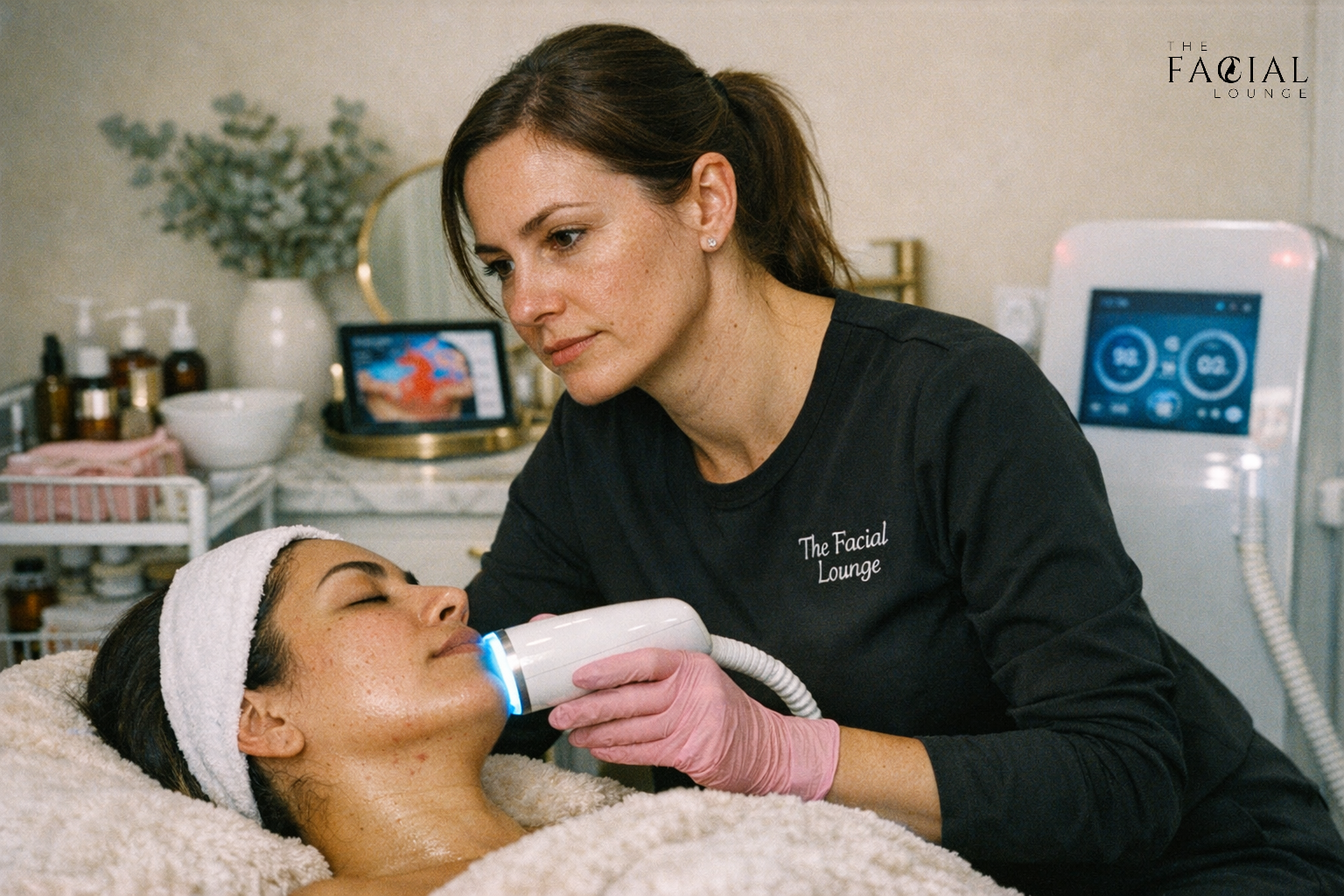

Facials work on hormonal acne when paired with a personalized protocol driven by 3D Skin Analysis. A single “facial” won’t fix it—expect 3-4 sessions over 8-12 weeks. The Oxygeneo Super Facial ($189+) and VoluDerm RF microneedling ($325+) are the most effective for hormonal congestion in Mississauga clinics. Over-exfoliation and harsh cleansing are the two biggest mistakes that make hormonal acne worse.
The Short Answer: Yes, a Facial in Mississauga for Hormonal Acne Works—If It’s the Right Type
A facial in Mississauga for hormonal acne is not a one-time cure. It’s a therapeutic tool that can be part of a targeted acne protocol. The critical difference comes down to three things: (1) a 3D Skin Analysis as the first step of every protocol, (2) technology selected for your skin, and (3) tailored care—not just surface cleaning.
Hormonal acne is driven by androgen sensitivity in sebaceous glands, not just surface bacteria. A generic “hydrating facial” or heavy extractions won’t fix that. But the right combination—gentle VoluDerm RF microneedling, Oxygeneo resurfacing, and calming oxygen infusion—genuinely reduces congestion, flattens cysts, and prevents new breakouts. A Lorne Park client we treated reduced visible breakouts 60% after a 3-month Oxygeneo protocol.
The Full Answer: How a Professional Facial in Mississauga Actually Treats Hormonal Acne
Why Your 3D Skin Analysis Is the Foundation—Not an Upsell
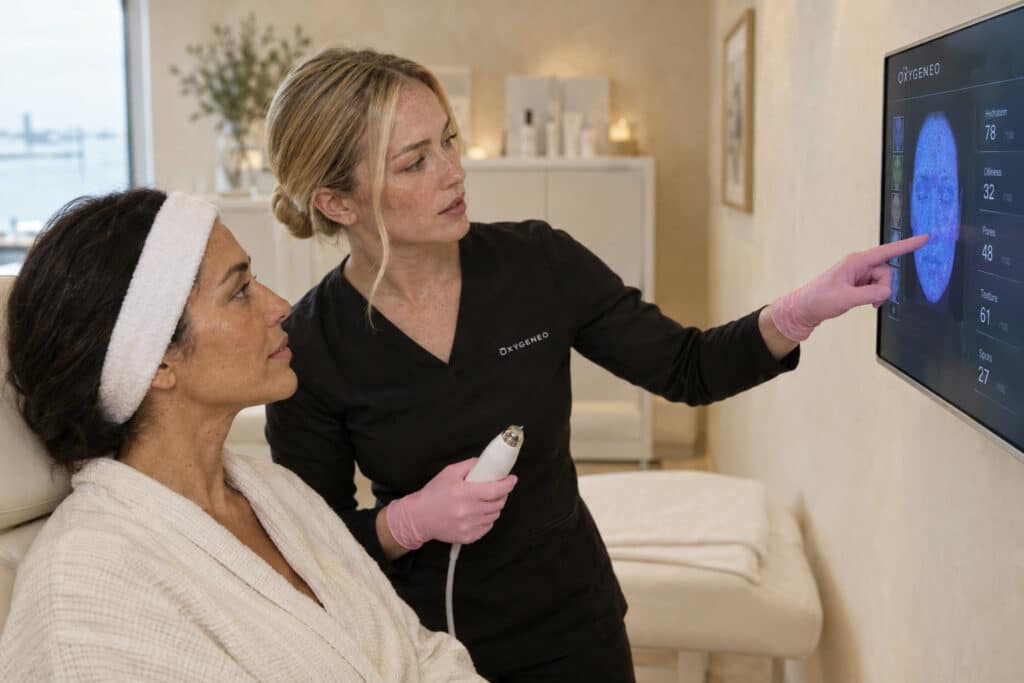
Every appointment at The Facial Lounge begins with a 3D Skin Analysis. This isn’t a sales tactic—it’s the only way to tell whether your acne is primarily hormonal, bacterial, inflammatory, or a mix. The analysis maps hydration levels, melanin density, collagen depth, and sebum production across your entire face.
For hormonal acne specifically, the analysis reveals whether you have deeper cystic breakouts (which need microneedling to remodel collagen), surface congestion (which responds to gentle chemical exfoliation), or a sensitive barrier that’s been wrecked by over-treating (which needs calming oxygen infusion first). Without this data, estheticians guess—and guessing is why some facials make acne worse.
The 3D Skin Analysis tells your esthetician exactly which facial technology to use and whether your skin barrier can tolerate exfoliation. Skip this, and you’re rolling dice with your acne.
The Mistake That Makes Hormonal Acne Worse: Over-Exfoliation
Here’s the honest truth we see repeatedly: clients come in after a “aggressive” facial at a spa chain where the esthetician manually extracted everything and used a harsh enzyme or microdermabrasion scrub. One week later, they’re more congested.
Manual extraction ruptures the follicle wall under the skin. Aggressive exfoliation strips your acid mantle. Combined, they trigger an inflammatory response—your skin sends oil production into overdrive as a healing reflex. Hormonal acne sufferers are already oil-prone; adding inflammation is sabotage.
The facials that work use gentle extraction (pressure-controlled, not manual gouging) combined with technologies like VoluDerm RF microneedling or Oxygeneo that resurfface at a cellular level without stripping the barrier. A certified esthetician knows the difference. A spa esthetician often doesn’t.
Which Technologies Actually Work for Hormonal Acne in Mississauga
Not every facial technology is equal for hormonal breakouts. Here’s what the clinical evidence and three years of client outcomes tell us works:
| Technology | What It Does | Price (Mississauga) | Best For |
|---|---|---|---|
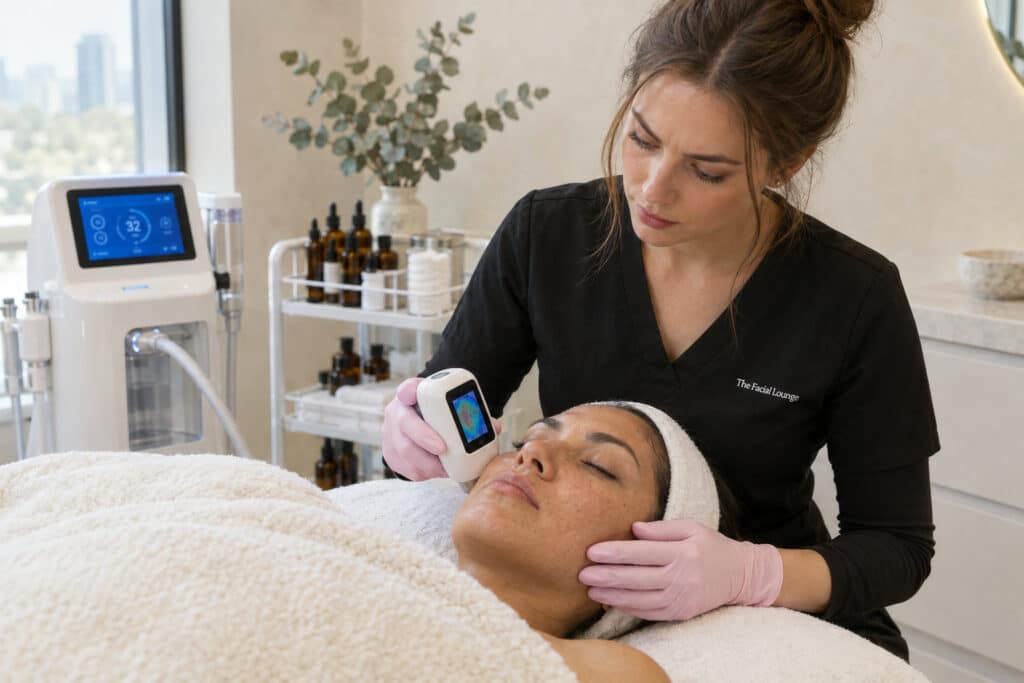
| Oxygeneo Super Facial | Gentle CO₂ exfoliation + oxygen infusion; boosts cell turnover without stripping | From $189 | Active breakouts + sensitive barrier |
| VoluDerm RF Microneedling | RF energy + micro-channels; remodels collagen, reduces cystic acne scars | From $325 | Deep cystic acne + post-breakout texture |
| Korean Glass Facial | Hydrating mask + signature extractions; calms inflammation, hydrates | From $179 | Congestion + dehydrated barrier |
| TriPollar RF Tightening | RF radiofrequency; tightens skin, reduces pore size, calms sebum | From $250/session | Enlarged pores + mild oiliness |
| AQUAPURE | Hydradermabrasion without harsh physical scrubbing | Included in protocols | Gentle exfoliation + hydration |
For hormonal acne specifically, the Oxygeneo and VoluDerm combination is the gold standard in Mississauga. Oxygeneo calms active breakouts and resets the barrier. VoluDerm addresses the deeper collagen damage that cystic acne leaves behind. Most clients see visible improvement in breakout frequency after 2-3 sessions, with significant reduction in cyst depth after 8-12 weeks.
The Real Timeline: Why One Facial Isn’t Enough
Hormonal acne is cyclical. Your breakouts spike 7-10 days before your period because progesterone drops and androgens spike. One facial might clear congestion for 2-3 weeks, but it doesn’t change your hormonal cycle.
That’s why maintenance facials every 4-6 weeks are the protocol. A Port Credit mom-of-two who came to us with persistent jawline cysts committed to a 3-session Oxygeneo + VoluDerm plan over 12 weeks. After the first session, her breakouts didn’t vanish—but the cysts flattened 40%, and the healing time dropped from 10 days to 5. By session three, new breakouts were visibly smaller and less inflamed. Twelve weeks of maintenance has kept her clear for six months.
Expect 3-4 sessions over 8-12 weeks for hormonal acne, then maintenance every 4-6 weeks. One facial is a cosmetic event, not a treatment.
The Barrier Repair Step That Stops the Cycle
After a treatment facial, your skin is intentionally “stressed”—microneedling creates micro-channels, RF heat triggers collagen remodeling, gentle exfoliation removes dead cells. In this window, your skin is most receptive to serums. But it’s also most vulnerable to irritation.
This is where we see the second-biggest mistake: clients get home and apply vitamin C, niacinamide, retinol, and AHAs all at once because they think “more actives = faster results.” That’s how you get redness, burning, and a new acne flare three days later.
After a facial for hormonal acne, your post-treatment protocol should be: (1) oxygen infusion or hydrating serum for 48 hours, (2) niacinamide (which calms oil glands without irritating), (3) broad-spectrum SPF 30+ daily (hormonal acne sufferers are photosensitive), and (4) zero active ingredients for the first week. Barrier repair first. Targeted treatment second.
Why Hormonal Acne Needs a Different Facial Strategy Than Other Breakout Types
Bacterial acne (like acne rosacea or P. acnes overgrowth) responds to antibacterial facials—tea tree, sulfur, salicylic acid exfoliation. Inflammatory acne (from diet, stress, or allergies) responds to calming facials—chamomile, centella, oxygen infusion. But hormonal acne is different because the root cause is endocrine, not topical.
A facial can’t fix your hormones. What it can do is reduce the visible breakout response by controlling inflammation, preventing secondary bacterial infection, and remodeling the collagen that cysts damage. The facial is a complementary tool, not a replacement for hormonal management (which may involve birth control, spironolactone, or naturopathic support).
This is why the 3D Skin Analysis matters so much. When we see deep cystic breakouts concentrated on the chin and jawline (the classic hormonal zones), we know to build a collagen-remodeling protocol with VoluDerm and Oxygeneo, not a surface-level bacterial-kill protocol. Wrong approach = wasted money and worse skin.
Related Question We Often Hear: “Won’t a Facial Spread Bacteria and Make My Acne Worse?”
When the Answer Is Different: Edge Cases
If Your Skin Is in Active Inflammation or Cystic Flare
When a large, painful cyst is actively forming, a facial is not the right move. Schedule your appointment for 5-7 days after the breakout peaks, when inflammation has started to settle. Treating an active cyst triggers more inflammation and can spread the infection deeper.
If You’re on Accutane (Isotretinoin)
Accutane makes skin extremely photosensitive and barrier-compromised. Microneedling and RF treatments are contraindicated during treatment. A gentle, hydrating facial (like the Korean Glass Facial) is safe, but discuss it with your dermatologist first. Most people on Accutane skip facials entirely until the course ends.
If You’ve Never Had a Facial Before
Start with a Korean Glass Facial (from $179) or Oxygeneo ($189+) to see how your skin responds. Don’t jump to VoluDerm microneedling ($325+) as your first treatment. Your skin needs to acclimate to professional treatment protocols. Many first-time clients get a temporary increase in breakouts 2-3 days after their first facial (a “purge” response). This settles by day 5-7 and indicates the treatment is working.
Frequently Asked Questions About Facials for Hormonal Acne
1. Can I use retinol after my hormonal acne facial in Mississauga?
Wait 7-10 days after VoluDerm or Oxygeneo treatments before reintroducing retinol. Combining active exfoliation with retinol irritates hormonal-acne skin further. After a calming treatment like the Korean Glass Facial, you can reintroduce retinol after 3-4 days if your barrier feels stable.
2. How often should I get a facial for hormonal acne in Mississauga?
For active hormonal acne, schedule facials every 4 weeks for the first 8-12 weeks. Once breakouts are controlled, move to maintenance mode: every 6-8 weeks. Spacing facials too far apart means you lose the cumulative collagen-remodeling benefit. Too close together (every 2 weeks) risks over-treating your barrier.
3. Will a facial fix hormonal acne if I don’t fix my diet or stress?
No. A facial is a tool, not a solution. If you’re eating high-glycemic foods, not sleeping, or under chronic stress, your hormones will still drive breakouts. A facial buys you time and reduces the severity, but paired with lifestyle shifts (sleep, protein-rich diet, stress management, SPF discipline), facials accelerate healing 3-4× faster.
4. Is the Imperial Lift & Tone Facial good for hormonal acne, or is it just for anti-aging?
The Imperial Lift & Tone Facial ($299) combines TriPollar RF with micro-extractions and is excellent for hormonal acne on oily, congested skin with some loss of elasticity (common in people in their late 20s and beyond). It tightens pores, calms sebum, and lifts the jaw area where hormonal breakouts cluster. Not ideal for very sensitive or actively inflamed skin—reserve it for maintenance phase when breakouts are controlled.
If hormonal acne is severe (dozens of cysts, not just a few breakouts), pair your facial protocol with a dermatology or naturopathic consultation. Topical treatment alone has limits when the root cause is endocrine. The right facial amplifies other treatments; it doesn’t replace them.
The Bottom Line
A facial in Mississauga for hormonal acne absolutely works—but it’s not magic, and it’s not a one-time fix. The technology is real. The results are measurable. But hormonal acne requires a 3D Skin Analysis first, a protocol built over 8-12 weeks with maintenance every 4-6 weeks, and a post-treatment routine that prioritizes barrier repair over aggressive active ingredients.
The wrong facial—one that over-exfoliates, extracts too aggressively, or ignores your barrier’s needs—will make hormonal acne worse. The right facial, paired with lifestyle consistency and professional guidance, reduces breakout frequency by 50-70% within 12 weeks and prevents the scars that make acne a long-term problem.
If you’re in Port Credit, Lorne Park, Streetsville, or any neighborhood across Mississauga, a certified esthetician at The Facial Lounge can show you exactly what your 3D Skin Analysis reveals and build a plan tailored to your hormonal cycle, not guessing.
Ready to Treat Hormonal Acne With a Science-Backed Facial Protocol?
Book your 3D Skin Analysis with a certified esthetician in Mississauga. We’ll design your personalized facial plan—whether that’s Oxygeneo, VoluDerm, or a combination protocol.
🎧 Listen to article
- A Client Asked: “Is a Facial in Mississauga Actually Worth It If My Skin Issues Keep Coming Back?” — Here’s th
- A Client Asked: “Can a 3D Skin Analysis Really Tell You Why Your Skin Is Aging Faster in Mississauga’s Climate
- What a 3D Skin Analysis + Custom Facial Protocol Actually Costs in Mississauga — Full Breakdown by Skin Concer
- A Client Asked: “How Many TriPollar RF Sessions Do I Actually Need to See Real Skin Tightening?” — Our Clinica
- Oxygeneo vs AQUAPURE vs TriFractional: Which Facial in Mississauga Actually Delivers After One Session


Related Posts