A Client Asked: “Can I Get a Facial in Mississauga to Address Melasma, or Is That Out of Scope for an Aesthetic Boutique?”, Our Esthetician’s Boundary-Setting Answer
Last updated: September 25, 2026
Published September 25, 2026 · Updated September 25, 2026
The honest answer on a facial in Mississauga for melasma: what an aesthetic boutique can address is the visible, cosmetic side of the skin, through gentle barrier-first protocols built on a 3D Skin Analysis, while diagnosis, prescriptions and medical treatment of melasma belong with a physician or dermatologist. At The Facial Lounge, we will happily care for melasma-prone skin. We will not pretend a facial treats a medical condition.

A question we hear often from clients, usually at the front desk, sometimes in a quiet voice, and almost always from someone who has already tried three brightening serums.
- Melasma is a medical skin condition, so diagnosis and prescription treatment belong with a physician or dermatologist, not an aesthetic boutique.
- A 3D Skin Analysis begins every appointment at The Facial Lounge and maps visible pigment patterns, but it is a planning tool, not a diagnosis.
- Heat-based technologies such as TriPollar RF (from $250 per session), VoluDerm RF microneedling (from $325) and TriFractional resurfacing are not a default choice for melasma-prone skin at our boutique.
- Gentle, hydration-focused facials such as the Korean Glass Facial (from $179) are the kind of service we typically discuss first, after the analysis confirms fit.
- Daily broad-spectrum SPF, which Health Canada recommends at SPF 30 or higher, matters more for melasma-prone skin than any single in-clinic treatment.
- The Short Answer: Can a Facial in Mississauga Help Melasma?
- The Full Answer: What Can a Facial Do for Melasma, and What Can’t It?
- Related Question We Often Hear
- When the Answer Is Different: Which Situations Change the Advice?
- Our Take After Years of Caring for Pigment-Prone Skin
- Frequently Asked Questions
- Sources
The Short Answer: Can a Facial in Mississauga Help Melasma?
A boutique facial can support melasma-prone skin, but it cannot diagnose, treat or cure melasma. That is the real line on a facial in Mississauga for melasma: what an aesthetic boutique can address is comfort, hydration, barrier health, gentle surface care and the daily habits that keep pigment from being provoked.
The Facial Lounge is a premium aesthetic skincare boutique, not a medical spa. We don’t prescribe, and we don’t treat conditions. What we do is read your skin carefully with a 3D Skin Analysis, choose protocols that respect a reactive pigment pattern, and tell you plainly when something belongs in a doctor’s office instead.
If you’re a client who has already been told by a physician that you have melasma, and you want skin care that works alongside that plan rather than against it, this article is written for you. If you have a new, changing or irregular dark mark that nobody has looked at yet, see a physician first. That is not a formality.
The Full Answer: What Can a Facial Do for Melasma, and What Can’t It?
A facial for melasma-prone skin can help the skin look and feel healthier, but the pigment itself responds to triggers that no single appointment controls. The nuances below are the ones that come up in almost every consultation, and each one shifts the plan a little.
Why melasma is not the same as a regular dark spot
Melasma is a chronic pigmentation condition, usually appearing as symmetrical brown or greyish-brown patches on the cheeks, forehead, upper lip or chin. Dermatology references such as the American Academy of Dermatology and DermNet describe sun exposure and hormonal shifts, including pregnancy and some hormone-based medications, as common triggers.
A sun spot from one bad sunburn and a mark left behind by a pimple (post-inflammatory hyperpigmentation) behave differently from melasma. They can look similar in a bathroom mirror. They are not managed the same way. Sorting out which one you have is a physician’s job, and it changes everything that follows.
The pattern we notice repeatedly is that people arrive having treated melasma like an ordinary spot: scrubbing it, peeling it, layering every brightening product on the shelf. The skin usually ends up irritated, and irritated skin is rarely calmer skin.
Where the boundary sits: what we will and won’t do
The boundary for an aesthetic boutique is simple to state: we care for skin, and physicians treat conditions. Certified estheticians at The Facial Lounge work on the cosmetic side, meaning cleansing, hydration, gentle exfoliation where appropriate, barrier support, and home-care coaching.
We will not diagnose melasma, recommend or adjust prescription products, suggest stopping a medication, or promise that a pattern will fade. When a client asks us to go further than that, the answer is a polite no and a suggestion to speak with their physician or dermatologist.
Honestly, turning down part of a booking is not the part of this job anyone enjoys. It is still the right call more often than people expect, and most clients tell us they’re relieved someone finally drew the line clearly.
Why heat-based technology gets a cautious look on melasma-prone skin
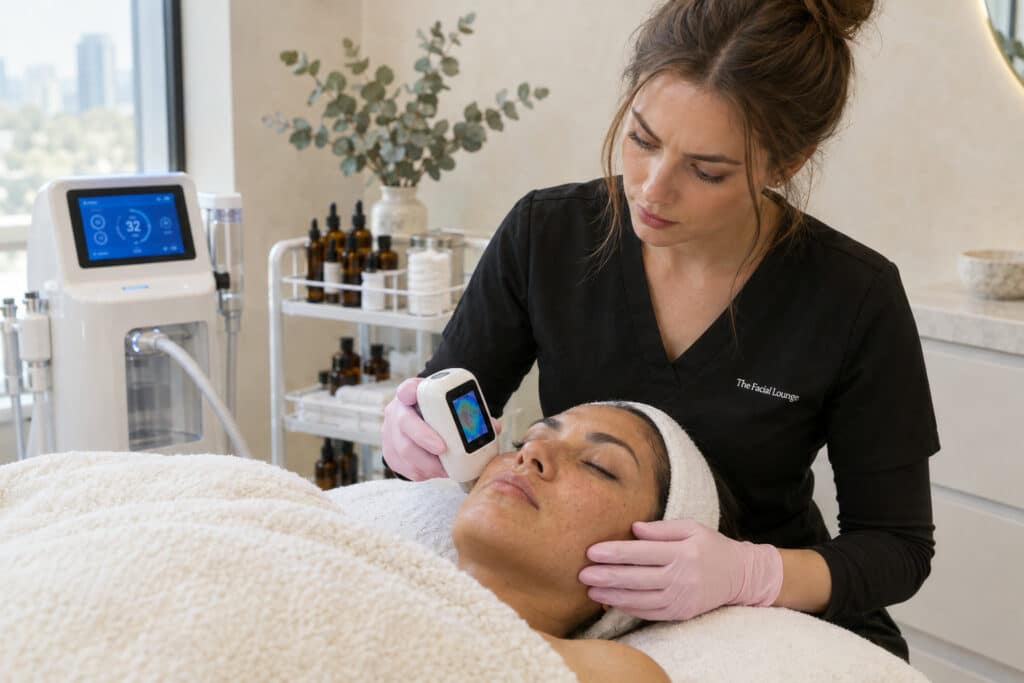
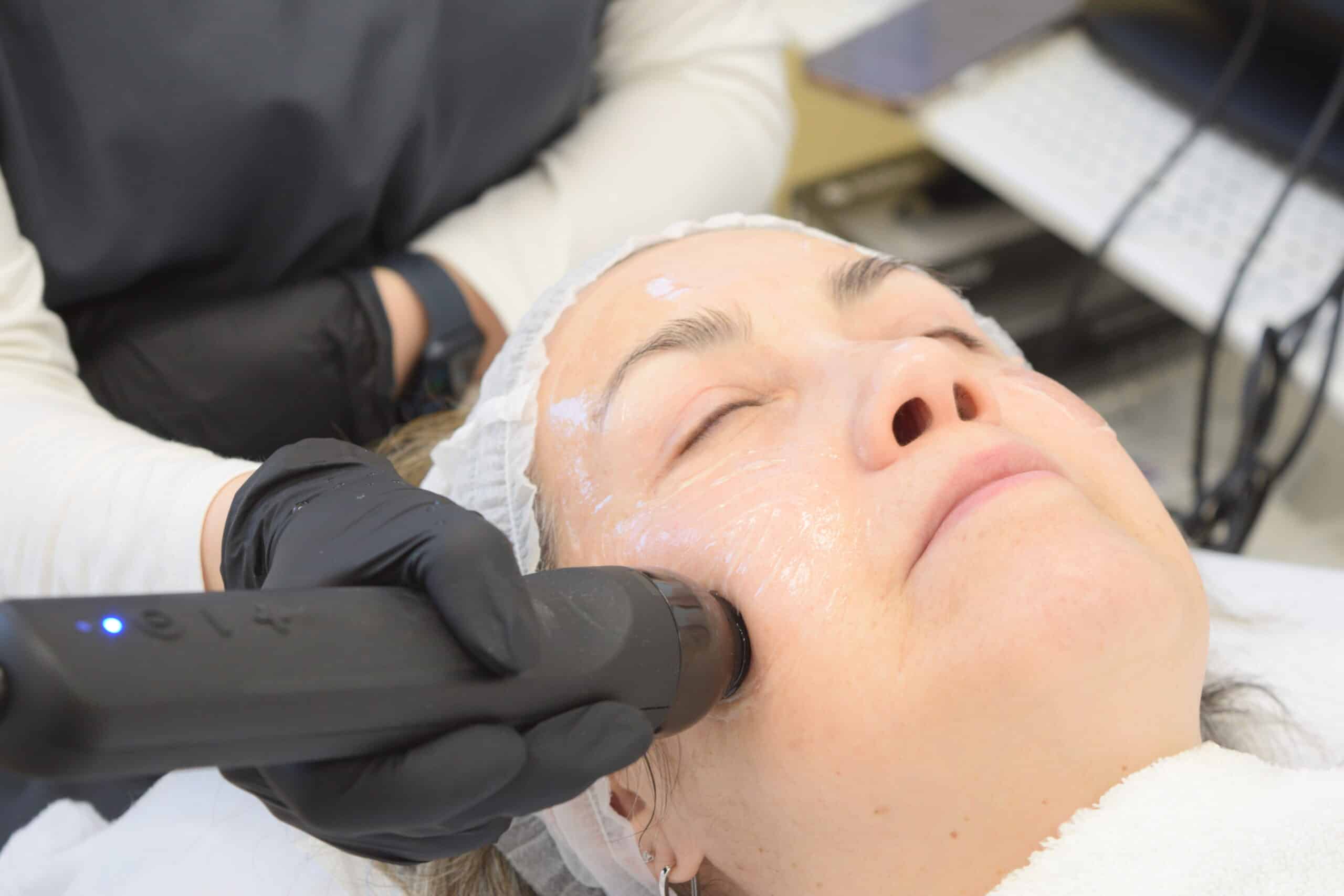
Heat is the reason our advanced devices are not the first conversation for melasma-prone skin. TriPollar RF skin tightening, VoluDerm RF microneedling and TriFractional resurfacing are all radio-frequency technologies, and they work by delivering controlled energy into the skin.
Many dermatologists caution that heat and inflammation can darken melasma. So our default is restraint. These devices are excellent for what their manufacturers market them for, such as skin tightening and texture, but on a reactive pigment pattern we would only consider them after a thorough consultation, and we would want your physician’s input first.
That caution applies to the whole room, not just the device. Hot steam, a heated towel pressed too long, an aggressive extraction session: small things add up. In practice, a melasma-aware protocol often feels cooler and quieter, with a chilled gel mask instead of a warm compress.
Melasma diagnosis and treatment belong with a physician. The Facial Lounge approaches heat-based technologies such as TriPollar RF, VoluDerm and TriFractional with caution on melasma-prone skin, and builds gentler, cooler protocols from the 3D Skin Analysis instead.
What a boutique facial can realistically offer, and what it costs
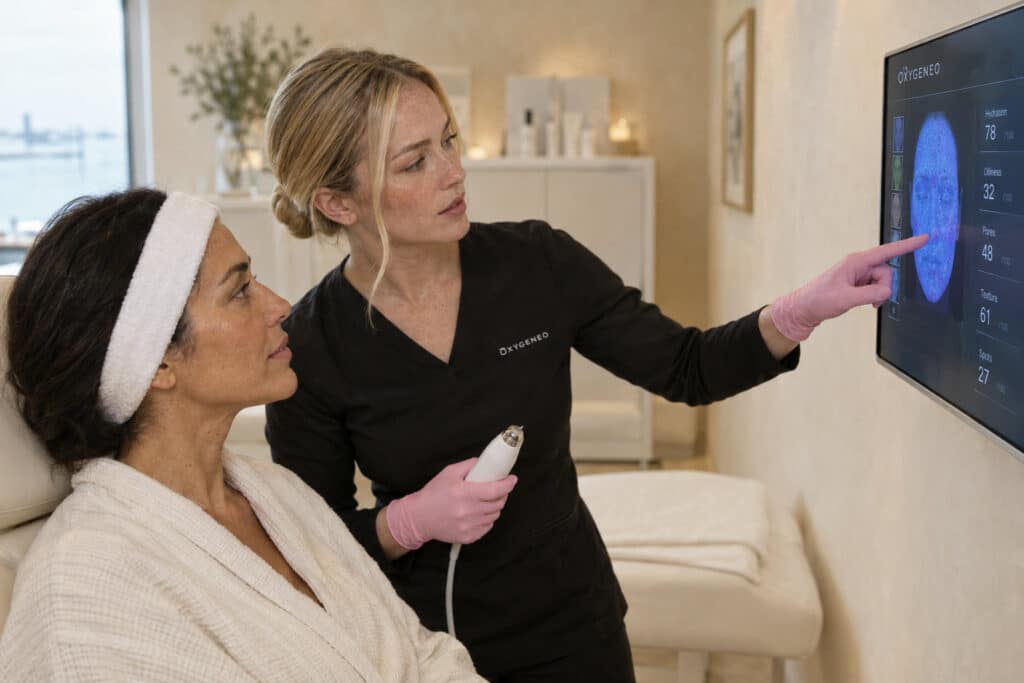
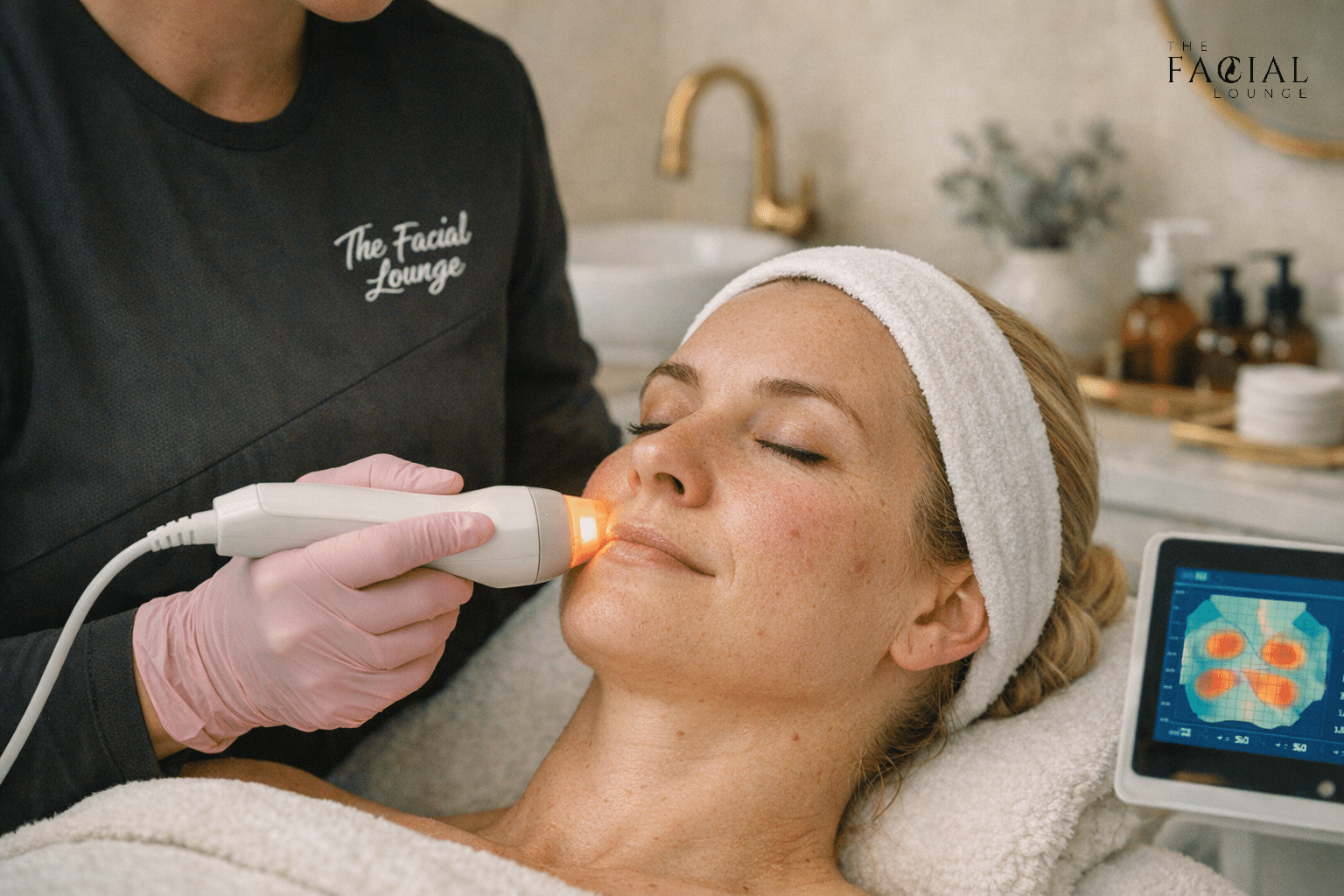
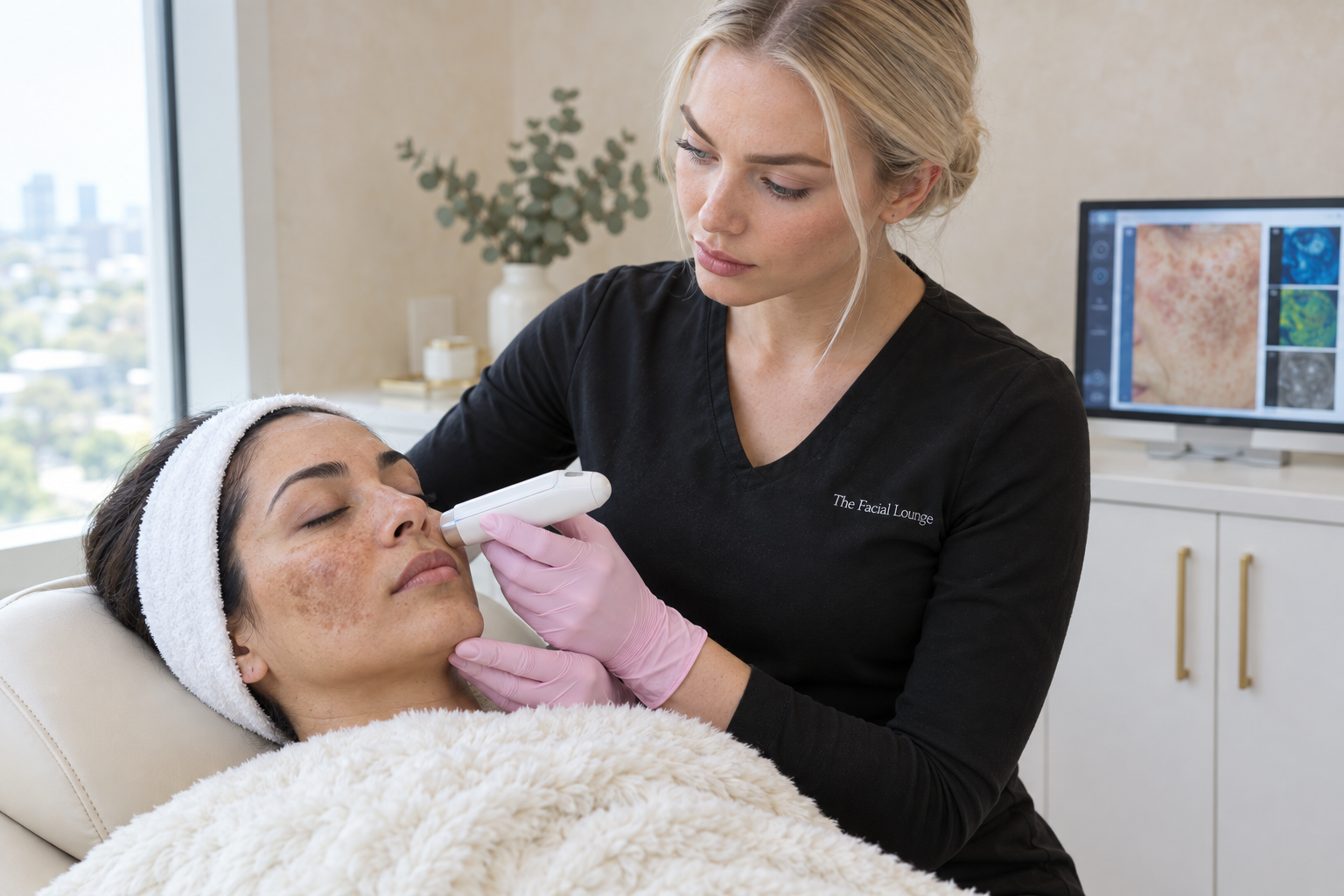
A boutique facial for melasma-prone skin starts with the 3D Skin Analysis, which is the foundation of every protocol at The Facial Lounge. You sit upright, the imaging captures your skin, and the esthetician walks you through visible pigment, texture and hydration patterns on screen before a single product touches your face.
From there, the protocol is chosen for fit, not for the menu. The table below uses our published starting prices and shows how we typically approach each service when a client has melasma-prone skin. Final suitability is always confirmed at consultation.
| Service | Published price | Typical approach for melasma-prone skin |
|---|---|---|
| 3D Skin Analysis | Begins every appointment | Maps visible pigment and sets the protocol; not a diagnosis |
| Korean Glass Facial | from $179 | A hydration and glow focus that is often part of the first conversation, once the analysis confirms fit |
| Oxygeneo Super Facial | from $189 | Oxygeneo is marketed for exfoliation, infusion and oxygenation; exfoliation intensity is discussed first |
| Imperial Lift & Tone Facial | from $299 | Ask which steps involve heat or energy; adapted or deferred as needed |
| TriPollar RF skin tightening | from $250 / session | Heat-based; not a default; physician input first |
| VoluDerm RF microneedling | from $325 | Energy plus micro-channels; approached with strong caution |
| TriFractional resurfacing | Confirmed at consultation | Resurfacing with RF energy; generally not a starting point |
| AQUAPURE | Confirmed at consultation | Suitability depends on your analysis and current home routine |
None of these services is sold as a melasma treatment. Results vary from person to person, and the goal is healthier-looking, calmer skin, not a promise about pigment. You can browse the full service menu on The Facial Lounge homepage before you book.
The four home-care mistakes that undo good work
Home care decides more of the outcome for melasma-prone skin than anything done on the treatment bed. These are the four mistakes our estheticians see most often, and every one of them tends to make reactive pigment harder to live with.
Over-cleansing or harsh exfoliating
Scrubbing a patch does not lift it. Harsh exfoliation irritates the skin, and irritation is the opposite of what a reactive pigment pattern needs.
Skipping SPF year-round
Grey February mornings still carry daylight. Health Canada recommends a broad-spectrum sunscreen of SPF 30 or higher, and for melasma-prone skin that habit runs twelve months a year.
Mixing too many active ingredients at once
Stacking acids, retinoids and brightening serums from different brands often leaves skin stinging and red. If a physician has prescribed something, ask them before adding anything else.
Expecting overnight results from advanced treatments
No device or facial rewrites a chronic pattern in one visit. Skin care for melasma-prone skin is a slow, steady rhythm, not a single event.
Why Mississauga summers and lakefront sun matter for melasma-prone skin
Mississauga sits right on Lake Ontario, and that shapes how clients live outdoors. Clients who walk, cycle or run along the Port Credit and Lakeview waterfront in July get sun reflected off the water on top of the heat of a humid afternoon.
Think of the teacher on outdoor recess duty, or the new parent pushing a stroller for an hour in the midday sun. Neither is doing anything wrong. They just need a hat, shade breaks and sunscreen reapplication built into the day, not saved for the cottage.
Winter brings the opposite problem. Dry forced-air heat leaves skin tight and flaky by January, and flaky skin tempts people toward the exact scrubbing habits that backfire. A barrier-supportive facial every 4-6 weeks, the maintenance rhythm we typically suggest, fits well here.
When the Answer Is Different: Which Situations Change the Advice?
The standard answer on melasma-prone skin changes in a handful of situations, and in most of them the right next step is a conversation with your physician before any booking. Here are the ones we flag at the front desk.
You are pregnant or breastfeeding. Pregnancy is a well-known melasma trigger, and it also changes which products and treatments are appropriate. Please speak with your physician and with our clinic before booking anything, and let us know at the time of booking.
The mark is new, changing, raised, bleeding or irregular. That is not a facial question. It is a physician question, and it comes first. We would never want a cosmetic appointment to delay a medical one.
You are using prescription skin medication. Prescription topicals and oral medications can change how skin reacts to exfoliation and devices. Tell us what you use, and confirm with your prescribing physician that a facial is appropriate right now.
You are already under a dermatologist’s care. This is often the best-case scenario. Your dermatologist leads the treatment, and we support the skin cosmetically in a way that fits their plan. Shared information keeps everyone on the same page.
It turns out not to be melasma at all. Sometimes a physician identifies post-inflammatory marks from old breakouts or sun damage instead. The skin care conversation can change quite a bit then, and our custom facial protocols are re-planned from a fresh 3D Skin Analysis.
Our Take After Years of Caring for Pigment-Prone Skin
Our honest view on a facial in Mississauga for melasma is that clients overweigh the treatment and underweigh the routine. People ask which device is strongest. The better question is which habit is weakest, and it is usually sunscreen reapplication or an over-busy shelf of actives.
What actually matters is a calm barrier, consistent sun protection, a physician in the loop, and an esthetician who knows when to hold back. What surprised us early on was how often the most helpful appointment was the gentlest one on the menu. Less heat. Less friction. More patience.
If a friend asked us, we would say this: book the 3D Skin Analysis, bring your physician’s notes, and judge any skincare boutique by how clearly it tells you what it won’t do. That clarity is a better sign than any before-and-after photo.
Frequently Asked Questions About Melasma and Boutique Facials
Can a 3D Skin Analysis tell me if I have melasma?
A 3D Skin Analysis maps visible pigment, texture and hydration patterns, but it cannot diagnose melasma or any other condition. At The Facial Lounge, the analysis begins every appointment and guides the cosmetic protocol, while diagnosis stays with a physician or dermatologist.
Is TriPollar RF a good choice for melasma-prone skin?
TriPollar RF skin tightening, from $250 per session at The Facial Lounge, is a heat-based radio-frequency treatment, so it is not our default choice for melasma-prone skin. We would only consider it after a full consultation and with your physician’s input, since many dermatologists caution that heat can darken melasma.
How often should melasma-prone skin get a facial?
Melasma-prone skin is usually cared for on the same maintenance rhythm we suggest for most clients, every 4-6 weeks, with the exact plan set after your 3D Skin Analysis. Daily broad-spectrum SPF 30 or higher between visits matters more than the appointment schedule itself.
Can I get a facial while pregnant if I have melasma?
Pregnancy and melasma together call for a conversation with your physician before booking any facial or skin treatment. Tell The Facial Lounge about your pregnancy at the time of booking so the team can confirm what, if anything, is appropriate for you right now.
Sources
- Melasma overview, common triggers including sun exposure and hormonal changes: American Academy of Dermatology
- Melasma as a chronic, recurring pigmentation condition: DermNet
- Sunscreen guidance, including broad-spectrum SPF 30 or higher: Health Canada
- Services, 3D Skin Analysis and published starting prices: The Facial Lounge
The Facial Lounge
The Facial Lounge is a premium aesthetic skincare boutique at 100 Queen St., Unit 202, Mississauga, ON.
🎧 Listen to article
- A Client Asked: “Can I Get a Facial in Mississauga If I Have Rosacea and Active Redness?” — Our Esthetician’s
- A Client Asked: “Will a Facial in Mississauga Actually Help My Hormonal Acne or Just Mask It?” — A Certified E
- A Client Asked: “I Got a Facial in Mississauga Last Month and My Skin Looks Worse — What Went Wrong?” — Our Es
- A Client Asked: “Is a Facial in Mississauga Actually Worth It If My Skin Issues Keep Coming Back?” — Here’s th
- A Client Asked: “Can a Facial in Mississauga Actually Improve My Skin Texture or Will I Always Need In-Office


Related Posts