Personalized Facial in Mississauga: Should Photos of a Bad Skin Day Change the Plan After Your 3D Skin Analysis?
Last updated: October 20, 2026
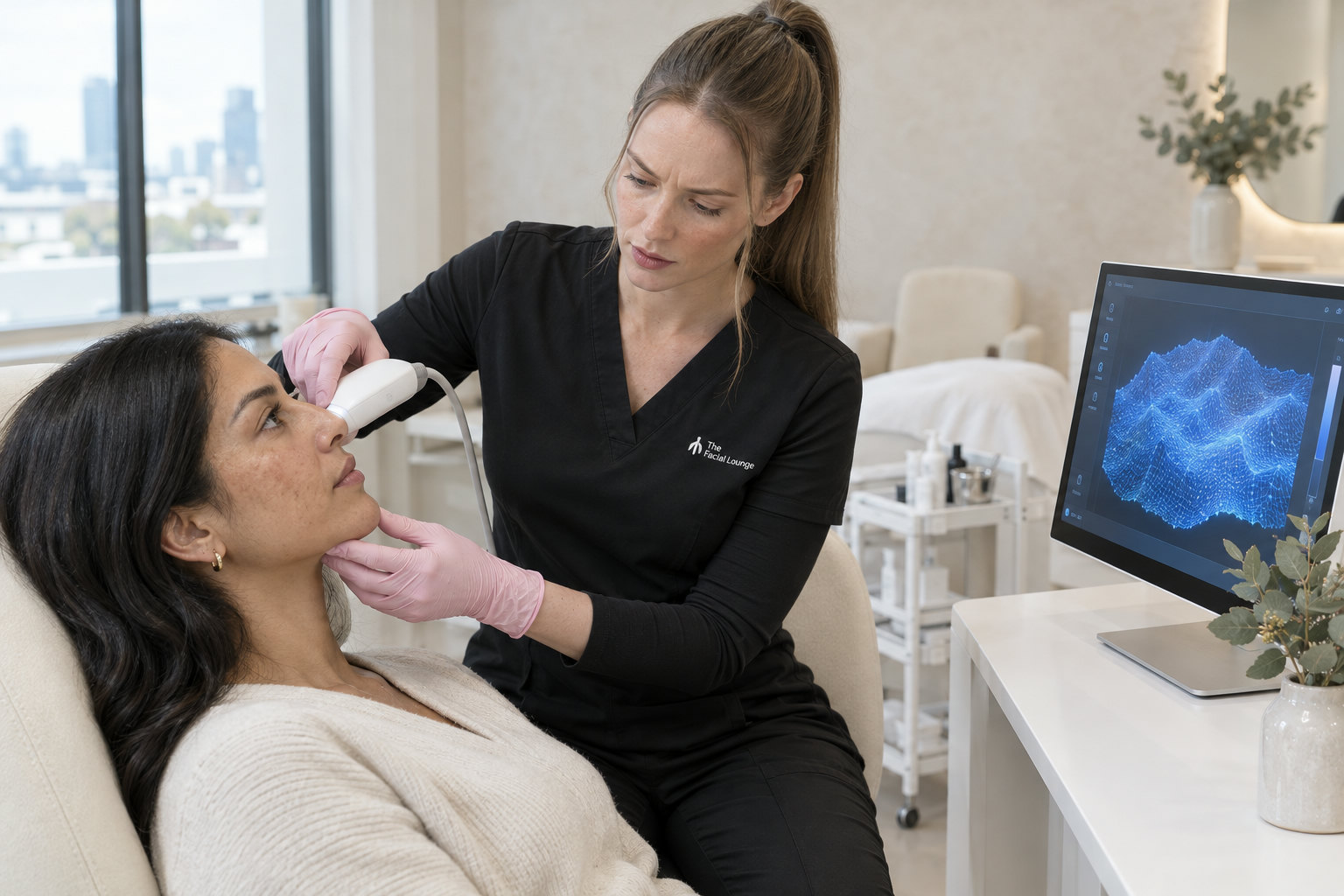
A personalized facial in Mississauga should not be rebuilt from a single bad skin day photo, because a 3D Skin Analysis measures what sits beneath the surface while a phone camera records one moment under one light. There are three ways to handle those photos: re-plan immediately, ignore them and hold the original plan, or log them and bring them to your next visit for a re-scan. The third approach usually wins, and the sections below explain why and when the other two make sense.

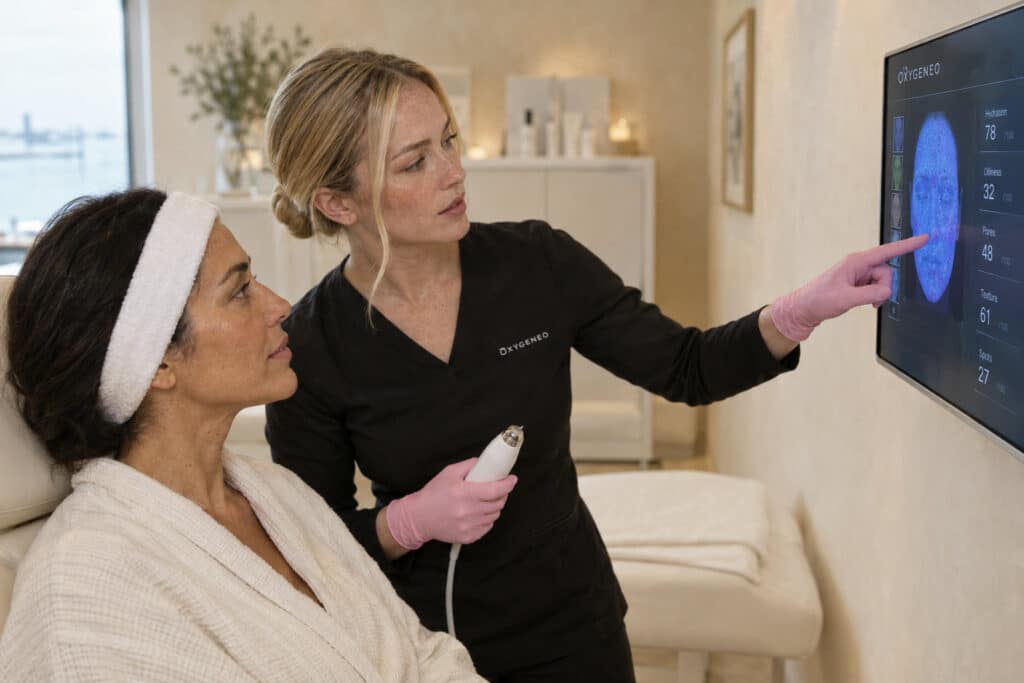
- A 3D Skin Analysis is the foundation of every protocol at The Facial Lounge, and it reads deeper layers that a phone photo cannot see.
- A single bad skin day photo reflects lighting, hydration and timing as much as it reflects your actual skin condition.
- A dated photo log taken in the same light over several weeks gives your esthetician useful context to compare against a fresh scan.
- Protocol changes between services such as the Korean Glass Facial (from $179) and the Oxygeneo Super Facial (from $189) are best made at an appointment, not after one photo.
- Sudden, painful or spreading reactions are a reason to contact the clinic and your physician right away, not a reason to wait for your next visit.
How Do Bad Skin Day Photos Compare to a Personalized Facial Plan in Mississauga?
Bad skin day photos are context, while a 3D Skin Analysis is measurement, and a personalized facial plan works best when the two are combined at an appointment. This piece is for clients who have already had their 3D Skin Analysis and started a protocol, not for someone still deciding whether to book the analysis itself. If you’re midway through a plan and woke up to redness, a breakout or dull texture, the comparison below shows your three realistic choices.
| Attribute | Re-plan from photo | Hold original plan | Log, bring, re-scan |
|---|---|---|---|
| Data source | One phone image | Original 3D Skin Analysis only | Photo log plus fresh 3D Skin Analysis |
| Sees below the surface | No | Yes, but dated | Yes, and current |
| Risk of overreacting | High | Low | Low |
| Risk of missing a real change | Low | Moderate | Low |
| Effort for you | Minimal | None | A few consistent photos |
| Best fit | Urgent reactions only (call the clinic) | One-off flare after a known trigger | Recurring or slowly changing concerns |
The full list of protocols a re-scan can steer you toward sits on the Facial Lounge services page.
Should You Re-Plan Your Facial From a Single Photo?
Re-planning a facial protocol from a single photo is rarely the right move, because phone cameras exaggerate redness, flatten texture and shift colour depending on the light. Bathroom bulbs, front cameras and beauty filters all change what you see. A warm bulb can make healthy skin look blotchy, and a front camera held close distorts pores.
The strength of this approach is speed. If something looks wrong, you act. The weakness is that a one-day snapshot cannot separate a temporary state, such as a poor night’s sleep or a salty dinner, from a true shift in skin condition. Swapping a Korean Glass Facial (from $179) for a VoluDerm RF microneedling session (from $325) because of one picture would be a protocol decision built on noise.
A related mistake is reacting at home. A common error is mixing too many active ingredients at once after a bad day, layering acids, retinoids and spot treatments to fix what the photo showed. That often irritates the barrier and makes the next photo look worse.
Is It Better to Hold the Original Plan No Matter What?
Holding the original personalized facial plan is the right call after a one-off flare with an obvious trigger, but it becomes risky when the same concern keeps returning. The 3D Skin Analysis that shaped your protocol captured your skin at a specific point. That baseline is valuable. It is not permanent.
The strength here is discipline. Advanced treatments build results gradually, and expecting overnight change is a common mistake that pushes people to abandon a sound plan too early. TriPollar RF skin tightening (from $250 / session), for example, is marketed by the manufacturer as a treatment course, not a single-visit fix, so judging it from a Tuesday morning selfie misses the point.
The weakness is blind spots. Skin responds to seasons, stress, hormones and new products. Homes along the lake in Port Credit and Lakeview face cold, windy winters, and indoor heating dries the air across the whole area. A plan set in early autumn may need a hydration or barrier focus by January, and a rigid plan will not notice.
Why Does Logging Photos and Re-Scanning Work Best?
Logging photos and bringing them to a re-scan works best because it pairs your day-to-day view with a fresh 3D Skin Analysis, so the protocol changes only when both sources agree. Your photos show frequency and pattern: is the redness always on the left cheek, does the breakout appear in the same week each month? The scan shows what is actually happening beneath the surface.
That combination lets an esthetician make specific adjustments. A log showing persistent dullness alongside a scan showing congestion might point toward an Oxygeneo Super Facial (from $189), which the manufacturer describes as combining exfoliation, infusion and oxygenation. A log showing loss of firmness might support adding the Imperial Lift & Tone Facial (from $299). Neither change comes from guesswork.
The only real cost is a little effort. Consistent photos take seconds once you have a routine. For a deeper look at what the scan reveals that the eye misses, see this piece on hidden pigmentation found through 3D Skin Analysis.
How Do You Take Skin Photos That Actually Help?
Useful skin photos are taken in the same light, at the same distance and at the same time of day, with no filter. Consistency matters more than image quality. Four habits make a log worth bringing to an appointment.
Indirect daylight near a window is more consistent than bathroom bulbs. Use the same spot every time.
Many front cameras smooth skin automatically. Turn off beauty modes and portrait effects.
Front, left and right, before applying products, so texture and tone are not masked.
Sleep, new products, travel, cycle timing or weather. Context turns a picture into evidence.
If a treatment seemed to make things look worse rather than better, read why skin can look worse after a treatment before drawing conclusions from your photos.
- Contact the clinic now if you have pain, swelling, blistering or a spreading reaction. That is the only situation where acting on what you see should be immediate, and it should involve your physician.
- Hold the plan after a single flare with a known cause: a late night, a new product, a stressful week, a cold snap. Keep going and watch.
- Log and re-scan when the same concern shows up across two or more weeks of photos, when seasons change, or when you start or stop a medication or major product (and check with your physician about any medication).
- Ask about a protocol shift at your next maintenance visit, typically every 4 to 6 weeks, rather than booking a different service between visits on impulse.
Our view
In our opinion, people overweigh how their skin looks on a given morning and underweigh the direction it is moving over a month. A personalized facial protocol is a trend line, not a daily score. One bad day sits on that line without changing its slope.
What actually matters is consistency in three places: consistent home care, consistent appointment spacing and consistent photos. When those three are in place, the 3D Skin Analysis at each visit has something solid to compare against, and adjustments become precise instead of reactive.
Our Verdict
The log-and-re-scan approach is the strongest choice for most clients on a personalized facial plan, because it uses your photos for what they do well (showing patterns) and the 3D Skin Analysis for what it does well (measuring beneath the surface). It is not the universal answer, though.
For the busy professional in Streetsville or Cooksville who had one rough week, holding the plan is the smarter, calmer move. For the client in Lorne Park or Mineola noticing the same dullness or tightness for a month, logging and re-scanning is worth the small effort. And for anyone with a sudden painful reaction, neither applies: call the clinic and your doctor.
If you want to understand how plan type affects cost before your next visit, the guide comparing monthly maintenance versus a targeted corrective plan lays out the trade-offs.
FAQ
Can a phone photo replace a 3D Skin Analysis?
A phone photo cannot replace a 3D Skin Analysis, because it only captures the surface under whatever light is in the room. The 3D Skin Analysis is the foundation of every protocol at The Facial Lounge, and photos are best used as supporting context at your next appointment.
How often should I re-scan during a facial plan?
Re-scan timing during a facial plan depends on your goals, and your esthetician will confirm it at consultation. Many clients align it with maintenance visits every 4 to 6 weeks, or ask for one when a photo log shows a concern repeating.
Should I switch from a Korean Glass Facial to something stronger after a breakout?
Switching from the Korean Glass Facial (from $179) after one breakout is usually premature. Bring dated photos to your next visit so a fresh scan can show whether a different service, such as VoluDerm RF microneedling (from $325), actually suits your skin.
What if my skin reacts badly right after a treatment?
A bad reaction right after a treatment, such as pain, swelling or blistering, should be reported to the clinic within the same day, and you should also speak with your physician. Do not try to treat it with extra actives at home, and do not wait for your next scheduled appointment.
Sources
- Services and published pricing for the Korean Glass Facial, Oxygeneo Super Facial, VoluDerm RF microneedling, Imperial Lift & Tone Facial and TriPollar RF: The Facial Lounge Services
- General skin care and when to see a doctor about skin reactions: Canadian Dermatology Association
- General guidance on skin care habits and irritation: American Academy of Dermatology
The Facial Lounge
The Facial Lounge is a premium aesthetic skincare boutique at 100 Queen St., Unit 202, Mississauga, ON.
 Listen to this articleAudio version
- How One Client’s Korean Glass Facial Plan Was Redesigned After Her 3D Scan Revealed Subclinical Redness in 4 Zones
- A Client Asked: “Should Hydration Come Before or After Skin Tightening in One Facial in Mississauga?” Here Is Why the Sequence Matters
- Oxygeneo Facial in Mississauga: The Mistake of Committing to Multiple Sessions Before a 3D Skin Analysis
- What a 3D Skin Analysis + Custom Facial Protocol Actually Costs in Mississauga — Full Breakdown by Skin Concern
- What a Typical First Facial in Mississauga Looks Like at The Facial Lounge — From 3D Skin Analysis to Custom Protocol, Start to Finish


Related Posts