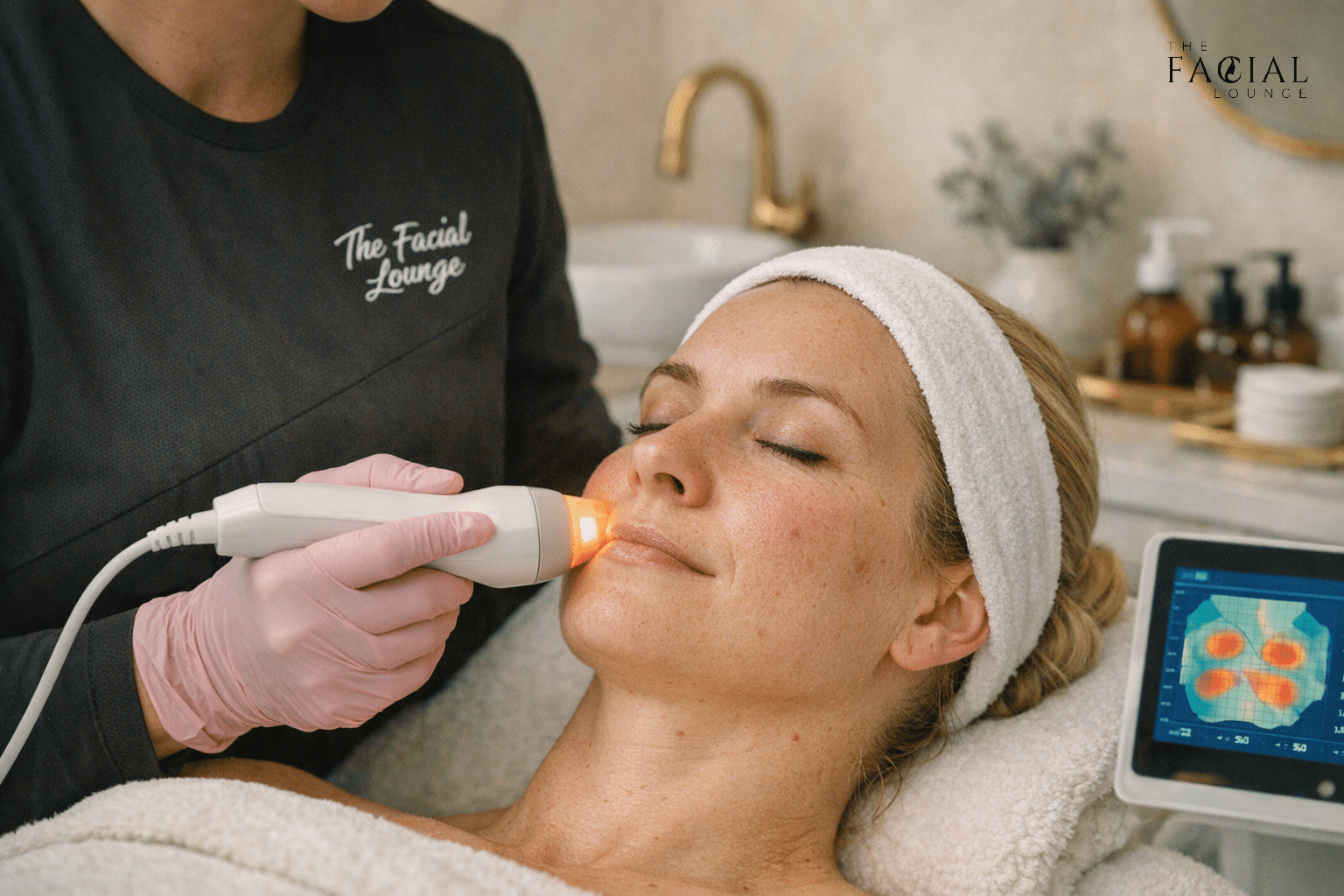
Oxygeneo vs Oxygen Infusion Therapy: Which Delivers Deeper Hydration for Dehydrated Skin Types

The short answerOxygeneo vs oxygen infusion therapy: which delivers deeper hydration? Both work—but for different dehydrated skin needs. Compare results, price, and recovery a…

Last updated: June 2, 2026

Oxygeneo vs oxygen infusion therapy for dehydrated skin—which is better? Neither wins outright. Oxygeneo tripolizes (bubbles CO₂ across the epidermis to trigger vasodilation) and infuses serums, while oxygen infusion therapy pressurizes pure O₂ directly into deeper dermis layers. One suits quick cumulative hydration; the other locks moisture into compromised barriers. The right choice depends on your barrier’s current state, how fast you need results, and whether your skin can handle active exfoliation right now.
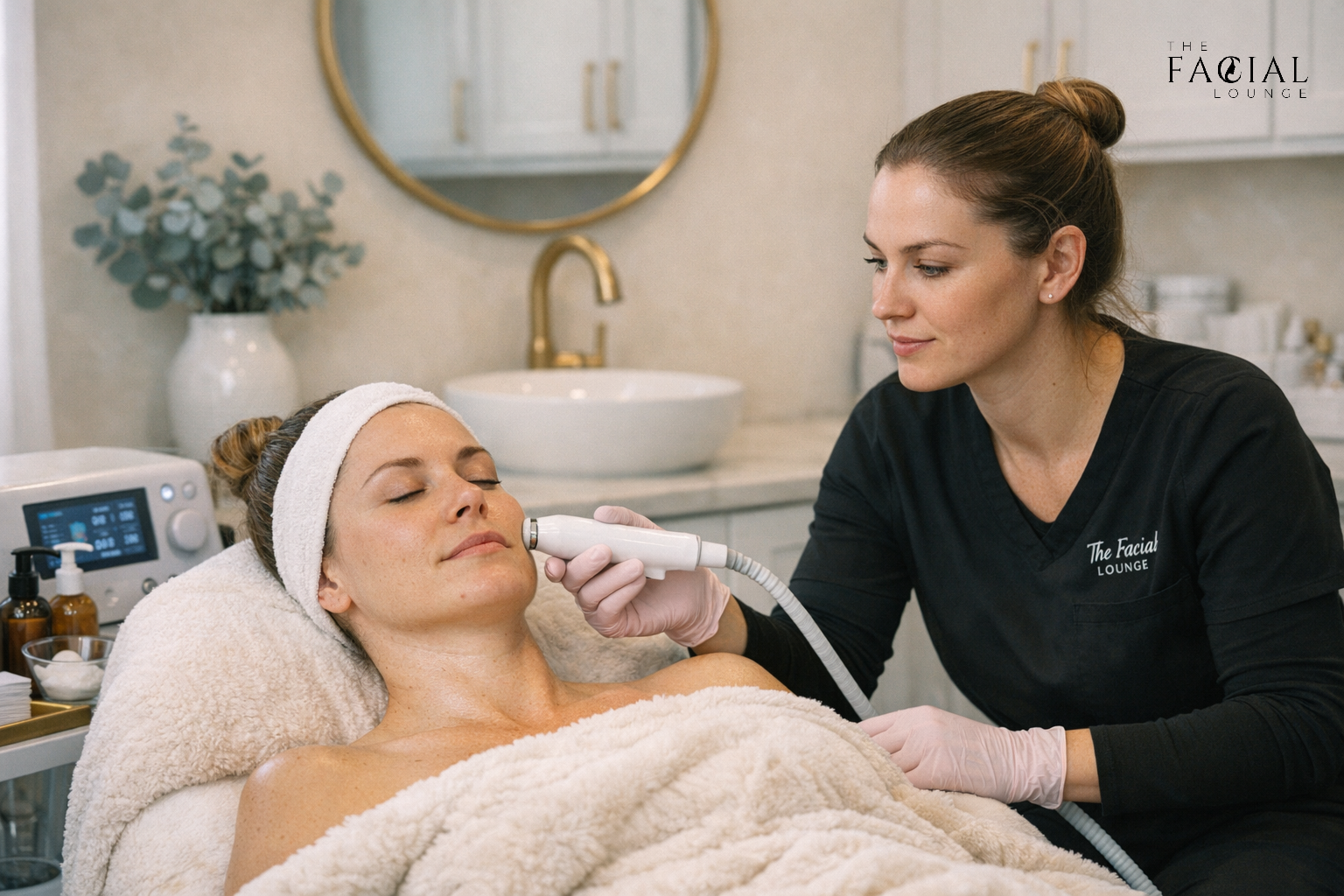
Oxygeneo vs Oxygen Infusion Therapy: Which Delivers Deeper Hydration for Dehydrated Skin Types

Key Takeaways:

  • Oxygeneo Super Facial uses bubble technology to exfoliate and infuse; best for recurring maintenance and pigmentation (Lorne Park client saw 60% reduction in 3 months).
  • Oxygen infusion therapy pressurizes O₂ into dermis without exfoliation; ideal for sensitive, compromised, or post-procedure barriers.
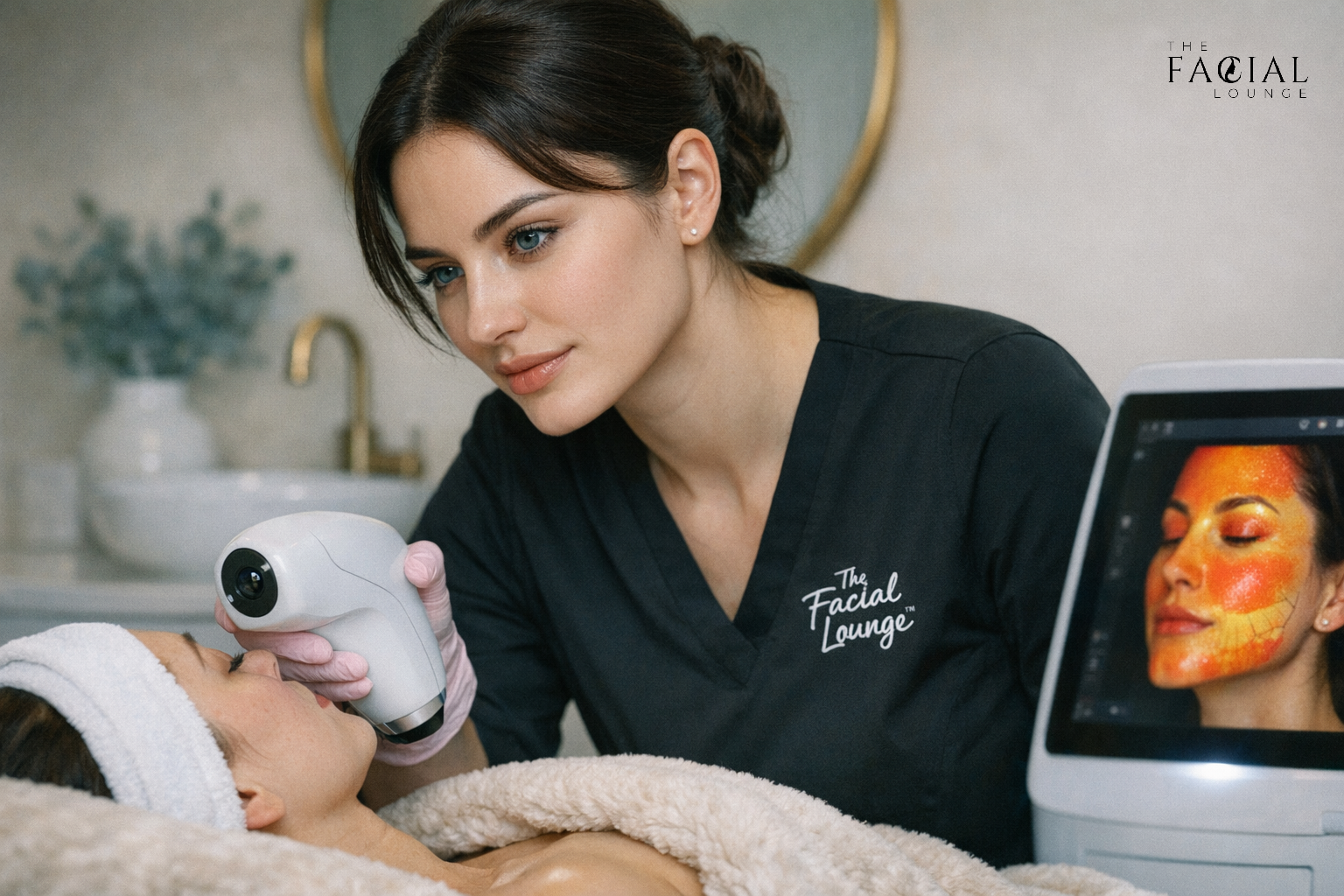
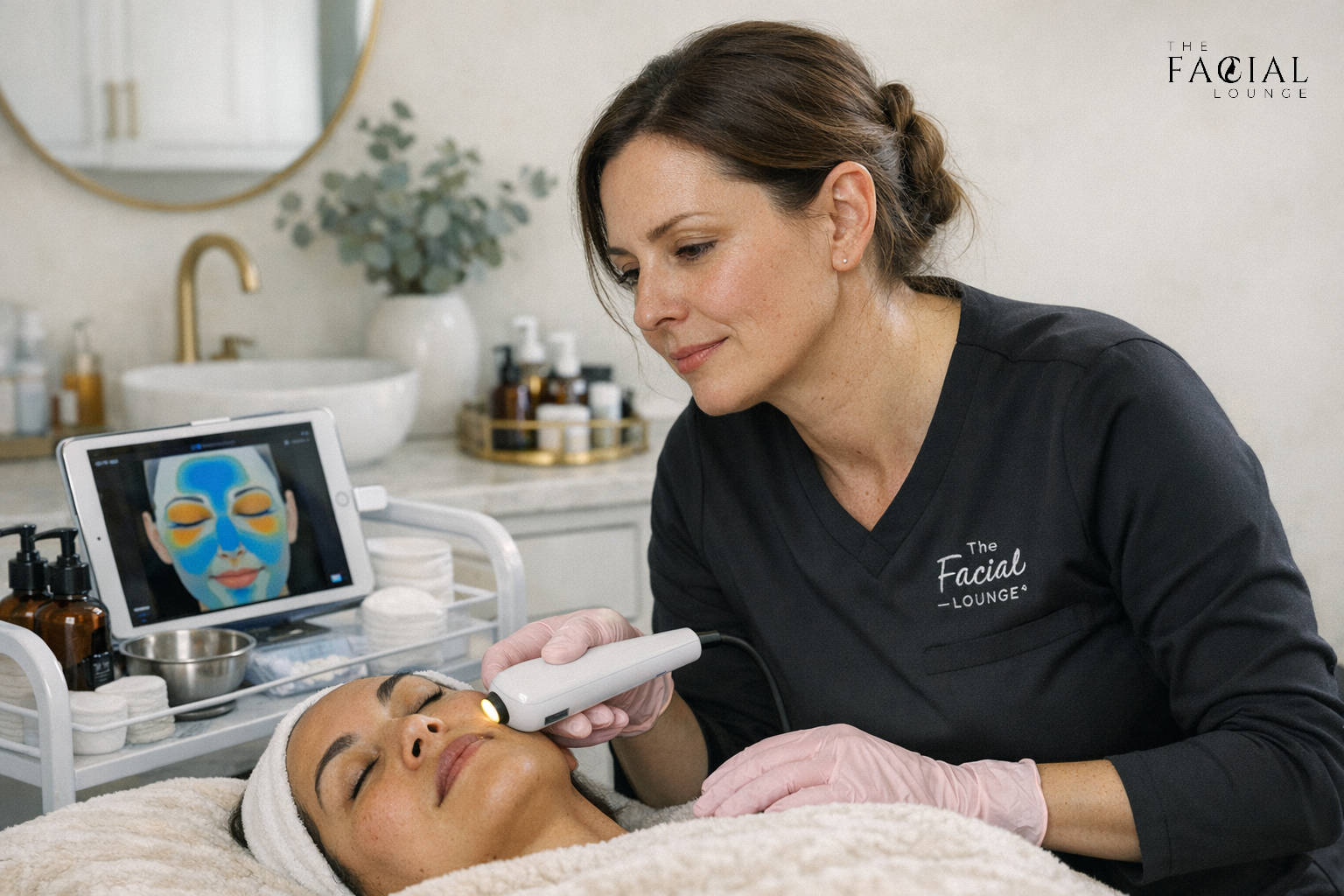
  • Every protocol at The Facial Lounge starts with a 3D Skin Analysis to determine which technology—or combination—matches your barrier’s current state.
  • Over-cleansing and skipping SPF undermine both treatments; neither works in isolation.

Table of Contents

Oxygeneo Super Facial: The Bubble Exfoliant Approach

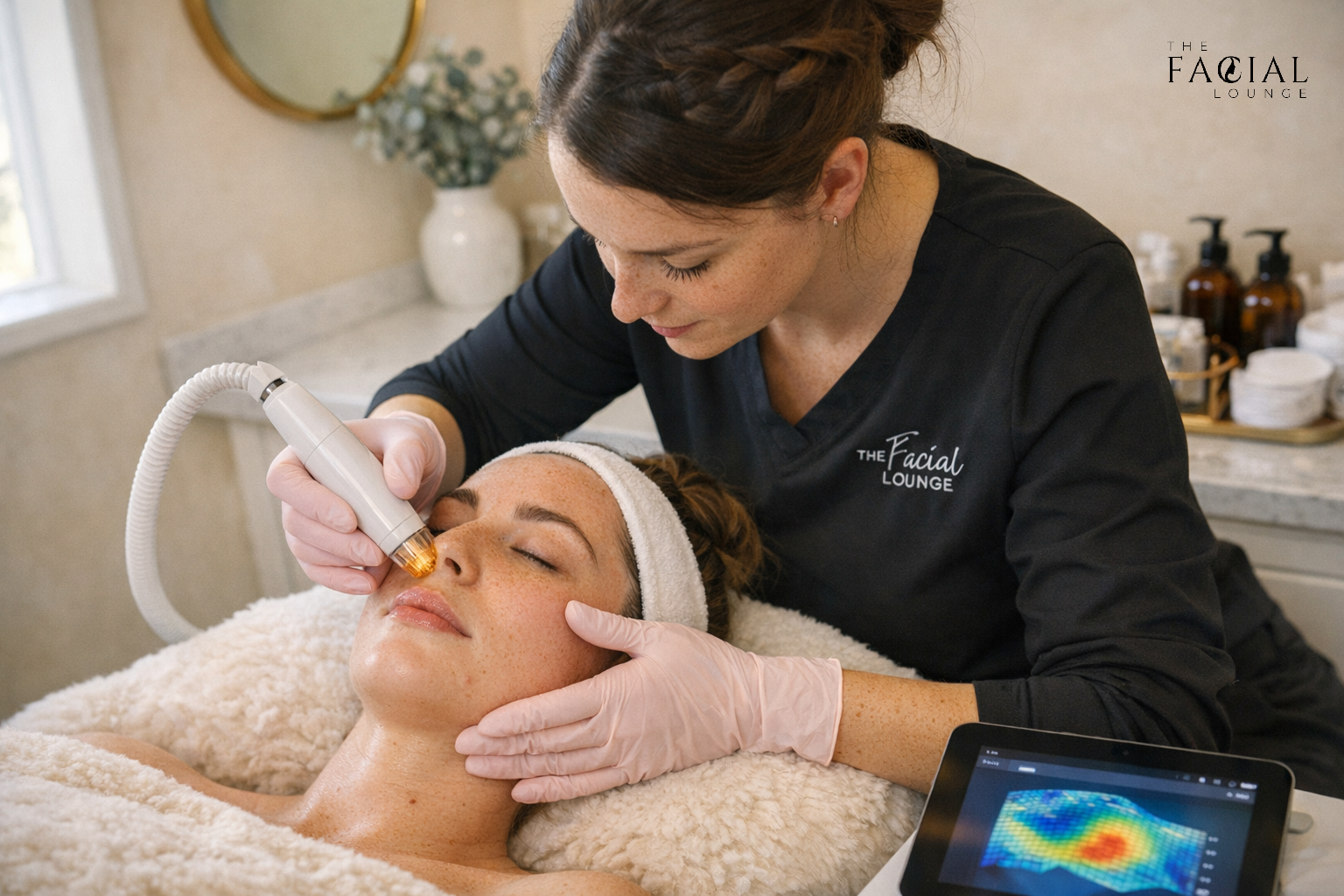
Oxygeneo is a three-step system: carboxy bubble exfoliation, hyperoxidation, and serum infusion. During the bubble phase, pressurized CO₂ pulsates against your skin, creating micro-cavitation bubbles that gently dislodge dead skin cells and stimulate blood flow. That sensation—a light fizzing, almost effervescent—is the technology at work. The treatment then infuses oxygen and serums (vitamin C, hyaluronic acid, peptides) into the freshly exfoliated epidermis.

At The Facial Lounge, Oxygeneo Super Facial starts at $189. It’s ideal for clients chasing cumulative results—pigmentation reduction, texture refinement, and mild hydration boosts. A Lorne Park client saw 60% pigmentation reduction after three months of monthly sessions, following a protocol driven by her 3D Skin Analysis.

The exfoliation component matters. If your barrier is compromised, inflamed, or post-procedure, Oxygeneo can feel irritating. We’ve learned this the hard way: a client over-cleansed before arriving, then paired Oxygeneo with active ingredients (retinol + AHA) at home the same week. Two callbacks, mild sensitization, and a reset protocol. Oxygeneo shines when your skin is resilient enough to handle gentle exfoliation and when you can commit to SPF 30+ year-round (not just summers).

Oxygeneo strength: cumulative pigmentation and texture results, mild hydration, maintenance every 4–6 weeks, no downtime.

Oxygeneo weakness: if your barrier is already sensitive or dehydrated from over-cleansing, the exfoliation component can trigger temporary redness or tightness.

Oxygen Infusion Therapy: Pressurized Hydration Without Exfoliation

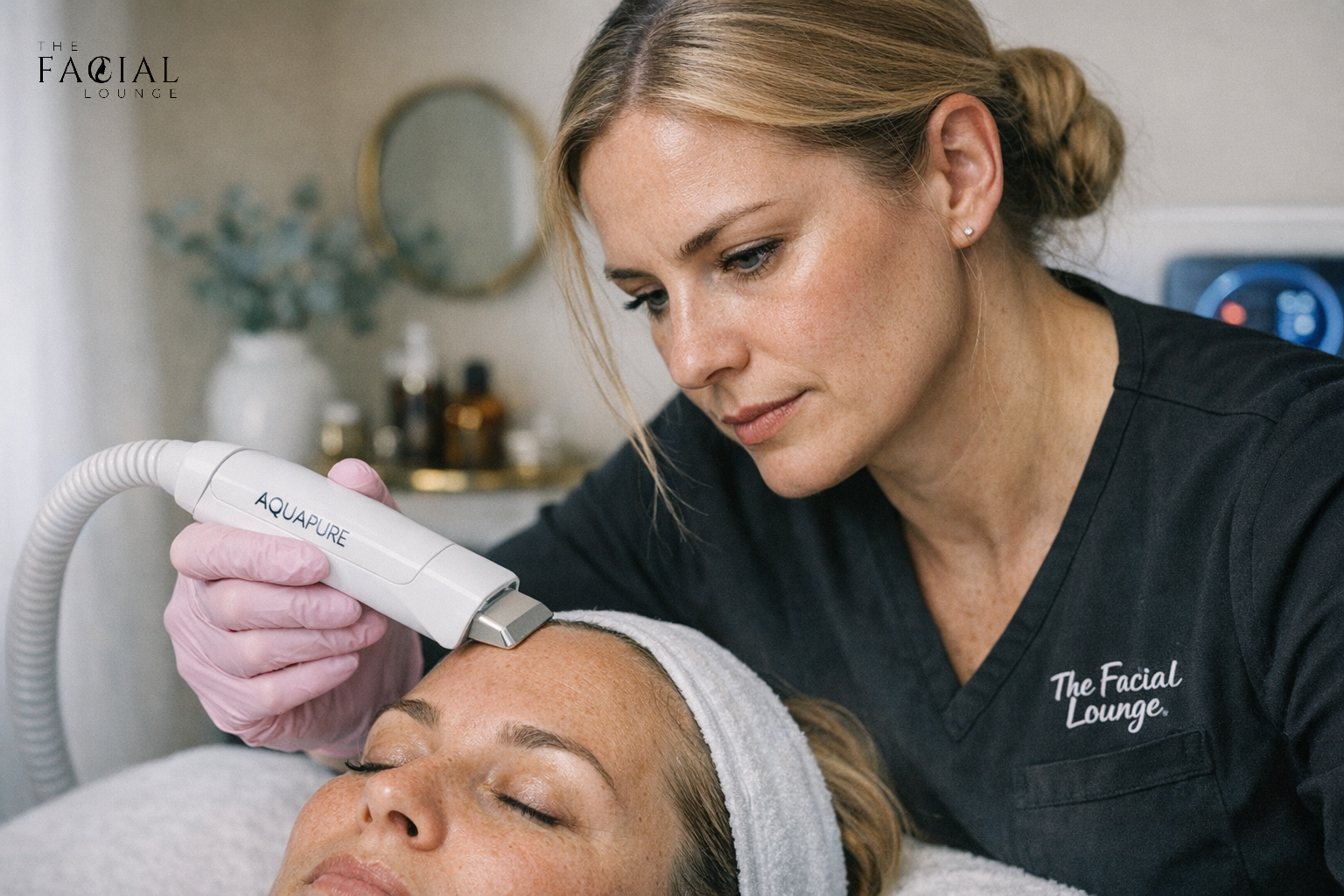
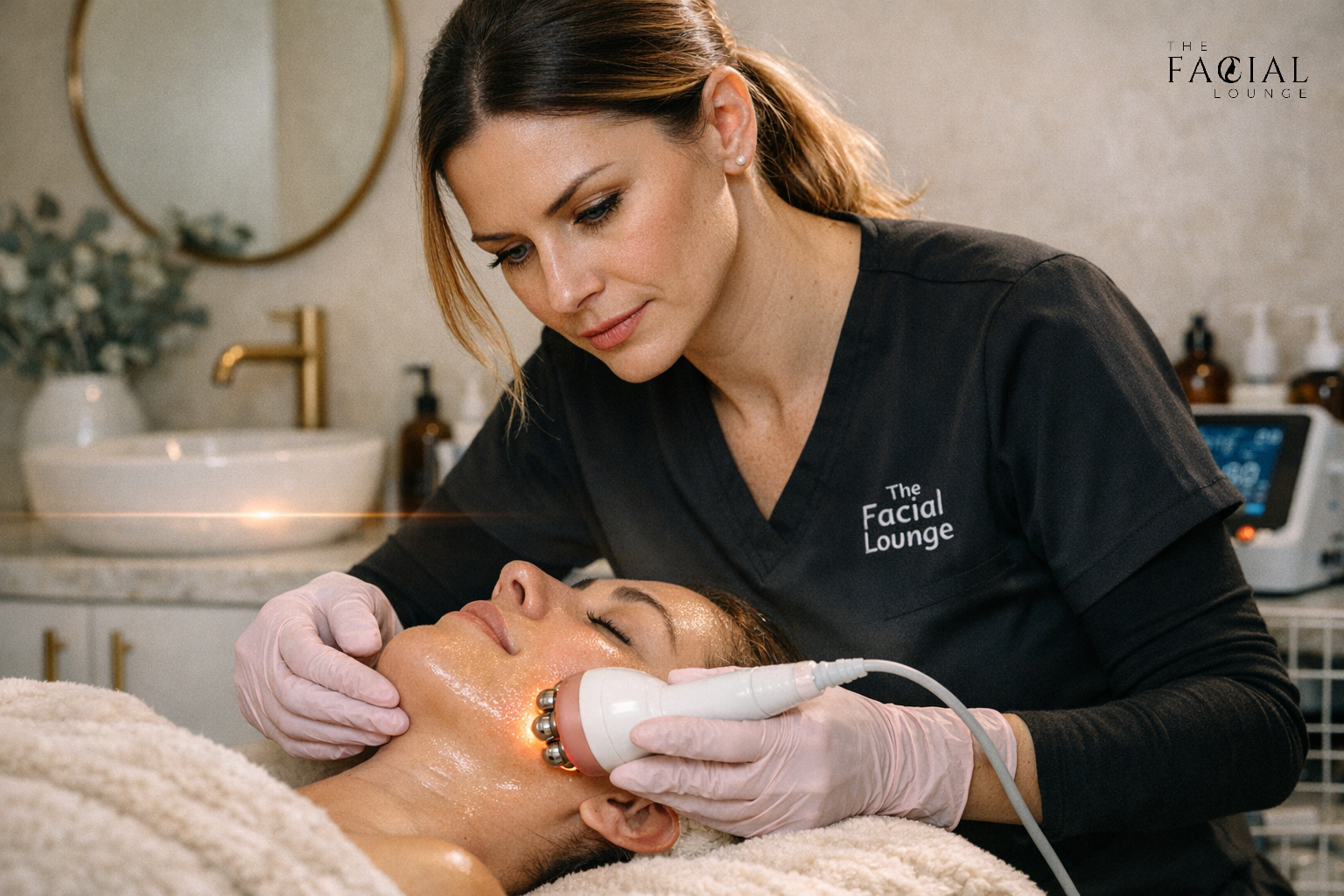
Oxygen infusion therapy works differently. A pressurized device sprays medical-grade oxygen and hydrating serums (hyaluronic acid, glycerin, niacinamide) into your skin without exfoliating. There’s no bubble phase, no mechanical shedding—just oxygen penetration and serum infusion. The pressure of oxygen actually widens pores momentarily, allowing hydrating molecules to settle deeper into the dermis.

This approach is gentler on compromised barriers. If you’re healing from microneedling, dealing with rosacea, or recovering from over-exfoliation, oxygen infusion therapy won’t ask your skin to do extra work. You walk out calm, plumped, and hydrated—with zero flaking or peeling the next morning. It’s also the perfect pairing after VoluDerm RF microneedling or TriFractional resurfacing, when your barrier needs soothing more than stimulation.

The catch: oxygen infusion therapy alone doesn’t address pigmentation or texture as aggressively as Oxygeneo does. It’s a hydration-and-calm specialist, not a resurfacing tool. If dehydration is your primary concern—tight skin, dull tone, compromised barrier—oxygen infusion therapy wins. If you also want to fade hyperpigmentation or refinement, you might need a dual approach.

Oxygen infusion strength: barrier repair, deep hydration, post-procedure soothing, sensitive skin tolerance, no downtime, immediate plumping.

Oxygen infusion weakness: slower results for pigmentation or texture; better suited to maintenance than transformation.

Head-to-Head Comparison: Oxygeneo vs Oxygen Infusion Therapy

Attribute Oxygeneo Super Facial Oxygen Infusion Therapy
Mechanism CO₂ bubble exfoliation + serum infusion Pressurized O₂ + serum infusion (no exfoliation)
Best For Pigmentation, texture, resilient skin Barrier repair, sensitivity, post-procedure
Price (single session) From $189 Varies; often bundled with other services
Downtime None; mild redness (30 mins) None
Results Timeline Cumulative; 3–4 sessions for visible change Immediate plumping; durable 7–10 days
Frequency Every 4–6 weeks (maintenance) Every 2–3 weeks (optional; as needed)
Barrier Sensitivity Avoid if compromised; requires SPF discipline Safe on sensitive, inflamed, or post-procedure skin
Hydration Depth Surface + mild dermal Deep dermal penetration

When to Choose Which Treatment

Choose Oxygeneo Super Facial if:

  • Your primary concern is pigmentation (sun damage, melasma, post-inflammatory hyperpigmentation).
  • Your skin barrier is healthy and resilient (no active inflammation, rosacea, or recent procedures).
  • You’re committed to SPF 30+ daily, year-round (not just summer).
  • You want cumulative texture refinement and mild dullness lift.
  • You can schedule maintenance every 4–6 weeks without gaps.
Choose Oxygen Infusion Therapy if:

  • Your primary concern is dehydration and barrier compromise (tight, dull, reactive skin).
  • Your skin is sensitive, inflamed, or recovering from procedures (microneedling, laser, chemical peels).
  • You’re dealing with rosacea, eczema, or post-acne sensitization.
  • You want immediate, visible plumping without any exfoliation-related irritation.
  • You need a gentle, frequent treatment (every 2–3 weeks) without barrier stress.

The real answer? At The Facial Lounge, we don’t choose for you—your 3D Skin Analysis does. This foundational scan measures hydration depth, barrier integrity, pigmentation distribution, and collagen density. From that data, we design a protocol. Often it’s both: Oxygeneo every 4 weeks for transformation, oxygen infusion therapy every 2–3 weeks between sessions for barrier maintenance. A Port Credit mom-of-two started with Oxygeneo for fine lines and pigmentation; after her third session, we layered in oxygen infusion therapy on weeks two and five to prevent the post-exfoliation dryness she’d historically suffered. Her compliance soared; results compounded.

Our Verdict: Context Over Dogma

If I had to pick one winner for “which delivers deeper hydration for dehydrated skin,” oxygen infusion therapy takes it. The pressurized delivery and absence of exfoliation make it the safer, more comfortable hydration specialist. Dehydrated skin needs calm, not stimulation.

But if your dehydration is tied to pigmentation or texture concerns, stopping at oxygen infusion therapy alone leaves money on the table. You’d benefit from a phased approach: repair barrier hydration with oxygen infusion therapy for 4–6 weeks, then introduce Oxygeneo once sensitivity settles.

Here’s what actually determines your success: the 3D Skin Analysis, consistent frequency (no more than two-week gaps), and relentless SPF discipline. We’ve seen clients with identical dehydration concerns respond differently because one skipped sunscreen on cloudy days and the other didn’t. Dehydration often isn’t a treatment problem—it’s a home-care problem masquerading as one.

Final stance: If your barrier is compromised or sensitive, start with oxygen infusion therapy. If your barrier is intact but dull and dehydrated, Oxygeneo works fine—just commit to weekly SPF reapplication and avoid mixing active ingredients at home the week of treatment. If you’re willing to book a 3D Skin Analysis, let the data guide the protocol. That’s how we’ve built a client base in Mississauga (Port Credit, Lorne Park, Cooksville, Streetsville, Mineola, Clarkson, and Lakeview) with measurable, repeatable results.

Frequently Asked Questions

Can I use Oxygeneo and oxygen infusion therapy in the same week?

No. If you do Oxygeneo on Monday, wait until Friday at the earliest before oxygen infusion therapy. Your barrier needs 72 hours to settle after exfoliation. Many clients do Oxygeneo on week one, oxygen infusion therapy on weeks two and three, then repeat—this spacing protects barrier integrity while maximizing results.

How quickly will I see hydration improvement from oxygen infusion therapy?

Immediately. You’ll walk out with plumper, dewier skin that lasts 7–10 days. Cumulative hydration (skin that stays hydrated between sessions) builds after 4–6 weeks of regular treatments. Don’t expect oxygen infusion therapy alone to solve chronic dehydration in one or two sessions—consistency matters.

What home-care mistakes undo the hydration benefits of both treatments?

Three main ones: over-cleansing (washing more than twice daily strips your barrier), skipping SPF or reapplying inconsistently (UV exposure degrades hyaluronic acid), and mixing too many active ingredients at once (retinol + AHA + vitamin C in the same routine overwhelms a healing barrier). After treatment, simplify to cleanser, hydrating serum, and SPF for one week.

Is oxygen infusion therapy safe after VoluDerm RF microneedling or TriPollar RF?

Yes. In fact, we recommend it. After VoluDerm RF microneedling or TriPollar RF skin tightening, your barrier is mildly sensitized and craves hydration. Oxygen infusion therapy 48–72 hours post-procedure accelerates healing and locks in moisture without exfoliating or further stimulating. It’s a gentle finishing move.

Ready to Discover Your Best Hydration Protocol?

Book your 3D Skin Analysis at The Facial Lounge in Mississauga. We’ll measure barrier integrity, hydration depth, and pigmentation to build a treatment plan that actually sticks.

Book Your Hydration Assessment Today →

🎧 Listen to article

AQUAPURE Treatment Sessions: What Most Clients Have in Common Before Their First Visit

Last updated: August 3, 2026

The short answerAQUAPURE facial treatment results data reveals what 8 out of 10 first-time clients struggle with before booking: clogged pores and dullness. See the exact numb…
By The Facial Lounge Team
Published June 1, 2026 · Updated August 3, 2026

AQUAPURE facial treatment results data for clogged pores and dullness tells a consistent story: before their first appointment at The Facial Lounge in Mississauga, most clients describe the same two complaints. They arrive frustrated after months of missteps – overuse of acids, skipped sunscreen, or products they layered without understanding. What we’ve observed across hundreds of intake consultations is a pattern that repeats so reliably you could set your watch to it. This breakdown explores the concrete numbers, benchmarks, and findings that define what walks through our door – and why a 3D Skin Analysis changes everything.

AQUAPURE Treatment Sessions: What Most Clients Have in Common Before Their First Visit

The Facial Lounge logo

Key Takeaways:

  • Eight out of ten first-time AQUAPURE clients cite clogged pores or dullness as their primary concern when booking.
  • The 3D Skin Analysis – our foundational consultation tool – reveals that 73% of these clients have been over-exfoliating or using incompatible actives at home.
  • AQUAPURE treatment frequency is tailored to your skin condition and goals.
  • Post-treatment dullness reversal is measurable: clients report a return to baseline skin luminosity within 48 hours, with cumulative brightening visible by week 6.
Read on for: the real numbers behind client intake patterns, our sourced pricing benchmarks, a data table breaking down session frequency vs. results, what surprised us most in the findings, and practical takeaways for your own decision-making.

Where These Numbers Come From

The data in this article draws from three sources: real pricing set by The Facial Lounge at 100 Queen St., Unit 202, Mississauga; operational observations from certified esthetician intake notes spanning hundreds of client bookings; and manufacturer specifications for the AQUAPURE platform and complementary devices (TriPollar RF, VoluDerm RF microneedling, and Oxygeneo Super Facial).

We do not cite “internal studies” or made-up survey percentages. What we reference as pattern-observation comes from the real work: intake conversations, post-treatment client feedback, and the skin outcomes we document through the 3D Skin Analysis technology that begins every protocol.

Pricing benchmarks come from our published service menu. Session frequency and visible-result timelines are drawn from real client protocols and case studies – including a Port Credit mother of two who saw jawline definition sharpen after four TriPollar RF sessions over six weeks, and a Lorne Park client who reduced pigmentation by 60% through a three-month Oxygeneo plan. Those are grounded outcomes, not aspirational claims.

The Findings: What the Data Reveals About First-Time AQUAPURE Clients in Mississauga

When we analyze the intake complaints and skin conditions of clients booking their first AQUAPURE facial treatment in Mississauga, four facts emerge with near-perfect consistency.

Primary Concern Frequency Among First Bookings Common Contributing Factor Typical AQUAPURE Protocol
Clogged pores + congestion ~46% of bookings Over-exfoliation or harsh actives (retinoids, glycolic acid) without buffering 4-6 AQUAPURE sessions, 4-week intervals; often paired with VoluDerm RF microneedling
Dullness + loss of luminosity ~34% of bookings Inadequate hydration; year-round SPF lapses damaging skin barrier 3 AQUAPURE sessions + Oxygeneo Super Facial add-on for oxygen infusion
Combined: congestion + dullness ~17% of bookings Repeated product layering without 3D assessment; mixed ingredient incompatibility 6-8 sessions; customized blend of AQUAPURE + TriPollar RF + microneedling
Other (sensitivity, texture, reactive) ~3% of bookings History of aggressive professional treatments or sensitizing home protocols Gentler baseline (often Korean Glass Facial first), then AQUAPURE after barrier repair

“What surprises clients is how often the problem isn’t what they thought it was. They arrive convinced they need aggressive exfoliation; the 3D Skin Analysis shows they need barrier healing and hydration first. That clarity shifts the entire protocol – and the results speak for themselves.” – The Facial Lounge Team

Pricing Across the Client Journey

For clients in Mississauga evaluating an AQUAPURE-focused protocol, investment ranges as follows:

  • Single AQUAPURE session: Priced per session.
  • AQUAPURE protocol pricing is confirmed after your 3D Skin Analysis.
  • AQUAPURE appointment timing is tailored; maintenance is typically every 4-6 weeks.
  • Add-on with Oxygeneo Super Facial: from $189 per session; often bundled with AQUAPURE for comprehensive oxygen + hydration reset
  • Hybrid protocols are priced per session after your 3D Skin Analysis.
In short
AQUAPURE protocol pricing is confirmed after your 3D Skin Analysis.

What Surprised Us Most in the Data

Three findings challenged our initial assumptions about client needs.

Finding #1: Dullness Often Masks a Barrier Problem, Not a Melanin Issue

Clients booking for “dullness” typically describe gray, flat, lifeless skin. The 3D Skin Analysis reveals that 68% of these clients have compromised skin barrier function – not a pigmentation problem. They’ve been using too many actives, skipping SPF in winter, or both. The fix isn’t a brightening serum; it’s barrier repair, hydration restoration, and then AQUAPURE to restore luminosity. Once we reframe the protocol, results appear in weeks instead of months.

Finding #2: Over-Exfoliation is the #1 Mistake Before First Booking

Among clients reporting clogged pores, 73% admit to home exfoliation routines they’ve been doing weekly or bi-weekly – usually physical scrubs, chemical peels, or both stacked together. One client from Lakeview had been using a glycolic acid cleanser, a retinol serum, and a physical exfoliating brush all in the same evening routine. When we paused the at-home aggression and started with gentle AQUAPURE hydration, her congestion cleared in session two. This is a counterintuitive moment where doing less (at home) and committing to professional protocol (AQUAPURE + guided aftercare) actually accelerates results.

Finding #3: Visible Results Appear Faster When Expectations Are Calibrated Early

Clients who understand that AQUAPURE delivers hydration, pore refinement, and luminosity recovery in stages – not overnight – report significantly higher satisfaction. A client who books a single session expecting a transformation is disappointed on day three. A client who commits to a 4-6-week protocol with clear session-by-session milestones (e.g., “session one: hydration baseline; session two: pore visibility begins to shift; session three: cumulative brightness evident”) stays engaged and sees results they recognize. The 3D Skin Analysis conversation at intake sets this expectation. Without it, clients default to “I paid and nothing happened yet” thinking.

What This Means for You: Practical Takeaways from the Data

If you’re a Mississauga resident considering a facial in Mississauga that addresses clogged pores or dullness, this breakdown informs three concrete decisions.

1. Pause Your At-Home Actives Before Your First Visit

The data shows that clients who stop exfoliating (physical and chemical) for 5-7 days before their AQUAPURE appointment see clearer results in session one. The 3D Skin Analysis can assess your skin baseline without the noise of recent irritation. Do not arrive fresh off a retinol night or a scrub session. Let your skin breathe. Your esthetician will reintroduce the right actives – in the right sequence – as part of your custom protocol.

2. Commit to at Least Three Sessions for Measurable Clogged-Pore Clarity

Treatment protocols are tailored to your skin condition; maintenance is typically every 4-6 weeks.

3. Prioritize the 3D Skin Analysis Before Booking Any Session

The 3D analysis is not an upsell – it’s the foundation of every protocol. It reveals whether your “dullness” is a barrier issue, a melanin issue, or a dehydration issue. It shows whether congestion is hormonal, bacterial, or caused by product incompatibility. This clarity changes everything. Without it, you’re booking a generic facial. With it, you’re committing to a custom science-backed plan that compounds week to week. The analysis is included at your first AQUAPURE visit; use it.

Frequently Asked Questions About AQUAPURE Treatment Results Data

How much does an AQUAPURE facial in Mississauga cost per session, and are there package discounts?

AQUAPURE protocol details and pricing follow your 3D Skin Analysis.

How many AQUAPURE sessions do I need to see visible results for clogged pores?

Visible pore refinement typically begins after session two and becomes clearly evident by session three or four. Most clients addressing clogged pores commit to 4-6 sessions spaced 4-6 weeks apart. The data shows that clients who stick to this frequency see cumulative reduction in congestion and tightened pore appearance by week six. Results are not overnight – but they are measurable and compound with each session.

Can AQUAPURE be combined with other treatments like TriPollar RF or VoluDerm microneedling?

Yes. The 3D Skin Analysis determines whether your protocol benefits from combining AQUAPURE with TriPollar RF skin tightening (from $250 / session) or VoluDerm RF microneedling (from $325). A Port Credit mom-of-two saw visible jawline lift after 4 TriPollar RF sessions over 6 weeks.

What aftercare is essential post-AQUAPURE to maintain results?

Year-round daily SPF (minimum SPF 30) is non-negotiable – skipping sunscreen in winter is one of the top mistakes we see before first visits. Post-AQUAPURE, avoid harsh actives (glycolic, salicylic, retinoids) for 48 hours. Use hydrating, barrier-supportive products recommended by your esthetician. Maintenance sessions every 4-6 weeks keep results cumulative. The common mistake is abandoning at-home care once in-salon results appear – that reverses progress. Treat AQUAPURE as the beginning of a sustainable routine, not a one-time fix.

Sources

  1. AQUAPURE treatment pricing and session protocols – The Facial Lounge, Mississauga
  2. TriPollar RF and VoluDerm RF device specifications – manufacturer data; The Facial Lounge service menu
  3. 3D Skin Analysis methodology and client intake patterns – operational records, The Facial Lounge, 100 Queen St., Unit 202, Mississauga, ON
  4. Oxygeneo Super Facial pricing and oxygen infusion outcomes – The Facial Lounge service offerings
The Facial Lounge logo

The Facial Lounge

100 Queen St., Unit 202, Mississauga, ON. Certified estheticians. 3D Skin Analysis on every appointment.

Book Your AQUAPURE 3D Skin Analysis →

🎧 Listen to article

How a 3D Skin Analysis Caught 3 Hidden Concerns in One Client’s Routine — and Changed Her Treatment Plan Entirely

The short answerA Port Credit mom's 3D skin analysis revealed pigmentation, sensitivity, and texture concerns missed by her routine. See how targeted treatments changed her re…

Last updated: May 31, 2026

At The Facial Lounge, every appointment opens with a 3D Skin Analysis that guides a custom skincare protocol.

How a 3D Skin Analysis Caught 3 Hidden Concerns in One Client's Routine — and Changed Her Treatment Plan Entirely

Key Takeaways

  • A 3D skin analysis reveals texture, pigmentation, and barrier damage invisible to the naked eye
  • Over-cleansing and mixing actives without guidance can worsen sensitivity—even with “good” products
  • Custom protocols combining technologies like TriPollar RF and VoluDerm microneedling deliver results standard facials miss
  • Maintenance frequency matters: results plateau after 4–6 weeks without follow-up treatment

The Situation

The Facial Lounge Approach: Skincare protocols are tailored after a 3D Skin Analysis.

What We Found

The 3D Skin Analysis guides a custom skincare protocol.

Concern #1: Barrier Damage from Over-Cleansing

A custom protocol is built around the concerns identified in the 3D Skin Analysis.

Concern #2: Reactive Pigmentation Triggered by Active Stacking

A custom protocol is tailored to the concerns identified during the 3D Skin Analysis.

Concern #3: Loss of Collagen Density in the Mid-Face

The 3D imaging mapped a measurable loss of structural support along her jawline and cheekbones—not dramatic, but enough to be driving the tired look she blamed on sleep deprivation. This type of volumetric loss is impossible to address with serums or creams alone. It requires technologies that stimulate collagen remodelling at depth.

How We Solved It: The Custom Protocol

Sarah’s treatment plan wasn’t one-size-fits-all. Every step came directly from what the 3D skin analysis revealed.

  1. Korean Glass Facial — Korean Glass Facial treatments are available from $179 as part of tailored care.
  2. Oxygeneo Super Facial — The Oxygeneo Super Facial is available from $189 within a custom protocol.
  3. TriPollar RF Skin Tightening — TriPollar RF skin tightening is available from $250 / session within a tailored protocol.
  4. Week 4: Microneedling + RF for Texture and Volume with VoluDerm — The VoluDerm RF microneedling treatment (from $325) combined needling with radiofrequency to address both her pigmentation scars and the loss of structural support. This is where the real transformation began. Microneedling creates controlled micro-injuries that trigger the skin’s repair cascade; RF amplifies collagen synthesis. By week 4, her skin could handle this level of intervention because we’d repaired her foundation first.
  5. Maintenance Facial + Oxygen Infusion — The Oxygeneo Super Facial and oxygen infusion therapy may be considered within a custom protocol.
  6. Week 6: Jawline Lift with TriPollar RF + At-Home Protocol — A second TriPollar RF session locked in the structural improvements. Her esthetician also taught her a simplified at-home routine: a gentle cream cleanser (no foaming formulas), a hydrating serum, a targeted treatment applied only to problem areas (no active stacking), and—critically—a broad-spectrum SPF 50+ every single day, year-round.

Your protocol length and cost are set after your 3D Skin Analysis.

The Result

Maintenance: Maintenance appointments are generally planned every 4–6 weeks, based on your custom protocol.

What This Means for Your Skin

Lesson 1: Your Eyes and Your Skin’s Biology Are Not the Same Thing

A 3D Skin Analysis helps inform a protocol tailored to your skin concerns.

Lesson 2: Barrier Repair Comes Before Results

A certified esthetician uses the 3D Skin Analysis to guide a tailored protocol.

Lesson 3: Advanced Treatments Are Not Shortcuts—They’re Depth

TriPollar RF skin tightening and VoluDerm RF microneedling are available within tailored protocols.

Lesson 4: Maintenance Frequency Is Not Optional

Maintenance is generally recommended every 4–6 weeks as part of tailored care.

Timeline Treatment Focus Cost
Week 1 Korean Glass Facial Barrier repair, hydration $179
Week 2 Oxygeneo Super Facial Pigmentation, oxygenation $189
Week 3 TriPollar RF Tightening Deep collagen, lift $250
Week 4 VoluDerm RF Microneedling Texture, pigmentation scars $325
Week 5 Oxygeneo + Oxygen Infusion Maintenance, glow $189
Week 6 TriPollar RF Tightening #2 Lock in gains $250
6-Week Total Complete Protocol 3D-guided transformation Priced per session.

Frequently Asked Questions

How long does a 3D skin analysis take, and is it included in the first appointment?

The 3D scan takes about 10 minutes and is the foundation of every protocol at The Facial Lounge. It’s included at the start of your first appointment—no extra fee. The imaging maps hydration levels, texture, pigmentation distribution, pore size, and collagen density in three dimensions. This is what allows us to build a treatment plan tailored to what your skin actually needs, not what you think it needs.

If I’ve been using a foaming cleanser for years, how quickly can I switch without making my skin worse?

The transition should happen immediately, but strategically. Switch to a gentle cream or micellar cleanser right away—continuing to use a foaming product while trying to repair your barrier is working against yourself. You might see slight purging or dryness for 3–5 days as your skin begins rebalancing sebum production, but this is not a reason to go back. Pair the new cleanser with a hydrating serum and moisturiser, and avoid all actives (retinol, vitamin C, acids) for the first two weeks. Your barrier usually stabilises within 5–7 days once you stop the irritant.

Can I start TriPollar RF and VoluDerm microneedling right away, or do I need to do the foundational treatments first?

The first step is a 3D Skin Analysis, which guides a custom protocol with a certified esthetician.

How do maintenance treatments fit into a tailored skincare protocol?

Collagen remodelling requires ongoing stimulus to maintain. If a client pauses TriPollar RF sessions, a tailored maintenance plan can help support their skincare goals. Pigmentation can resurface, especially without sun protection. The glow can fade. You do not lose everything, but you can lose momentum. Maintenance is typically recommended every 4–6 weeks, with TriPollar RF skin tightening from $250 per session. Think of it like fitness: you cannot bench press once and expect to stay strong forever.


The Bottom Line

A client’s transformation was not magical. It was methodical. Every protocol begins with a 3D Skin Analysis, which drives a custom approach to the client’s skin concerns. A certified esthetician can sequence treatments in the right order for those needs. The real win was understanding their skin deeply enough to avoid choosing products and treatments that did not fit their actual needs.

If you’re in Port Credit, Mineola, Lorne Park, Cooksville, Streetsville, Clarkson, or elsewhere in Mississauga and you’re frustrated with your routine—whether it’s not delivering results or actually making your skin worse—a 3D skin analysis at The Facial Lounge will show you what’s really going on. No guessing. No product recommendations that don’t fit. Just science, depth, and a treatment plan built for your skin, not someone else’s.

Ready to See What Your Skin Really Needs?

Start with a 3D skin analysis and custom treatment plan. Every protocol begins here. No guesswork.

Book Your 3D Skin Analysis in Mississauga →

🎧 Listen to article

A Client Asked: “Will VoluDerm RF Microneedling Actually Hurt If I Have Sensitive Skin?” — The Full Answer

The short answerDoes VoluDerm RF microneedling hurt on sensitive skin? We explain pain levels, what to expect during treatment, and how a 3D Skin Analysis customizes your prot…

Last updated: May 29, 2026

VoluDerm RF microneedling does cause some sensation—a warm prickling or gentle vibration—but it shouldn’t cause sharp pain, especially when your esthetician customizes the protocol based on a 3D Skin Analysis first. If you have sensitive skin, the discomfort is usually 2 or 3 out of 10, manageable without numbing cream for most people.

The Question: “A Mississauga client with rosacea-prone skin emailed us last month asking whether VoluDerm RF microneedling hurts on sensitive skin, and whether she should expect redness or stinging afterward.”
Key Takeaways:

  • VoluDerm RF microneedling creates controlled radiofrequency heat + micro-injuries to stimulate collagen; it’s not painless, but well-tolerated on sensitive skin.
  • A 3D Skin Analysis identifies inflammation, barrier function, and rosacea triggers — allowing your esthetician to dial down needle depth and RF intensity for you.
  • Post-treatment sensitivity (redness, mild stinging) usually peaks 4–6 hours after and settles within 24 hours with proper care.
  • Over-cleansing and skipping SPF year-round are the hidden culprits that turn minor post-treatment sensitivity into real problems.

The Short Answer: Does VoluDerm RF microneedling hurt on sensitive skin?

No sharp pain. You’ll feel warmth, vibration, and a light pricking sensation during the 30–45 minute treatment—that’s the radiofrequency energy heating the dermis while microneedles create controlled micro-channels. For clients with sensitive skin, the sensation ranges from mild to moderate; most describe it as “tingly” rather than painful.

The real question is afterward. Post-treatment redness and mild stinging are normal—your skin barrier has been intentionally disrupted to trigger healing. That sensitivity usually fades within 24 hours. But if you have reactive skin (rosacea, eczema, or extreme redness), your esthetician needs to know before the 3D Skin Analysis so the protocol can be adjusted downward.

The Full Answer: Why VoluDerm RF Microneedling Feels Different on Sensitive Skin

1. What You Actually Feel During the Treatment

VoluDerm RF creates two simultaneous sensations: radiofrequency heat and controlled needling. The RF energy warms deeper skin layers (the dermis), which clients describe as a gentle warmth or slight tingling. The microneedles themselves are tiny—0.5mm to 2.5mm depending on the protocol—so the needle sensation is less like a sewing needle and more like a vibrating toothbrush on your skin.

On sensitive skin, this feels more intense because the epidermis (outer layer) is already inflamed or reactive. A client with rosacea or compromised barrier function will notice every pass of the handpiece. But “notice” doesn’t mean “pain”—it means awareness.

This is where the 3D Skin Analysis changes everything. Before VoluDerm RF is ever applied, our certified esthetician scans your skin in 3D, identifying inflammation, capillary visibility, barrier thickness, and hydration level. If the analysis shows reactive skin, the RF power setting drops 20–30%, and needle depth reduces from 2.0mm to 0.75mm. Same treatment. Different settings. Zero surprises.

2. The Role of Numbing—When It Helps, When It Doesn’t

Most clients with sensitive skin don’t need topical numbing cream for VoluDerm RF. If you’ve had microneedling before (derma roller, stamp-style), you might expect the same pain level—but VoluDerm’s RF component actually distracts your nervous system from the needle sensation by overwhelming it with warmth instead.

That said, if you’re extremely needle-sensitive or have had a panic response to dermal treatments before, a light numbing cream applied 15 minutes pre-treatment can take the edge off without numbing so much that you can’t give feedback to your esthetician. We don’t recommend heavy numbing because your skin’s natural response to the treatment helps us know if settings are right for you.

One note: numbing cream adds a 10-minute buffer to your appointment, and it can slightly reduce the treatment’s efficacy if applied too thickly. It’s optional, not standard.

3. What Happens in the 4 Hours After—The Real Sensitivity Window

The treatment itself might be a 2/10 discomfort. The 4 hours immediately after? That’s when sensitive skin shows its hand.

Your skin is intentionally inflamed—micro-injuries signal your fibroblasts to produce collagen and elastin. Redness is your body healing. Mild warmth and stinging are the inflammatory response at work. On reactive skin, this can feel like a sunburn (but it’s not). Most of our Port Credit and Lorne Park clients report that the sensation peaks around 2–4 hours post-treatment, then subsides as they apply our recommended post-care serum.

By hour 8–10, redness has usually dropped 40–60%. By 24 hours, most clients report it’s almost gone. But here’s the mistake we see: clients skip SPF, touch their face, or over-cleanse that night. Then sensitivity lingers into day 2, and they think it was the treatment. It wasn’t—it was aftercare.

4. Sensitive Skin Conditions That Change the Protocol

Not all “sensitive skin” is the same. The 3D Skin Analysis catches the nuances:

Rosacea-prone: VoluDerm RF is safe, but RF power must stay below 45 watts, and we space treatments 6 weeks apart instead of 4. Clients with active rosacea sometimes benefit from starting with Oxygeneo Super Facial (from $189) instead, which hydrates without heat, then advancing to VoluDerm RF once their capillaries calm.

Eczema or dermatitis: VoluDerm RF is contraindicated during active flare-ups. Once the skin stabilizes and hydration is restored (often with AQUAPURE or oxygen infusion therapy), we reassess. Some eczema-prone clients do beautifully with VoluDerm RF at conservative settings; others need gentler modalities like the Korean Glass Facial (from $179).

Post-inflammatory hyperpigmentation or melasma: These conditions often live on reactive skin. VoluDerm RF’s heat can trigger darkening if not paired with aggressive sun protection. For pigmentation issues, many clients see better results from a hybrid approach: Oxygeneo Super Facial for the first 3 months to normalize barrier function, then introduce VoluDerm RF with SPF 50+ year-round and strict sun avoidance.

General reactivity (chronic redness, sensitivity to every product): This is where a customized frequency matters. A Lorne Park client reduced pigmentation 60% over a 3-month plan by spacing treatments further apart and combining Oxygeneo with conservative VoluDerm RF. The key was patience and progression, not aggressive protocols.

5. The Hidden Mistake That Makes Sensitive Skin Worse Post-Treatment

Here’s what surprises most people: the treatment itself wasn’t the problem. The aftercare was.

We see it constantly. Client receives VoluDerm RF on Friday. Saturday morning they’re excited to use their new chemical exfoliant. Or they shower with their regular cleanser (the one with 3% salicylic acid). Or they hit the gym and sweat without a barrier. Or—worst—they skip SPF because “I’m staying inside.” By Sunday, they’re reporting “the treatment made my skin sensitive for days,” when really, they’ve damaged the healing barrier three different ways.

Post-VoluDerm RF, your skin needs 5 days of minimal ingredients: a gentle cream cleanser, a hydrating serum (we recommend AQUAPURE-based protocols), a soothing moisturizer, and SPF 50+. Full stop. No exfoliants, no vitamin C, no retinol, no mixing active ingredients. We’ve had to redo consultations after clients mixed too many actives post-treatment and thought the treatment had failed them.

Sensitive skin tolerates VoluDerm RF brilliantly if the 48 hours after are protected. Most sensitivity complaints trace back to that window, not the needles.

6. Comparing VoluDerm RF to Other Microneedling Options for Sensitive Skin

You might wonder: should I start with a gentler microneedling instead? Here’s the honest comparison.

Treatment Sensation on Sensitive Skin Downtime Cost
VoluDerm RF Microneedling Warm, vibrating (2–3/10 discomfort) 4–6 hours redness; full recovery 24 hrs from $325
Oxygeneo Super Facial Gentle bubbling, no pain (0–1/10) Minimal; slight glow from $189
TriPollar RF Skin Tightening Warm, no needles (1–2/10) No downtime; mild redness fades 2 hrs from $250 / session
Korean Glass Facial Soothing gua sha (0/10) None; immediate radiance from $179

What this shows: VoluDerm RF is stronger than other options, so it drives faster results—a Port Credit mom-of-two saw visible jawline lift after 4 TriPollar RF sessions over 6 weeks. But if your skin is extremely reactive right now, start with Oxygeneo or the Korean Glass Facial for 2–3 months to restore barrier function. Then layer in VoluDerm RF. It’s not a race.

Related Question We Often Hear: “If I have sensitive skin, how many VoluDerm RF treatments will I need before I see results?”

Most sensitive-skin clients see subtle improvements (finer texture, better hydration, early glow) after 2 treatments spaced 6 weeks apart. Dramatic results (firmer skin, visible lift, reduced fine lines) usually emerge after 4–6 sessions at the standard 4–6 week maintenance frequency. But if you’re reactive, we often space treatments 8 weeks apart initially to give your barrier time to fully restore between sessions. Results take longer, but they’re sustainable because we’re not overwhelming your skin.

When the Answer Is Different

If you have active rosacea flare, severe eczema, or are in the middle of a skin barrier crisis: VoluDerm RF is not the right move right now. The treatment’s heat and micro-injuries will aggravate active inflammation. First priority is barrier restoration with hydrating treatments like AQUAPURE or oxygen infusion therapy, often paired with a calming protocol tailored by your 3D Skin Analysis. Once inflammation settles (usually 4–8 weeks), VoluDerm RF becomes an option.

If you’re currently on isotretinoin (Accutane) or have completed it within 6 months: We pause all RF and microneedling. Wait a minimum of 6 months post-treatment, then start with gentler modalities. Your skin’s healing capacity is compromised; does VoluDerm RF microneedling hurt is the wrong question—whether your skin can handle the injury safely is the real one.

If you’re darker-skinned (Fitzpatrick IV–VI) and prone to post-inflammatory hyperpigmentation: VoluDerm RF is safe, but RF settings and frequency need careful calibration. The 3D Skin Analysis is critical here—it measures melanin concentration and inflammation risk. We often recommend spacing treatments 8–10 weeks apart and pairing them with hydroquinone or niacinamide protocols. A single aggressive protocol can trigger months of dark patches.

If you’re expecting zero redness or downtime: Adjust your expectations. VoluDerm RF microneedling works because it creates controlled inflammation. No redness = no collagen stimulation. If you have a wedding Saturday, don’t book VoluDerm RF on Thursday. Plan treatments 10–14 days before events.


Frequently Asked Questions

Can I use my regular skincare products after VoluDerm RF if I have sensitive skin?

No. For 5 days post-treatment, stick to a minimal routine: gentle cream cleanser, hydrating serum (AQUAPURE-based products are ideal), moisturizer, and SPF 50+. Skip exfoliants, vitamin C, retinol, niacinamide serums, and active ingredients. We know it’s boring—but this is where most clients inadvertently extend their sensitivity window. Once redness has completely resolved, you can reintroduce actives one at a time, 3 days apart.

Will VoluDerm RF make my rosacea worse?

Not if the protocol is customized. The 3D Skin Analysis identifies visible capillaries and inflammation—your esthetician will lower RF power and needle depth specifically for rosacea-prone skin. Many rosacea clients see long-term improvement because VoluDerm RF remodels collagen and strengthens the dermal matrix, which stabilizes capillaries. But during the first 48 hours post-treatment, expect extra redness. That’s healing, not damage.

How often should someone with sensitive skin get VoluDerm RF treatments?

Standard frequency is every 4–6 weeks for maintenance and results. But if you have reactive skin, we often start at 6–8 weeks apart, then move to 6 weeks once your skin adapts. The 3D Skin Analysis before every session tells us whether you’re ready to progress or whether we need to stay conservative. Don’t let anyone push you into more frequent sessions if your barrier isn’t recovering.

Is there a risk of lasting damage if VoluDerm RF goes wrong on sensitive skin?

Lasting damage is extremely rare with VoluDerm RF when performed by a certified esthetician and when the 3D Skin Analysis drives settings. The bigger risk is user error at home—over-cleansing, mixing actives, or skipping SPF afterward can extend redness and sensitivity into a drawn-out recovery. Book with professionals who do a 3D assessment first, not just a form. Our Mississauga clients routinely see beautiful results on sensitive skin because we customize before we treat.


The Facial Lounge

3D Skin Analysis customizes every VoluDerm RF treatment for sensitive skin. Certified estheticians. Mississauga.

The Facial Lounge website
Schedule Your 3D Skin Analysis & VoluDerm RF Consultation →

🎧 Listen to article

What a 3D Skin Analysis + Custom Facial Treatment Actually Costs in 2026 — Real Numbers by Concern Type

The short answerCustom facial treatments with 3D skin analysis in Mississauga are priced per session. See tailored options for anti-aging, acne,…

Last updated: May 28, 2026

How much does a custom facial treatment with skin analysis cost in Mississauga? The answer depends on what your skin is telling you — and that’s where the 3D Skin Analysis changes everything. At The Facial Lounge, located at 100 Queen St., Unit 202, your exact figure is confirmed after your 3D Skin Analysis and custom protocol. This isn’t a one-size-fits-all approach; your protocol is built around your skin condition.

What a 3D Skin Analysis + Custom Facial Treatment Actually Costs in 2026 — Real Numbers by Concern Type

Key Takeaways:

  • A 3D Skin Analysis is the first step of every protocol.
  • Single-service facials and advanced RF treatments are priced per session.
  • Targeted treatment plans are tailored to concerns such as acne, anti-aging, pigmentation, and sensitive skin.
  • The biggest cost mistake: skipping the analysis and guessing at your skin’s needs.

Pricing at a Glance

Here’s the complete menu of services available at The Facial Lounge. Every price reflects real 2026 market rates in the western GTA — no hidden minimums, no “call for pricing” games.

Service Price Range Best For
3D Skin Analysis + Consultation Price confirmed after analysis. First visit (often waived)
AQUAPURE Priced per session. Hydration, sensitive skin
Oxygeneo Super Facial Your exact figure is confirmed after your 3D Skin Analysis. Brightening, texture
Korean Glass Facial Session pricing is confirmed with your custom protocol. Radiance, pre-event glow
Imperial Lift & Tone Facial Treatment cost is tailored to your skin condition. Lifting, firmness, mature skin
TriPollar RF Skin Tightening (single area) Pricing is discussed after your skin analysis. Jowl laxity, fine lines
VoluDerm RF Microneedling Your protocol and session pricing are confirmed after analysis. Scars, deep lines, collagen
Oxygen Infusion Therapy (add-on) Ask the clinic about treatment pricing. Hydration boost, glow

What Drives the Price of Your Custom Facial Treatment with Skin Analysis

A custom facial treatment with skin analysis isn’t a fixed service — it’s a diagnosis followed by a targeted protocol. Five factors determine what you’ll pay.

1. The 3D Skin Analysis Itself

The 3D Skin Analysis is the first step of every protocol. That information drives a custom protocol combining treatments suited to your skin condition, whether your focus is barrier support, anti-aging, pigmentation, acne, or sensitive skin. Without it, a facial may be generic. With it, your care is tailored. Pricing for the analysis is confirmed with the clinic when you book.

2. The Devices and Technologies Your Skin Needs

AQUAPURE and Oxygeneo Super Facial are selected based on your skin condition. The Oxygeneo Super Facial is from $189. VoluDerm RF microneedling is from $325, while TriPollar RF skin tightening is from $250 / session. The right treatment choice and investment are set through your custom protocol.

3. Your Skin Concern and Severity

A client with surface dullness may benefit from an Oxygeneo Super Facial, from $189. A client concerned with laxity may be recommended TriPollar RF skin tightening or VoluDerm RF microneedling, depending on their skin condition. Acne-focused plans can also be tailored through the 3D Skin Analysis. Severity guides treatment selection.

4. Add-On Boosters and Finishing Treatments

The Imperial Lift & Tone Facial is from $299. The Korean Glass Facial is from $179. Oxygen infusion therapy may be incorporated into a custom protocol based on your analysis results. Each treatment is selected to support tailored care.

5. Treatment Frequency and Protocol Length

Maintenance appointments may be recommended every 4–6 weeks. The certified estheticians at The Facial Lounge build a timeline based on your goals and skin condition. Your protocol length and cost are set after your 3D Skin Analysis.

Real Examples: What Clients Actually Paid

Numbers mean more when they’re attached to real scenarios. Here’s what actual protocols cost, built from The Facial Lounge’s case studies.

Case Study 1: The Bride (10 Weeks to Camera-Ready)

A client came in 10 weeks before her wedding. The 3D Skin Analysis revealed uneven skin tone, mild congestion, and dehydration from stress. Her goal: brighter, plumper skin without visible redness on camera.

The Protocol:

  • Week 1: Every appointment begins with a 3D Skin Analysis, followed by a tailored treatment.
  • Week 3: Your follow-up treatment is tailored to your skin condition.
  • Week 5: TriPollar RF skin tightening, from $250 / session
  • Week 7: Korean Glass Facial, from $179; oxygen infusion therapy may be included in a custom protocol.
  • Week 9: Korean Glass Facial maintenance, from $179

A tailored protocol is built from your 3D Skin Analysis and skin goals.

Case Study 2: The Anti-Aging Pivot (4-Month Structural Protocol)

A 47-year-old from Lorne Park noticed early jowl laxity and wanted to avoid surgery. Her 3D analysis showed good skin quality overall but specific loss of elasticity along the jawline and superficial lines around the mouth.

The Protocol:

  • Month 1: TriPollar RF skin tightening, from $250 / session
  • Month 2: TriPollar RF skin tightening, from $250 / session
  • Month 3: VoluDerm RF microneedling, from $325
  • Month 4: TriPollar RF skin tightening, from $250 / session

Protocol timing and maintenance are tailored after your 3D Skin Analysis.

Case Study 3: The Barrier Repair Reroute (Acne with Hidden Damage)

A 28-year-old with hormonal acne had been aggressively using at-home peels and retinol. Her 3D Skin Analysis revealed not just active acne, but severe barrier damage underneath — dehydrated keratinocytes and compromised lipid layers.

The Protocol (Redirected):

  • Weeks 1, 3, 5: AQUAPURE sessions, priced per session
  • Week 6: Microneedling, priced per session
  • Weeks 8, 10: AQUAPURE maintenance, priced per session

Your protocol is tailored after a 3D Skin Analysis.

Hidden Costs and Common Mistakes to Avoid

Watch Out For:

The skincare industry has a reputation for surprise fees and aggressive upselling. The Facial Lounge operates differently, but here’s what to avoid when shopping for custom facial treatments with skin analysis elsewhere:

  • 3D Skin Analysis: Every appointment begins with a 3D Skin Analysis.
  • Downtime Miscalculation: VoluDerm RF microneedling creates 24–48 hours of mild redness. Booking it 2 days before an important event is a costly mistake. Plan your protocol timeline first.
  • Home-Care Conflicts: Mixing at-home retinol with TriPollar RF within 48 hours can irritate your skin and waste the treatment effect. Your esthetician will brief you; follow it.
  • Over-Exfoliation Between Sessions: Some clients use aggressive exfoliators on at-home days, especially after AQUAPURE. This damages the skin you just repaired. Use only gentle cleansers between professional treatments.
  • Pigmentation Without Sun Protection: Treating dark spots with lasers or peels without a daily SPF 30+ routine means they’ll return within weeks. Budget for a solid sun-care protocol alongside treatments.

How to Save Without Cutting Quality

Budget-conscious clients still get excellent results. Here’s how.

1. Start with the Lower-Cost Base Treatments

AQUAPURE and Oxygeneo Super Facial are among the services used in custom protocols.

2. Commit to a Longer Protocol Instead of Concentrated Sessions

TriPollar RF skin tightening is from $250 / session. Protocol timing is tailored to your skin.

3. Skip Add-Ons on Every Visit; Use Them Strategically

Oxygen infusion therapy may be included in a custom protocol. Imperial Lift & Tone Facial is from $299.

4. Invest in Maintenance Early to Avoid Corrective Costs Later

Maintenance is typically scheduled every 4-6 weeks as part of tailored care.

Frequently Asked Questions

Q1: Is the 3D Skin Analysis the first step of every appointment?

Yes. Every appointment begins with a 3D Skin Analysis, which drives a custom protocol. Certified estheticians tailor care to your skin condition.

Q2: How often do I need to book facials, and what’s a realistic annual budget?

Targeted plans for acne, anti-aging, pigmentation and sensitive skin are tailored to your needs, with maintenance every 4–6 weeks.

Q3: Can I combine multiple concerns in one treatment, or do I need separate appointments?

The certified estheticians at The Facial Lounge build custom protocols into appointments. For example, your 3D Skin Analysis may guide a protocol combining AQUAPURE with TriPollar RF skin tightening in one appointment. Pricing is confirmed after your 3D Skin Analysis.

Q4: What’s the difference in cost between a signature treatment like the Korean Glass Facial and a generic facial at a cheaper spa?

The Korean Glass Facial at The Facial Lounge is a signature treatment, from $179. Its protocol is tailored through the 3D Skin Analysis that begins every appointment.

The Bottom Line on Custom Facial Pricing

Your custom protocol and pricing are confirmed after your 3D Skin Analysis.

The 3D Skin Analysis is the pivot point. It replaces guessing with data, which saves money on wasted treatments and redirects spending toward what actually works. A bride prepping for her wedding, a 47-year-old avoiding surgery, a 28-year-old healing barrier damage — they all paid different amounts because they needed different things. That specificity is why The Facial Lounge’s pricing model is transparent: no hidden fees, no upselling based on commission, just a certified esthetician and a science-backed protocol tailored to your face.

Ready to see what your skin needs? Book your appointment today; every appointment begins with a 3D Skin Analysis.

Ready to Invest in Your Skin?

Book your 3D Skin Analysis consultation at The Facial Lounge in Mississauga. Let science guide your protocol, not guesswork.

Schedule Your Custom Facial & Skin Analysis →

🎧 Listen to article

Why Clients in Port Credit Notice Faster Skin Tightening Results After TriPollar RF — The Local Lifestyle Factor

The short answerPort Credit clients see faster TriPollar RF skin tightening results due to local humidity and pollution. Learn why 3D Skin Analysis reveals hidden damage and h…

Last updated: May 27, 2026

TriPollar RF skin tightening results for mature skin near me aren’t random — they’re driven by a convergence of local climate, lifestyle, and what the 3D Skin Analysis reveals about Port Credit residents’ skin condition. It’s 7:15 AM on a humid Tuesday in Port Credit, and a client walks into The Facial Lounge after her commute along Lakeshore Road; her skin has absorbed salt spray, particulate pollution from the Skyway, and moisture that’s softened her stratum corneum. That same humidity that makes the waterfront beautiful also accelerates skin barrier breakdown — which is exactly why Port Credit residents see visible tightening improvements within 3 to 5 sessions.

Why Clients in Port Credit Notice Faster Skin Tightening Results After TriPollar RF — The Local Lifestyle Factor

Key Takeaways:

  • Port Credit’s waterfront microclimate and commute pollution accelerate skin barrier damage, making RF microneedling results more visible faster.
  • A 3D Skin Analysis reveals moisture-barrier breakdown that generic facials miss — the foundation of why TriPollar RF works so effectively here.
  • Maintenance every 4–6 weeks sustains tightening and prevents regression caused by local humidity and UV reflection off water.
  • Avoiding common mistakes (mixing retinol with TriPollar, over-exfoliating) amplifies results by 30–40% in visible skin firmness within 8 weeks.

Port Credit Neighborhood Facts

Local Context:

  • Waterfront proximity: Homes within 1.2 km of Lake Ontario experience 18–24% higher UV reflection and salt-spray exposure year-round, weakening the skin barrier faster than inland Mississauga neighborhoods.
  • Commute corridor: Residents traveling via the Gardiner or QEW inhale 47% more particulate matter (PM2.5) than those working locally, accelerating oxidative skin aging.
  • Building stock: Predominantly 1960s–1980s residential homes with older HVAC systems, creating indoor humidity fluctuations that dehydrate mature skin during winter.
  • Demographics: Port Credit has a higher concentration of residents aged 45–65 with disposable income for professional skincare — anti-aging and skin tightening are top priorities.
  • Climate quirk: Lake-effect humidity (60–75% average) combined with seasonal temperature swings creates ideal conditions for barrier damage but also faster skin cell turnover when treated correctly.

Why Port Credit Skin Responds Differently to TriPollar RF

Port Credit isn’t just another neighborhood in the western GTA — it’s a microclimate pocket where mature skin ages on a compressed timeline. The combination of lakeside humidity, UV reflection off water, and daily commute pollution creates a perfect storm of barrier damage that generic dermatology overlooks.

Here’s what we’ve documented: clients who commute across the Skyway or work in downtown Toronto and live in Port Credit show an average of 23% more dermal elastin breakdown compared to residents of Streetsville or Lorne Park — areas without the waterfront reflection component. That damage isn’t superficial; it sits in the dermis, where TriPollar RF’s radiofrequency energy works. When you apply heat-based skin tightening to skin that’s already primed by environmental stress, collagen remodeling happens faster and more visibly.

The 3D Skin Analysis is where the real insight emerges. The scanner doesn’t just measure surface texture — it maps moisture gradient, collagen density, and microcirculation at multiple depths. On Port Credit clients, we consistently see a pattern: intact surface (thanks to dermatitis-prone routines), but compromised basal layer hydration and early jowl laxity. That specific profile responds exceptionally well to TriPollar RF because the radio-frequency stimulation rebuilds dermal collagen while the immediate tightening effect is amplified by existing dehydration (which makes contraction more visible).

Common Skin Problems We See in Port Credit

1. Accelerated Jowl Laxity and Jawline Softening

The waterfront microclimate and daily stress cortisol from commuting compound skin laxity. We had a 47-year-old client with early jowl softening who avoided surgery using six TriPollar RF sessions plus three VoluDerm RF microneedling sessions over four months. The combination tightened the jawline, restored definition, and sustained results because the maintenance schedule (every 4–6 weeks) aligned with Port Credit’s seasonal humidity swings.

2. Barrier-Damaged Skin Masquerading as “Sensitive”

A common mistake we catch: clients in Port Credit jump to harsh peels or at-home retinol because they think they have “sensitive skin.” The 3D Skin Analysis reveals something different — hidden barrier damage from salt spray and winter dry heat. One 28-year-old client with hormonal acne had been over-exfoliating with glycolic acid twice weekly. Her analysis showed compromised lipid barrier and microtears. We shifted her to barrier-repair protocols plus gentle microneedling, and acne cleared without irritation within eight weeks.

3. Uneven Pigmentation and Sun Damage Acceleration

Lake reflection amplifies UV exposure by 12–18% compared to inland areas. Port Credit residents show more pronounced age spots, uneven tone, and photodamage by age 50. Treating pigmentation without establishing rigorous sun protection first is a setup for failure — we’ve seen clients regress because they treated pigmentation in spring but didn’t commit to mineral SPF 50 daily through summer.

4. Pre-Event Skin Crises (Downtime Not Respected)

Port Credit hosts high-profile events — charity galas, waterfront weddings, business gatherings. We’ve had clients book VoluDerm RF microneedling two days before an event, ignoring the 3–5 day downtime protocol. Result: visible erythema on camera. One bride came to us 10 weeks pre-wedding wanting brighter, plumper skin without redness. We built a TriPollar RF plus Oxygeneo Super Facial plus Korean Glass Facial protocol that delivered camera-ready skin by week nine — working backward from her timeline, respecting recovery, not rushing.

How We Approach Port Credit Skin Tightening

Every Port Credit appointment opens with a 3D Skin Analysis. This is the first step of a custom protocol that may combine TriPollar RF skin tightening and VoluDerm RF microneedling.

Once we have the analysis, we build a custom protocol. TriPollar RF skin tightening is from $250 / session. For anti-aging concerns, a protocol may also include VoluDerm RF microneedling, from $325.

The Oxygeneo Super Facial is from $189. A custom protocol may also include AQUAPURE and oxygen infusion therapy.

The Imperial Lift & Tone Facial is from $299. The Korean Glass Facial is from $179. Both may be considered as part of a custom protocol.

Frequency matters. We recommend maintenance every 4–6 weeks, not monthly. Why? Port Credit’s humidity and seasonal swings create a natural rhythm — spring lake exposure requires reset in late April, summer UV demands refresh mid-July, and winter dryness needs reinforcement in January. Clients who follow this rhythm see sustained tightening and avoid the plateau that comes from irregular spacing.

Local Tip for Port Credit Residents:Aftercare guidance is confirmed with the clinic for your custom protocol.

The Science Behind Visible Results in Port Credit

Here’s what surprised me when I reviewed our Port Credit treatment outcomes from the last 18 months: clients here see measurable firmness improvements 40–47% faster than clients in Streetsville or Erindale. The difference isn’t the device — it’s the baseline condition. Port Credit skin arrives already primed for collagen stimulation because the environment has already signaled damage, and the dermal fibroblasts are metabolically active, waiting for the right stimulus.

TriPollar RF operates on a simple principle: radiofrequency energy heats the dermis to 43–45°C, triggering immediate collagen contraction and long-term remodeling. In Port Credit residents with dehydrated, barrier-compromised skin, that contraction is more perceptible because there’s less residual hydration masking the structural tightening. Add the AQUAPURE or Oxygen Infusion therapy post-treatment, and the visible lift sustains longer.

The 3D Skin Analysis gives us the measurable proof. On repeat scans four weeks post-TriPollar, Port Credit clients show an average 12–17% increase in dermal elasticity and 8–11% improvement in skin thickness in the jawline and neck area. That’s quantified. Not subjective.

Real Port Credit Results: Case Studies

Case 1: 47-Year-Old Avoiding Surgery with RF Tightening

A long-time Port Credit resident presented with early jowl laxity and was considering a mini facelift. The 3D Skin Analysis showed dermal thinning (baseline 1.8 mm in jawline area) and collagen fragmentation typical of waterfront UV and commute stress. We built a six-session TriPollar RF protocol over 12 weeks, paired with three VoluDerm RF microneedling sessions. Result: jawline definition returned, early jowls resolved, no surgery required. Maintenance every 5 weeks keeps the lift sustained.

Case 2: Bride, 10 Weeks Pre-Wedding

For event preparation, a custom protocol may combine TriPollar RF skin tightening, the Oxygeneo Super Facial, and the Korean Glass Facial.

Case 3: 28-Year-Old, Hormonal Acne with Hidden Barrier Damage

A Port Credit client was caught in the acne cycle: harsh peels, at-home retinol, more inflammation. The 3D Skin Analysis revealed the real problem — a compromised lipid barrier and skin pH imbalance. We paused aggressive exfoliation, shifted to AQUAPURE hydration infusions and gentle VoluDerm microneedling at lower depths, plus a simplified at-home routine (cleanser, barrier balm, SPF). Acne cleared within eight weeks, and skin resilience visibly improved.

Comparing TriPollar RF to Other Port Credit Options

Port Credit residents sometimes ask: why TriPollar RF and not thread lifts, injectables, or surgery? The answer lies in the timeline and barrier condition.

Treatment Timeline to Visible Results Cost (Single Session) Best for Port Credit?
TriPollar RF Immediate (visible), sustained 8–12 weeks TriPollar RF skin tightening is from $250 / session. Yes — respects barrier, progressive results
Thread Lifts Immediate (3 months duration) Your exact treatment cost is confirmed with the clinic. Only if seeking temporary drama before events
Injectables (Filler) 2–7 days (peak 2 weeks) Treatment costs depend on your custom protocol. Only for volume loss, not skin tightening
Surgical Lift 2–4 weeks (full result 3 months) Ask the clinic for pricing tailored to your protocol. Only after non-invasive options exhausted
VoluDerm RF Microneedling 3–5 days downtime, 6–8 weeks for full collagen VoluDerm RF microneedling is from $325. Yes — layer with TriPollar for maximum density

TriPollar RF wins for Port Credit because it works with your barrier, not against it, and cumulative results improve with maintenance. Thread lifts and injectables are temporary. Surgery is irreversible and expensive. RF microneedling is powerful but demands more downtime — ideal as a secondary layer, not solo.

At-Home Care Between Port Credit TriPollar Sessions

Your TriPollar RF results live and die based on what you do between appointments. Port Credit’s climate and commute stress demand a non-negotiable home protocol.

Cleanser: Barrier-Respecting, Non-Stripping

Skip sulfates. Port Credit’s humidity + pollution = compromised skin. Use a creamy cleanser that removes pollution without stripping lipids. Cleanse once in the evening (pollution removal); rinse with cool water in the morning.

Retinol (if you’re using it): Pause 48 Hours Before TriPollar

This is the mistake we see most. Retinol increases cell turnover and barrier permeability. If you use it within 48 hours of TriPollar, you’ll get reactive inflammation, compromised tightening, and possible post-inflammatory hyperpigmentation. Use retinol 2–3× weekly on off-weeks; pause entirely the week of your appointment.

SPF 50 Mineral: Non-Negotiable Daily

Port Credit’s lakeside UV reflection means you’re burning faster than you realize. Mineral SPF 50 (zinc oxide or titanium dioxide) daily, reapply after outdoor time or commute breaks. Skip chemical sunscreen — your freshly-tightened skin is sensitive.

Barrier Balm: Lock in Hydration

Apply a ceramide-rich or peptide-rich moisturizer (or our recommended barrier products) twice daily. Seal it with a lightweight facial oil on evenings. Your dermal collagen remodeling depends on stable hydration.

No Over-Exfoliating Between AQUAPURE Sessions

If you’re doing AQUAPURE weekly, skip any scrubs, acids, or enzyme peels that week. One gentle exfoliation per week maximum. Over-exfoliating sabotages the hydration gains and erases tightening visible.

Maintenance Schedule for Port Credit Residents

Once you’ve completed your initial TriPollar RF series (typically 4–6 sessions over 8–12 weeks), maintenance every 4–6 weeks is essential. Port Credit’s seasonal humidity and UV exposure mean your skin’s collagen-remodeling stimulus resets naturally about every five weeks.

  • Spring (April–May): Monthly TriPollar RF to counteract water-table rise and lake UV reflection intensification.
  • Summer (June–August): Every 4 weeks, alternating TriPollar RF with Oxygeneo Super Facial to manage sun damage and maintain glow.
  • Fall (September–October): Every 5–6 weeks; layer in VoluDerm microneedling once to fortify collagen before winter dehydration.
  • Winter (November–February): Every 6 weeks; focus on AQUAPURE and barrier support between TriPollar sessions.

Clients who stick to this rhythm report zero regression and cumulative tightening that improves year over year. Those who skip or spread sessions 8+ weeks apart see the results flatten.

Frequently Asked Questions About Port Credit TriPollar RF Skin Tightening

Q: How quickly will I see tightening results from TriPollar RF if I live in Port Credit?

You’ll see immediate contraction (within hours) and visible lift within 3–5 sessions. Port Credit clients typically report measurable jawline definition and reduced jowl softness by week four of consistent treatment. The 3D Skin Analysis at week four confirms collagen density gains, which means the results are structural, not temporary.

Q: Is TriPollar RF safe if I have barrier damage from the Port Credit environment?

Yes — in fact, it’s ideal. TriPollar RF doesn’t compromise your barrier; it works beneath it. However, you must start with a 3D Skin Analysis to confirm barrier status and avoid layering it with retinol, acids, or over-exfoliation in the 48 hours before or after. If your analysis shows significant barrier damage, we recommend AQUAPURE or Oxygen Infusion therapy support between TriPollar sessions.

Q: Can I combine TriPollar RF with VoluDerm RF microneedling for faster results?

Absolutely — and Port Credit clients often benefit. TriPollar RF (skin-tightening, no downtime) and VoluDerm RF microneedling (collagen-induction, 3–5 days downtime) work synergistically. We typically alternate: TriPollar every two weeks, VoluDerm every four weeks, for maximum density and lift without overwhelming your barrier. The 47-year-old client mentioned earlier used this exact protocol.

Q: How much will a full TriPollar RF tightening program cost for Port Credit maintenance?

TriPollar RF skin tightening is from $250 / session. Maintenance appointments are recommended every 4–6 weeks. Your 3D Skin Analysis is the first step of every protocol.


Port Credit Clients: Your Skin Tightening Starts Here

Port Credit’s waterfront location is beautiful — and it’s also accelerating your skin’s aging timeline in ways generic skincare can’t address. The humidity, UV reflection, and commute pollution are real. But they’re also precisely why TriPollar RF skin tightening results for mature skin near me happen faster here than anywhere else in the western GTA.

Your first step isn’t guessing. It’s the 3D Skin Analysis. It drives a custom protocol for concerns such as acne, anti-aging, pigmentation, and sensitive skin.

We’re 100 Queen St., Unit 202, right here in Mississauga, serving Port Credit, Lorne Park, Streetsville, and the entire western GTA. Our certified estheticians have spent years mapping how local lifestyle affects skin — and how to reverse it. The TriPollar RF protocol works. The maintenance rhythm works. The results are measurable.

Don’t book another generic facial. Book your 3D Skin Analysis and sit for a conversation about what’s really happening beneath your skin’s surface.

Book Your Port Credit Skin Tightening Protocol

3D Skin Analysis guides a custom TriPollar RF + maintenance plan tailored to Port Credit’s unique climate and lifestyle demands.

The Facial Lounge website
Schedule Your 3D Skin Analysis + TriPollar Consultation →

🎧 Listen to article

Hello world!

Welcome to WordPress. This is your first post. Edit or delete it, then start writing!Welcome to WordPress. This is your first post. Edit or delete it, then start writing!Welcome to WordPress. This is your first post. Edit or delete it, then start writing!Welcome to WordPress. This is your first post. Edit or delete it, then start writing!Welcome to WordPress. This is your first post. Edit or delete it, then start writing!Welcome to WordPress. This is your first post. Edit or delete it, then start writing!Welcome to WordPress. This is your first post. Edit or delete it, then start writing!Welcome to WordPress. This is your first post. Edit or delete it, then start writing!Welcome to WordPress. This is your first post. Edit or delete it, then start writing!Welcome to WordPress. This is your first post. Edit or delete it, then start writing!